
What to Check in a Condensing Unit Manufacturer Before Ordering
A condensing unit is the outdoor half of a cold room refrigeration system, and it works only as a matched assembly of compressor, condenser, controls, and panel. That is why the condensing unit manufacturer matters more than the badge on the compressor. A supplier who sizes the condenser for your ambient, selects the matching air cooler, builds the electrical panel, pressure-tests the circuit, and documents the result gives you a system you can commission and maintain. A supplier who bolts a branded compressor onto a generic frame gives you a collection of parts and a warranty conversation. The checks below separate the two before a deposit is paid.
What a Condensing Unit Manufacturer Actually Controls
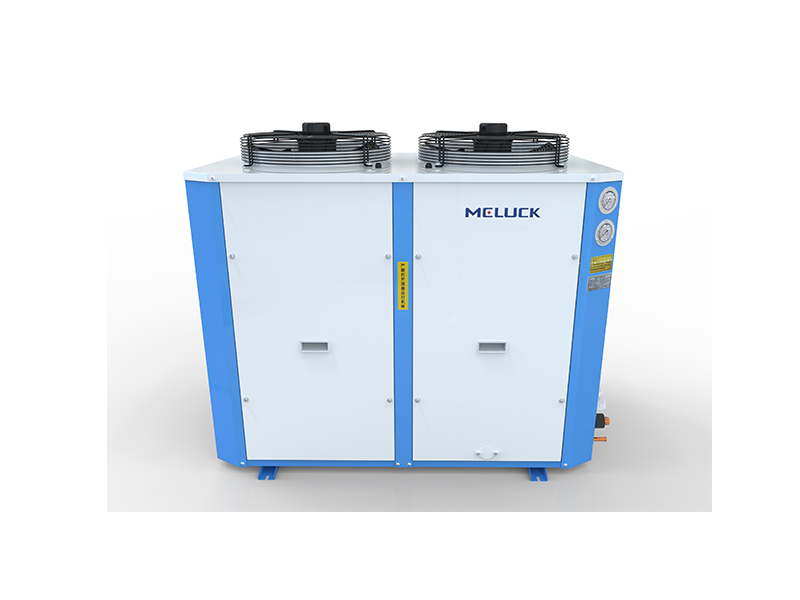
A condensing unit is a system, not a component. It contains the compressor, the condenser coil and fan section, the receiver and filter drier, the high and low pressure controls, the electrical panel, the frame, and the interconnecting piping. The capacity that reaches the room depends on how those parts are matched at the design ambient, and that matching is the manufacturer's engineering work.
Two suppliers can ship the same Bitzer or Copeland compressor and still deliver very different machines. Condenser face area and fin spacing decide how much heat is rejected at 45°C. Receiver volume decides whether the unit can hold its charge across the ambient swing. The panel decides whether a phase failure trips the compressor or destroys it. The test record decides whether a slow leak leaves the factory inside the unit.
A branded compressor does not prove the unit was assembled in that brand's factory, and it does not transfer that brand's process control to the condenser sizing, the panel wiring, or the refrigerant charge. The compressor label identifies one part. It says nothing about the rest of the assembly. Buyers who compare only the compressor brand are comparing one cell of a much larger table.
Manufacturer signals worth checking are concrete. Ask who builds the coil and the panel. Ask for a model-specific spare parts list. Ask for a test record with measured values instead of a stamped approval. Ask for the engineer who will produce a capacity table at your design point, rather than a sales address that forwards the question.
Match the Unit to Each Cold Room Zone Before You Compare Prices
The first specification task is not brand selection. It is mapping every room in the project to a temperature zone and a load, because each zone calls for a different unit type and control strategy. A seafood plant may run a 5°C to 10°C processing room, a -18°C storage room, and a -35°C blast freezer in the same building, and no single configuration serves all three well.
| Room zone | Room temperature | Unit type | Capacity band in a typical catalogue |
|---|---|---|---|
| Processing or chiller room | 0°C to +10°C | Medium-temperature air-cooled unit, scroll or reciprocating | 2 to 25 HP |
| Freezer storage | -18°C to -25°C | Low-temperature air-cooled unit | 4 to 34 HP |
| Blast freezer | -30°C to -40°C | Two-stage or large single-stage low-temperature unit | 16 HP and upward, scaled to room volume |
| Deep freeze or IQF line | -40°C to -50°C | Two-stage semi-hermetic unit | 16 to 20 HP |
| Large multi-zone facility | -25°C to -40°C | Screw compressor or parallel piston unit | Three or four compressors in parallel |
Those bands describe what is available in a standard export range. They are not a sizing method. Final selection needs a load calculation for each room, and the load shifts with product entry temperature, daily throughput, door openings, insulation thickness, and air changes.
Real projects show why the zone mapping comes first. A seafood facility in Manta, Ecuador runs five zones under one roof: three blast freezer rooms at -35°C on 40HP Bitzer units, a -18°C frozen store on 30HP, a -10°C ice store on 7HP, and a 5°C to 10°C processing room on 25HP. A french fries plant in Cairo works the same logic at a larger scale, with a -35°C blast freezer on a 125HP Bitzer system, two -20°C stores on 75HP each, and a 5°C to 10°C packaging area on 25HP. A Peruvian avocado pre-cooling room sits at the other end of the range, holding +10°C within ±0.5°C on two 20HP units. Same product family, different selections, because the room and the load are different.
Horsepower alone cannot be compared across suppliers. A unit's capacity depends on evaporating temperature, condensing temperature, refrigerant, and the superheat at which it is rated. A 20HP unit rated at -25°C evaporating is not the same machine as a 20HP unit rated at -30°C. Ask every supplier for a capacity table at your design point, and treat a headline horsepower figure as a label rather than a performance statement.
At the low end of the temperature range, single-stage compression becomes inefficient. The compression ratio rises, discharge temperature climbs, and capacity per horsepower falls. Two-stage units split that ratio across two compression steps, which is why rooms at -40°C and below are normally specified with them.
Deep freeze rooms put the hardest demands on a condensing unit: low evaporating temperature, long defrost cycles, and oil return that has to be designed rather than assumed. <Bitzer Screw Compressor Condensing Units for Deep Freeze Storage> covers how low-temperature units are configured for continuous deep freeze duty.
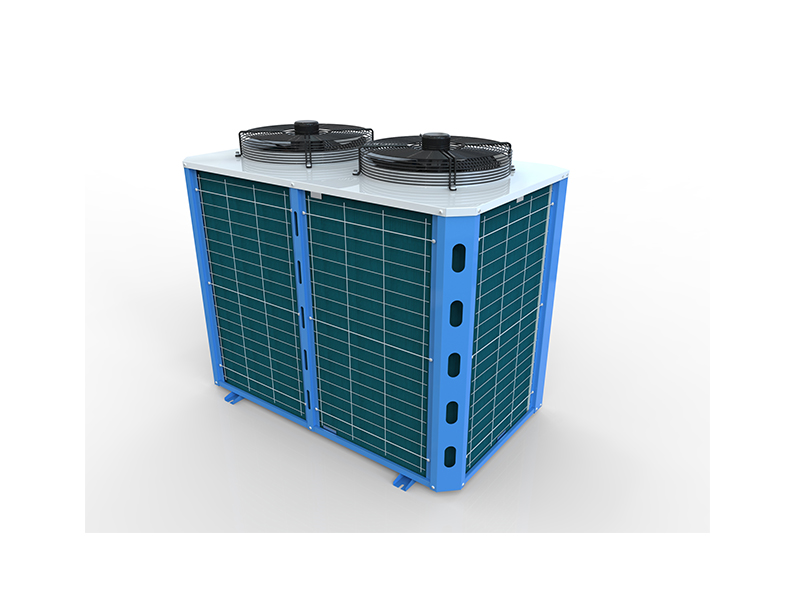
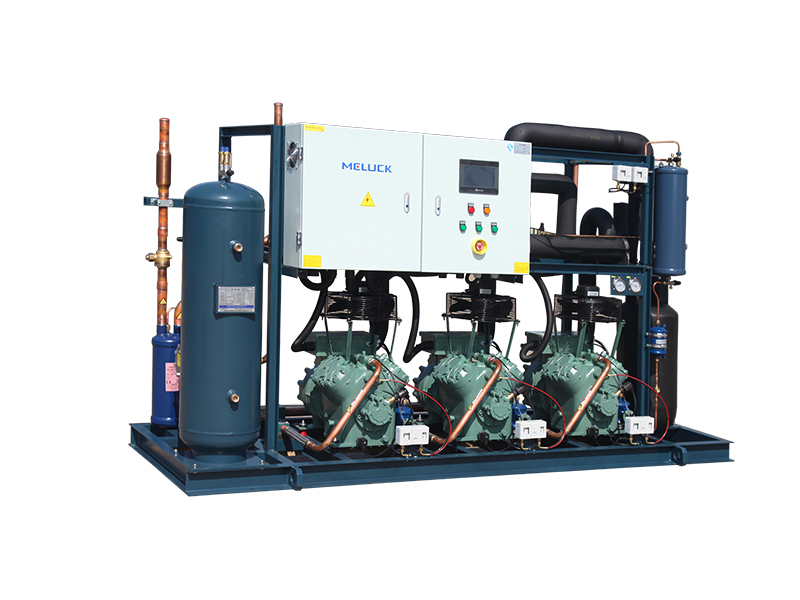
Where the load changes across the working day, a parallel unit with three or four compressors matches capacity in steps instead of cycling one large machine. That arrangement also keeps the room running while one compressor is out of service.
Why Ambient Temperature and Power Supply Change the Selection
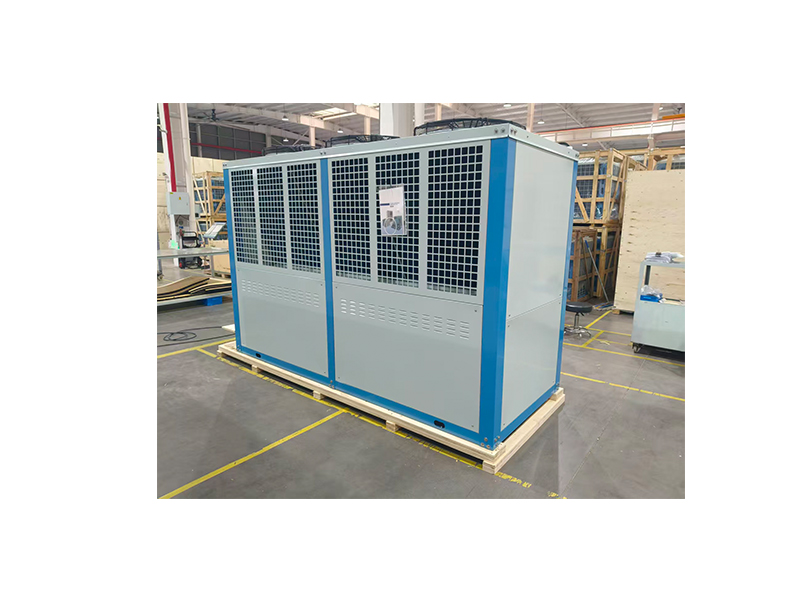
An air-cooled condensing unit rejects heat to the outdoor air, so its capacity depends on the temperature at the installation site. As ambient rises, condensing pressure and temperature rise with it, the compression ratio grows, and the unit delivers less cooling from the same compressor. Running current climbs at the same time. A selection made at 32°C ambient can fall short at 45°C, and the shortfall appears exactly when the room is fully loaded.
The design response is not to add horsepower and hope. It is to size the condenser for the site ambient, confirm the receiver volume covers the full ambient swing, and decide whether fan speed control or head pressure control is needed for low ambient operation in winter. Coastal and humid sites need a second layer of decisions: coated fins, corrosion-resistant frames, and a panel rated for local humidity and dust.
Power supply belongs in the same conversation. A 50Hz rating does not describe 60Hz operation, because the compressor runs faster, capacity changes, and motor current changes with it. Contactors, overloads, and control transformers sized for one frequency may be wrong for the other. Confirm voltage, phase, frequency, and control circuit voltage before the quotation is finalized, and ask for the model built and approved for that supply rather than a field conversion.
Ambient temperature changes more condensing unit selections than most buyers expect. <Selecting a Condensing Unit for Tropical Climates> covers how condensing units are selected for high-ambient, high-humidity sites.
Refrigerant Choice Is a Compliance Decision, Not a Preference
For years R404A was the default for commercial low-temperature systems. Its global warming potential is high, which put it first in line for regulatory pressure. The EU F-Gas Regulation (EU) 2024/573 tightens the HFC quota and adds equipment restrictions on top of the phase-down already under way [1]. The Kigali Amendment sets a comparable global phase-down schedule and entered into force in 2019 [2], and Regulation (EU) 2015/1095 sets efficiency requirements for condensing units placed on the EU market [3]. Even where none of these rules applies directly, export buyers increasingly ask for a lower-GWP refrigerant in the specification.
| Refrigerant | Where it still fits | Confirm before specifying |
|---|---|---|
| R404A | Existing low-temperature systems and service top-ups | Phase-down exposure and future charge availability |
| R448A and R449A | New medium and low-temperature commercial systems | Glide handling, expansion valve and drier compatibility, pressure settings |
| R507A | Low-temperature systems needing azeotropic behaviour | Regulatory exposure similar to R404A |
| R717 (ammonia) | Industrial plants with trained operators | Separate safety regime and machinery room requirements |
| R744 (CO2) | Industrial and low-temperature cascade systems | High pressure design and component ratings |
Switching refrigerant is not a gas swap. R448A and R449A have temperature glide, so the charge must be added as a liquid, and the expansion device, filter drier, elastomers, and pressure switch settings all need confirmation against the new refrigerant. A unit approved for R404A is not automatically approved for a lower-GWP alternative.
The practical question is simple. Ask for the approved refrigerant list for each model, ask whether the condenser and the expansion device were selected for the refrigerant you intend to use, and ask what the nameplate will state. Large low-temperature systems with a defined charge, such as screw compressor units serving -25°C to -40°C storage, are where this decision carries the most weight, because the charge is largest and the efficiency penalty of a poor match runs continuously.
What to Verify in the Factory Before You Approve the Supplier
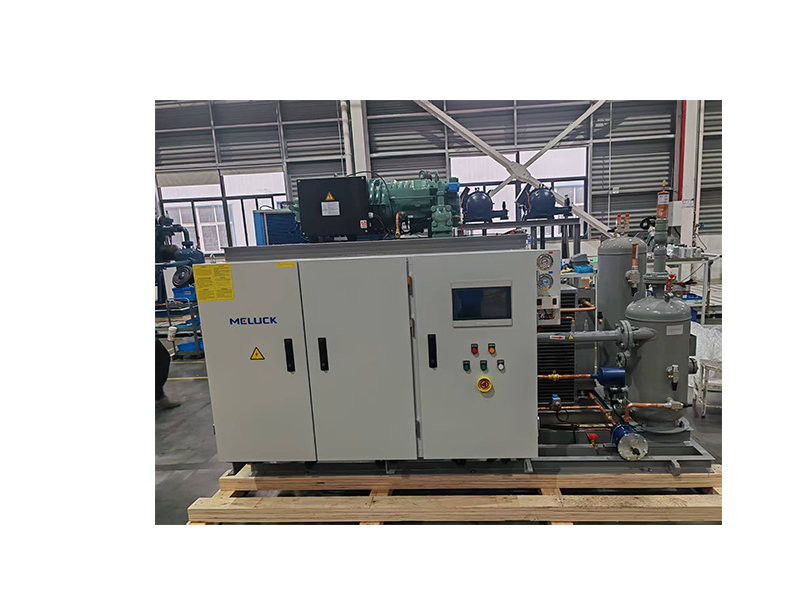
A supplier approval should produce evidence, not impressions. Whether you visit the factory or review documents remotely, five items decide whether the unit on the pallet matches the unit in the quotation.
- Pressure and leak test: the nitrogen hold pressure and hold duration, recorded against the unit serial.
- Evacuation: the standing vacuum level and the time held before charging.
- Run test: measured running current per phase against the nameplate value, suction and discharge pressures, superheat and subcooling, and the ambient temperature during the test.
- Panel and wiring: component brands, overload and phase failure protection, control transformer rating, terminal labelling, and the wiring diagram revision that matches the build.
- Documentation: nameplate data against the order, refrigerant charge, declaration of conformity where the destination market requires it, operating manual, spare parts list, and compressor serial numbers.
Each item exists because of a failure it prevents. A leak that passes a short hold and fails in service shows up as a slow loss of capacity months after commissioning. Superheat set wrong at the factory produces liquid floodback that damages a compressor in its first season. A panel without phase failure protection turns a site power problem into a compressor replacement.
Two boundaries are worth keeping. A photograph of a nameplate proves identification, not performance. A factory run test at 30°C ambient does not prove capacity at a 45°C site. Both records are useful, and both have a limit.
Certification is a separate check, and it ties back to the safety and documentation basis of the design. ISO 5149-2 sets requirements for the design, construction, testing, and documentation of refrigerating systems [4], and EN 378-1 sets the equivalent European framework [5]. CE marking answers European market requirements, CRAA certification answers the China market, and your own market may require a third approval. Ask which certificate applies to the exact model and whether it covers the configuration you are buying.
Certification claims are easy to state and harder to verify at model level. <Bitzer CRAA Certified Condensing Units: China Market Guide> covers what CRAA certification involves for condensing units sold into the China market.
The RFQ Fields That Force Comparable Quotations
Most quotations are not comparable because each supplier answers a slightly different question. Fixing the RFQ format removes most of that variation before the first reply.
| RFQ field | What to request | Why it matters |
|---|---|---|
| Design point | Room temperature, evaporating temperature, design ambient, refrigerant | Two quotes rated at different evaporating temperatures look alike and behave differently |
| Capacity evidence | Manufacturer capacity table at that design point | A headline horsepower figure hides the rating conditions |
| Unit configuration | Compressor model code, condenser rows and fin spacing, receiver volume, panel | The same horsepower can mean different condenser and receiver sizing |
| Electrical | Voltage, phase, frequency, control voltage, panel IP rating | A 50Hz build on a 60Hz site changes capacity and current draw |
| Documentation | Test records, wiring diagram, declarations, spare parts list | Without them, site acceptance has no reference |
| Scope split | Who supplies expansion valve, piping, controls, commissioning | Unclear scope becomes a cost argument after shipment |
A weak RFQ line reads like this: "20HP Bitzer condensing unit for -25°C, please quote best price." It cannot be compared, because the evaporating temperature, the ambient, the refrigerant, the condenser sizing, and the electrical supply are all missing.
Rewrite it as a measurable statement: "Air-cooled condensing unit with a Bitzer semi-hermetic compressor, capacity stated at evaporating temperature -30°C and ambient 45°C, refrigerant R448A, condenser with coated fins, receiver sized for the full ambient swing, 380V three phase 60Hz supply, IP54 panel with phase failure and high/low pressure protection, factory pressure test and run test records, wiring diagram, operating manual, and spare parts list with lead times." That line produces answers you can place side by side.
If a scroll alternative is acceptable, the same field set applies to a Copeland medium-temperature range. Keeping the fields fixed means the comparison stays on capacity, documentation, and terms instead of brand preference.
How to Compare Quotations and Contract Terms
Once quotations arrive in a comparable format, the decision usually comes down to configuration fit and commercial risk. The table below covers the first part.
| Configuration | Fits when | Do not choose it when |
|---|---|---|
| Single medium-temperature unit, 2 to 7 HP | One small chiller room with a steady load | The room needs -18°C or lower |
| Large single low-temperature unit, 18 to 34 HP | One freezer room with a stable load and short door openings | The load swings widely and part-load efficiency matters |
| Parallel piston unit | Several rooms or a variable load, and redundancy matters | Space, budget, or maintenance skill cannot support multi-compressor control |
| Two-stage unit | The room runs at -35°C or below | The room runs above -25°C, where single stage is sufficient |
| Screw compressor unit | Large low-temperature capacity in continuous duty | The project is small enough that the unit runs short hours |
Commercial terms carry as much risk as configuration. Warranty scope is the first item to read closely, because a warranty covering the compressor but not the coil, the panel, or the labour to replace them is a different offer from one covering the assembly. Ask who handles the claim, who pays for the refrigerant, and how the compressor maker's own terms pass through to you.
Spare parts and service are the second item. A supplier who can name the contactor, fan motor, expansion valve, and pressure switch for your model, with lead times, is a supplier you can operate with. A supplier who answers with a general parts catalogue is a risk you discover during the first breakdown.
Commissioning support is the third. Confirm who performs the vacuum, the charge, the control settings, and the site acceptance test, and whether that support is remote, on site, or not included. Unclear scope here is the most common source of cost disputes after delivery.
Set the acceptance basis in the contract as well. State the design point, the refrigerant, the electrical supply, the documentation package, and the test records that must arrive with the unit. An acceptance clause with those five items is enforceable. A clause requiring the equipment to "perform as specified" is not.
Send the Design Point and Get a Matched Selection
Send the room temperature and volume, the product and daily throughput, the design ambient, the refrigerant you intend to use, the power supply in voltage, phase, and frequency, your compressor preference if you have one, the evaporator model or duty, and any certificate your market requires. Shanghai Meluck Refrigeration Equipment Co., Ltd builds condensing units from 2HP to 50HP in reciprocating and scroll configurations, plus two-stage units for lower evaporating temperatures and screw or parallel units for larger low-temperature plants. We will return a selection with the capacity table at your design point and a spare parts list.
David Zhang, meluck@meluckcooling.com, +86 173 6989 3087.
FAQ
How can I tell a condensing unit manufacturer from a trading company?
Ask who designs and builds the condenser coil and the electrical panel, and who signs the test record. A manufacturer can change a condenser configuration, adjust receiver volume, and produce a capacity table at your design point. A trading company can forward documents but usually cannot change the build. Two more questions settle it: can they list spare parts against your model code, and will they share run test values rather than a stamped approval.
Is a Bitzer condensing unit better than a Copeland one?
It depends on the zone and the capacity. Bitzer semi-hermetic reciprocating units are common in low-temperature duty and in larger medium-temperature rooms, and two-stage variants cover deep freeze work. Copeland scroll units are common in medium-temperature chiller rooms and smaller capacities where a compact, low-vibration unit fits the space. Decide on the capacity table at your design point, refrigerant approval, local spare parts, and service familiarity. Both brands appearing in one project, serving different rooms, is normal.
What information do I need before requesting a condensing unit quotation?
Six inputs make the reply comparable: room temperature and product load, design ambient, refrigerant, power supply in voltage and frequency, evaporator model or duty, and the documentation or certification your market requires. Without the design ambient and the evaporating temperature, supplier capacity figures describe different machines and cannot be compared line by line.
Should I use one large condensing unit or several smaller ones?
It depends on load variation and redundancy. One large unit costs less per horsepower and takes less floor space, but takes the whole room down if it fails and runs poorly at part load. Multiple units, or a parallel unit with three or four compressors, give stepped capacity and let you service one machine while the room stays cold. For a single small chiller room, one unit is simpler and the extra piping and controls rarely pay back.
Can one condensing unit serve both a chiller room and a freezer room?
One unit serves one suction temperature. A chiller room at 0°C to +8°C and a freezer at -18°C need separate units and separate evaporators, because the evaporating temperatures, defrost method, and control logic differ. Combining them through one unit forces a compromise that shows up as either product quality loss in the chiller or excessive defrost and energy use in the freezer.
References
[1] Regulation (EU) 2024/573 of the European Parliament and of the Council on fluorinated greenhouse gases, Off. J. Eur. Union, 2024.
[2] Kigali Amendment to the Montreal Protocol on Substances that Deplete the Ozone Layer, UNEP, 2016 (entry into force 2019).
[3] Commission Regulation (EU) 2015/1095, "Ecodesign requirements for professional refrigerated storage cabinets, blast cabinets, condensing units and process chillers," Off. J. Eur. Union, 2015.
[4] ISO 5149-2:2014, "Refrigerating systems and heat pumps — Safety and environmental requirements — Part 2: Design, construction, testing, marking and documentation," ISO, 2014.
[5] EN 378-1:2016, "Refrigerating systems and heat pumps — Safety and environmental requirements — Part 1: Basic requirements, definitions, classification and selection criteria," CEN, 2016.
If you're interested, check out these related articles:
Cold Storage for Nuts & Dried Fruits: Prevent Rancidity & Mold
Cold Room Equipment Warranties: A Buyer’s Guide to Guarantees
With over 15 years of experience as a MELUCK refrigeration engineer, I specialize in the design of cold storage, chillers, ice makers, and cold chain energy-saving systems, providing technical support to distributors and engineering companies worldwide.

meluck