
Parallel Condensing Unit: When Does a Cold Room Need One?
A parallel condensing unit places two or more compressors on a shared suction header and a shared discharge line, then stages them in and out as the room load moves. The arrangement is not automatically better than one well-matched compressor. It earns its cost under a narrow set of conditions: a single evaporating temperature, several evaporators, long hours at part load, and a requirement that capacity stay available when one machine is down. Where those conditions are missing, the same budget buys a simpler system with fewer things that can go wrong. The decision turns on load shape, and the conditions below show how to test it against a real project.
What a Parallel Condensing Unit Actually Is
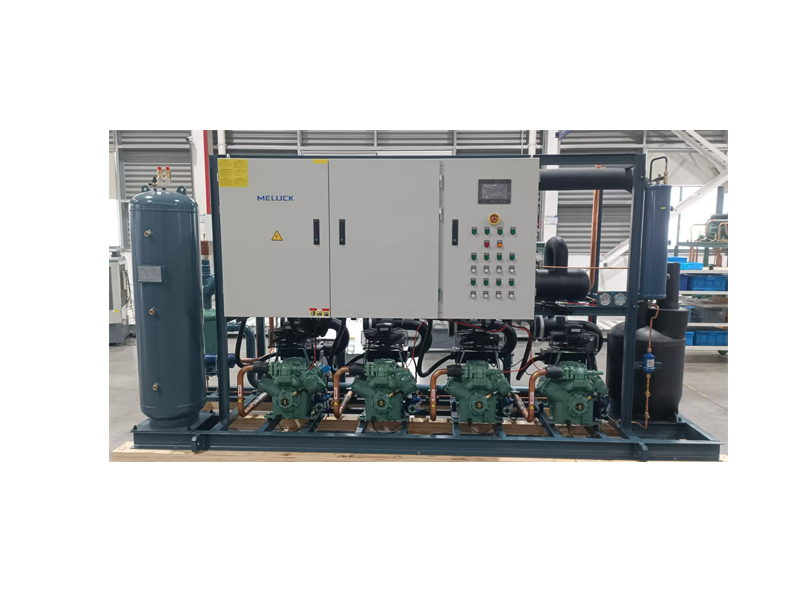
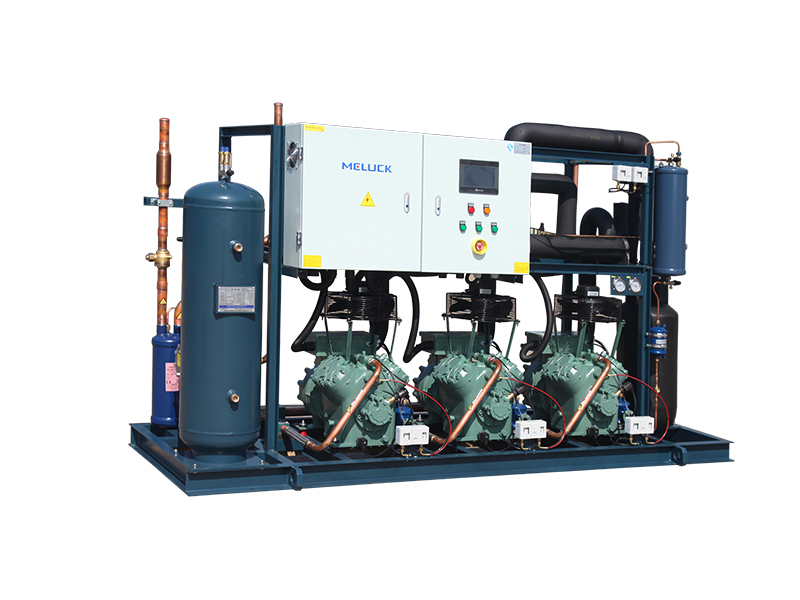
A parallel condensing unit connects two or more compressors to a common suction header and a common discharge line. The compressors share one condenser, one liquid receiver and one oil management arrangement, while a controller decides how many of them run at any moment. Each machine keeps its own protection devices, oil level control and isolation valves, which matters during service: one compressor can be pumped down and repaired while the others hold the room temperature.
The sharing is what separates a rack from several ordinary condensing units installed side by side. Separate units each carry a condenser and their own control logic, and they do not coordinate with each other. A rack does coordinate. Suction pressure is held at one target, condenser fans stage against ambient conditions and load, and compressors start in a defined order so running hours stay balanced across the set.
Balance is the reason the concept exists. A single compressor sized for the hottest day spends most of the year running well below its rated capacity, and a reciprocating or scroll machine at low load cycles more often and loses efficiency. Several smaller machines running in the right combination track the load more closely, and the ones that are not needed stay off.
The cost of that flexibility sits in the pipework, the oil management hardware and the controls. A rack is a small refrigeration plant in its own right, and it needs a technician who understands how its parts interact rather than someone who can only change a contactor.
How It Compares With One Large Compressor or Several Standalone Units
Four arrangements cover most cold room projects, and each one fails in a different way when it is applied to the wrong load.
| Arrangement | Strength | Weakness | Reasonable fit |
|---|---|---|---|
| One fixed-speed compressor | Lowest first cost, fewest components, simple service | Poor part-load efficiency, no standby, one failure stops the room | Small rooms with short running hours or a steady full load |
| One variable-speed compressor | Continuous turndown, stable suction pressure, good part-load behavior | Higher cost at large capacity, drive electronics add service requirements | Medium loads with wide daily swings at a single temperature level |
| Several standalone condensing units | Simple redundancy, one unit per room, no shared oil system | No coordination, more condensers and electrical circuits, uneven running hours | Sites with several small rooms at different temperatures |
| Parallel rack with staged compressors | Capacity steps that follow the load, built-in standby, one condenser and one control system | Higher engineering content, oil management, trained service needed | One temperature level with many evaporators and long part-load hours |
The comparison is not a ranking. The rack wins only where part-load hours are real and the load divides into more than one machine's worth of steps. On a plant that runs close to design load around the clock, the extra controls and oil hardware add service work without returning much.

Capacity matching decides more of the outcome than the equipment label. A rack whose smallest step is still larger than the minimum load will cycle much as the single compressor it replaced did, and the additional hardware buys nothing. The useful question is how low the load actually falls, and for how many hours a week.
Condensing unit choice for a large cold store usually turns on how the load behaves across the day rather than on the headline capacity figure. <High-Capacity Condensing Unit Selection for Cold Storage> covers the selection factors that matter in warehouse-scale refrigeration projects.
When a Cold Room Genuinely Needs a Parallel Rack
The clearest signal is a single evaporating temperature serving many evaporators. When one freezer level has four, six or ten air coolers and the rooms pull down at different times, a rack can follow the combined load with steps no single compressor can match.
Load diversity is the second signal. If rooms are loaded and defrosted on different schedules, the combined peak is smaller than the sum of individual maximums, and a rack sized on the diversified load can be smaller than the collection of standalone units it replaces.
Long part-load hours are the third. A processing plant that fills a freezer steadily through a shift, then idles overnight, gives staging something to work with. A plant that runs flat out all day gives it very little.
Availability is the fourth. If losing one compressor means losing the room, the modular structure supplies standby without a second full-size machine sitting idle. The same structure supports phased expansion, provided the header, receiver and condenser were sized for the final build rather than the first stage.
| Signal | What it implies | What to verify |
|---|---|---|
| One temperature level, several evaporators | A shared suction header can serve them all | That every evaporator runs at the same evaporating temperature and defrost method |
| Rooms peaking at different times | Diversified load is below the sum of individual peaks | Real loading and defrost schedules, not a nameplate total |
| Long stretches below design load | Staging has something to gain | A load profile across a typical week, including the quiet season |
| Losing one compressor stops the room | Modular capacity supplies standby | The redundancy level required and whether it applies in peak season |
| Capacity will grow in stages | Compressors can be added to the same rack | That header, receiver and condenser were sized for the final build |
When a Parallel Rack Is the Wrong Choice
Different temperature levels are the most common reason a rack is the wrong answer. A single suction header holds one suction pressure, so a blast freezer running near -35°C and a chiller room near +2°C cannot share it without one side being served badly. Deep freezing raises the pressure ratio, and the compressor that suits a chiller room is not the compressor that suits a blast freezer.
A project delivered in Manta, Ecuador shows the pattern. The facility needed blast freezing, frozen storage, ice storage and a tempered processing room, and the layout paired each temperature level with its own compressor capacity instead of forcing four suction pressures onto one header. That is the usual engineering answer when the levels differ by that much.
Zoning a plant into temperature levels usually settles the equipment list before any supplier is contacted. <Cold Room Zoning for Meat Packaging: Condensing Unit Guide> covers how zoning decisions map onto condensing unit selection.
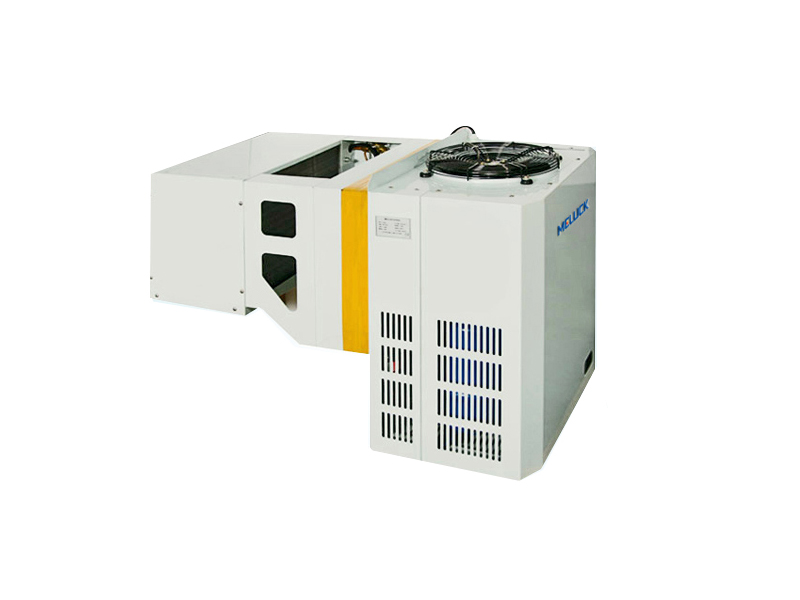
Small total capacity is the second reason. When the whole load is one or two evaporators, the rack's control overhead and oil hardware cost more than the part-load savings return. A single packaged unit does the same work with less to maintain. For one small room, a monoblock refrigeration unit that arrives with condenser and evaporator integrated removes the machine room from the project entirely.
A third reason is service capability. Oil management, level regulators and staged controls need a technician who can diagnose a rack, not just recharge a circuit. Where the nearest trained support is a flight away, a simpler machine that a local contractor can repair is the better engineering decision even if it uses more electricity.
Short-life and intermittent installations belong in the same category. A temporary store for a season, or a room used a few hours a week, will not accumulate enough running hours for staging to pay back the added complexity.
Capacity Control, Oil Management and Part-Load Behavior
Staging is arithmetic before it is electronics. Four compressors of equal size give four steps at roughly equal intervals, which is simple to control and easy to understand. Mixing sizes increases the number of usable steps and lets the controller match small loads with a small machine, at the cost of a more complicated sequence and more part numbers to stock.
The smallest step sets the floor. If the lightest expected load sits below the capacity of the smallest compressor, the rack will cycle on its smallest machine and behave like a single-stage unit during exactly the hours it was bought to improve. That floor is the number worth arguing about during design, not the peak.
Oil management is where racks fail. Oil leaves the compressor with the discharge gas, is separated and returned, and has to find its way back from every evaporator at every load condition. Suction line sizing, risers, traps and oil level regulators all have to work at minimum load, when gas velocity is lowest and oil is most likely to sit in a low point. A three or four compressor piston rack, such as the parallel units built by MELUCK around Bitzer piston compressors, uses a PLC with a touchscreen to sequence machines and offers remote monitoring as an option, but no controller can compensate for pipework that will not return oil.
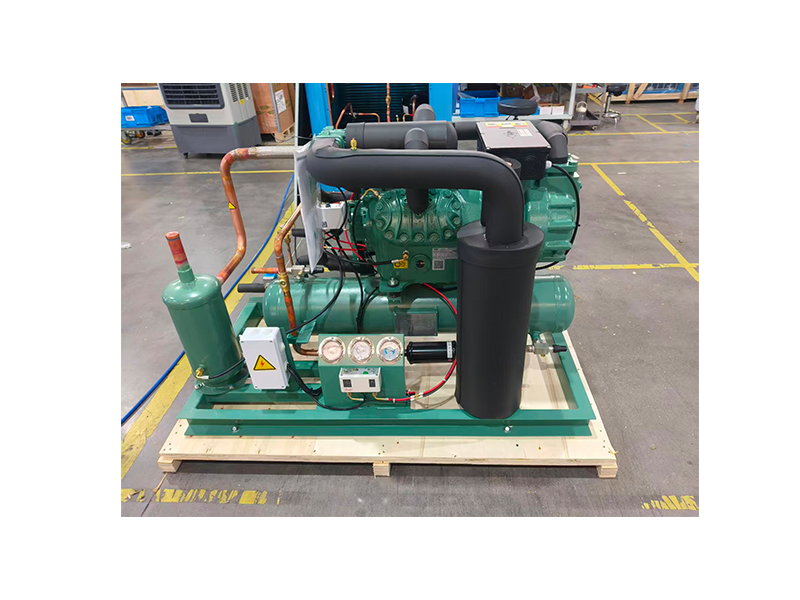
Very low temperatures raise a separate question. Two-stage compression handles a pressure ratio that a single-stage machine struggles with, and a two-stage unit often sits beside a rack rather than inside it, serving the coldest room while the rack covers the rest of the plant.
The honest tradeoff is complexity against running cost. A rack adds controllers, sensors, oil hardware and a service skill set. Whether that is repaid depends on the load profile, and a supplier who cannot show the part-load comparison over a typical year has not demonstrated the case.
Compressor Room Details That Decide Whether the System Works
A rack concentrates heat, noise and electrical demand in one place, and the room around it decides whether the equipment reaches its rating.
Condenser heat rejection comes first. An air-cooled rack sitting indoors rejects its heat into the machine room, so the room needs enough ventilation to keep discharge pressure inside its design range on the hottest afternoon, not just at night. Coil access matters for the same reason: a condenser that cannot be cleaned loses capacity steadily through the year.
Receiver and charge sizing come next. A rack holds more refrigerant than separate units, which makes leak detection, a service plan and refrigerant choice more consequential. Lower-GWP blends that replace R404A behave differently in a large system, and the charge has to match the receiver and the pump-down routine.
Four checks are worth completing before the order is placed:
- Confirm the machine room can reject condenser heat at design ambient, with the fans running at their normal stage rather than permanently at full speed.
- Confirm the receiver holds the full charge plus the pump-down volume of the largest compressor.
- Check suction riser velocities at minimum load, since that is when oil return is weakest.
- Verify the controller can lock out one compressor for service without taking the room above its temperature limit.
A rack room that cannot reject condenser heat will hold discharge pressure high no matter how well the compressors stage. <Compressor Room Airflow for Cold Storage: Design Factors> covers the ventilation and airflow factors that keep a machine room inside its design limits.
What to Specify Before You Request a Price
A rack quotation is only as good as the inputs behind it. These six fields decide the compressor count, the step sizes and the condenser, and leaving any of them out pushes the supplier into guessing.
| Field | What to send | Why it changes the quote |
|---|---|---|
| Temperature level | Room temperature, evaporating temperature and defrost method | Defines the suction pressure the rack has to hold |
| Load profile | Peak load plus a typical week of operation | Determines the number and size of compressor steps |
| Evaporator list | Number, capacity and location of each air cooler | Determines header layout, piping and oil return design |
| Redundancy | Standby requirement and whether it applies year round | Adds a compressor that produces no capacity in normal operation |
| Site conditions | Ambient range, electrical supply, indoor or outdoor installation | Fixes condenser type, fan staging and starting arrangement |
| Service capability | Who maintains the plant and what they can handle | Influences control complexity and whether a rack suits the site at all |
Reject a request phrased as "quote a parallel rack for a freezer room". Replace it with the temperature level, the load profile, the evaporator list, the redundancy requirement, the site conditions and the service arrangement.
A supplier who answers that request without asking for the load profile is quoting a category rather than a system. The same applies in reverse: a buyer who sends a load profile may be told a rack is unnecessary, and that answer is worth as much as a quotation.
Send the Load Profile and Get a Rack Sized Against It
Send the temperature level, the peak and typical load, the number of evaporators, the redundancy you need, the ambient range and the electrical supply. That set is enough to say whether a rack is justified at all, and in some projects the useful answer is that a simpler unit will serve you better.
MELUCK's engineering team can review those inputs and return a sizing together with a comparison against a single-compressor alternative, so the decision rests on the load profile rather than on the equipment label. Email meluck@meluckcooling.com or call and message +8617369893087 on phone or WhatsApp.
FAQ
Is a parallel condensing unit always more efficient than a single compressor?
No. The advantage depends on how long the plant runs below design load. A rack on a plant that sits near full capacity for most of the day adds controls, oil management and service requirements without returning much. Ask for the part-load comparison across a typical year rather than a single full-load efficiency figure. If a supplier can only quote performance at rated capacity, the case for a rack has not been made for your plant.
How many compressors should a parallel rack have?
Enough steps to follow the load, plus the redundancy the product actually needs. Three or four compressors is a common configuration for piston racks because it gives usable steps while keeping the smallest step below the lightest expected load. More, smaller machines give finer control and more maintenance points. The number that decides the design is the lowest load the plant will see, not the peak, because the smallest step sets how well the rack behaves in its quietest hours.
Can one parallel rack serve a chiller room and a freezer room?
Only with separate suction groups or a dedicated low-temperature section. A chiller room and a freezer room need different evaporating temperatures, and forcing both onto one suction pressure either over-cools the chilled product or leaves the freezer short of capacity. Two temperature levels usually mean two racks, or a rack plus separate units for the coldest room, which is often the cheaper answer for a mixed plant.
What maintenance does a rack need that a single unit does not?
Oil management checks and control verification. Oil levels, oil return and separator performance need routine attention because a fault on the shared circuit affects every compressor on the header. Staging and sensor calibration need checking so the capacity steps still match the load as the plant ages. Single units need the same cleaning and refrigerant checks, but a rack concentrates the consequences of one fault across the whole plant, which is why the service arrangement matters at the specification stage.
If you're interested, check out these related articles:
Cold Room Project Morocco: Citrus and Seafood Cold Chain
Cold Room for Cut Flower Export Ethiopia: A Practical Guide
With over 15 years of experience as a MELUCK refrigeration engineer, I specialize in the design of cold storage, chillers, ice makers, and cold chain energy-saving systems, providing technical support to distributors and engineering companies worldwide.

meluck