
Parallel Condensing Unit Manufacturer: Large Cold Room Guide
A parallel condensing unit manufacturer has to solve a system problem, not just supply a skid with several compressors. In a large cold room, the rack must hold product temperature through partial load, pull-down, defrost, and a hot afternoon, while keeping oil return stable and service access open. The right choice is rarely the unit with the highest headline capacity. It is the configuration whose compressor steps, refrigerant, controls, and documentation match the room load and the people who will maintain it. Buyers should compare parallel racks against separate condensing units on load diversity, redundancy, footprint, and long-term service before they compare price.
What a Parallel Condensing Unit Changes in a Large Cold Room
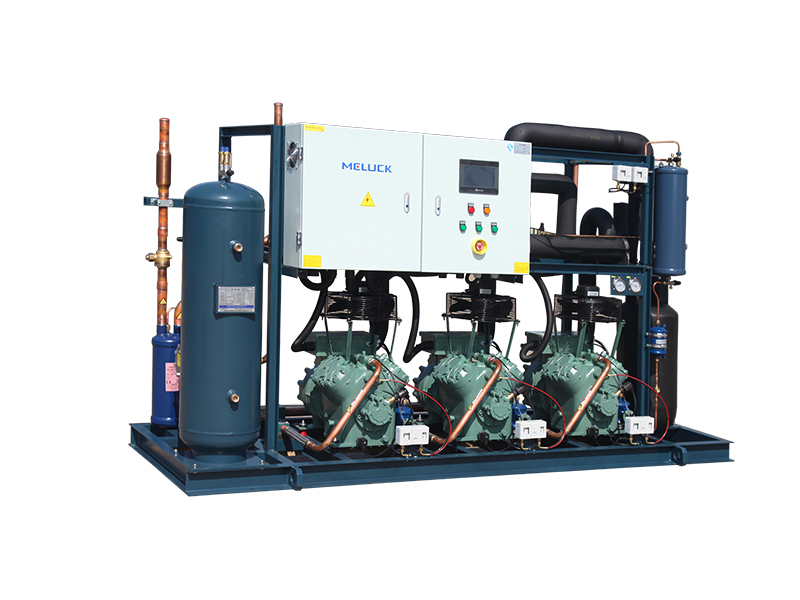
A parallel condensing unit is a central refrigeration package in which two or more compressors discharge into a common condenser and liquid receiver. The compressors can be piston, screw, or scroll machines, and they operate under one control scheme. The point is not simply to multiply compressors. It is to stage capacity in smaller increments as the room load falls, while sharing heat rejection and centralizing alarms, safeties, and records.
That difference matters because a large cold room rarely carries a steady load. Product entry, door openings, defrost cycles, packaging activity, and ambient temperature swings all shift the duty. A rack with well-selected compressor steps can follow those changes without starting and stopping one large machine repeatedly. It can also keep part of the capacity available when one compressor is isolated for service, provided the piping, valves, and controls are arranged for that mode.
The tradeoff is complexity. A parallel rack concentrates refrigerant charge, oil management, electrical starting duty, and control logic in one plant area. A fault in a common receiver, oil system, or controller can affect several rooms. Safety review normally runs against ISO 5149-1 and ASHRAE 15 [1], [2], and the review must cover the final refrigerant charge, occupancy, ventilation, and emergency arrangements rather than only the compressor frame.
When a Parallel Rack Is the Better Choice
A parallel rack earns its cost when the load spends meaningful time below peak and the project needs either capacity steps or redundancy. Multiple rooms with staggered schedules are a common example. So is a plant that wants one central compressor room instead of several remote condensing units spread across a roof or yard. The comparison below is a starting point, not a substitute for a load duration study.
| Decision factor | Separate condensing units | Parallel rack |
|---|---|---|
| Part-load match | Each unit cycles on its own, so staging is limited by the number and size of units | Several compressor steps can be sequenced to follow the load more closely |
| Redundancy | A failed unit removes its entire capacity from the system | A failed compressor can be isolated if the rack is valued and controlled for continued operation |
| Plant space and piping | More outdoor footprint and more separate refrigerant circuits | One central frame and common headers, but a larger single footprint and a more concentrated service area |
| Oil and refrigerant management | Simpler per circuit, with separate charges and independent oil systems | Common oil separator, equalization, and one main charge, but balance and return require careful design |
| Controls and service | Independent controllers and simpler fault isolation | One PLC and alarm history, but a shared fault can affect several rooms at once |
A parallel rack is not automatically more efficient. At full load with clean condensers, a well-matched single condensing unit can be competitive. The rack earns its place when the design uses real staging, and when the owner has the technicians and spare parts to maintain a central system. If the load is steady, the plant room is small, or local service capacity is thin, separate units may be the lower-risk choice.
Very low temperature duty adds another selection step because compressor staging and oil behaviour change as the evaporating temperature falls. <Bitzer Screw Compressor Condensing Units for Deep Freeze Storage> covers screw compressor condensing units for deep freeze storage.
Specifications to Fix Before Requesting Quotes
A useful enquiry reads like a specification, not a request for a price on a picture. The manufacturer needs the operating envelope, the load profile, the refrigerant plan, and the acceptance documents before it can select compressors honestly. The table below lists the fields that most often change the design.
| RFQ field | What to provide | Why it changes the design |
|---|---|---|
| Design duty | Product type, room temperature, design ambient, pull-down requirement, daily load profile, and defrost method | A single peak capacity figure hides the part-load hours that decide compressor staging |
| Compressor data | Model, displacement, approved refrigerant, operating envelope, and capacity at the stated evaporating and condensing temperatures | A model number without an operating map cannot be checked against the room duty |
| Capacity control | Step sequence, cylinder unloading or slide valve, variable speed if offered, lead and lag rotation, and minimum run time | The control method affects part-load efficiency, oil return, and compressor life |
| Refrigerant and pressure envelope | Selected refrigerant, regulatory plan, design pressures, receiver and vessel approvals | Refrigerant choice affects components, leak response, and future service |
| Electrical and controls | Supply voltage and frequency, starting method, PLC or controller, remote monitoring, alarm list, and spare input and output points | Starting current and control architecture affect the plant room and the operator's daily work |
| Documentation and test | P&ID, wiring diagrams, test plan, material certificates, O&M manuals, and spare parts list | Without records, acceptance becomes a visual inspection rather than a technical release |
The compressor row should be backed by an operating map, not only a horsepower figure. Electrical compliance for commercial refrigerating appliances should be stated against the applicable edition of IEC 60335-2-89 [3]. Pressure vessels and receivers fall under the applicable pressure-equipment regime, such as the PED in the EU [5]. Refrigerant choice also has a regulatory life, because the EU F-gas regulation sets a phase-down path for HFCs [4]. A rack designed around a refrigerant with limited future supply creates a service risk even when the first price looks attractive.
Capacity Control and Oil Management in Daily Operation
How staging responds to load
Capacity control is where the rack either behaves well or becomes a source of complaints. Piston racks may use cylinder unloading or fixed steps. Screw racks may use a slide valve or variable speed. The control sequence should state which compressor leads, how long it runs before another stage joins, and how the lead compressor rotates. Without lead and lag rotation, one machine accumulates run hours and the others sit idle.
The controller should also show the operator what it is doing. A display that lists only room temperature is not enough for a central plant. Useful data includes suction and discharge pressures, stage status, oil pressure or level status, condenser fan state, alarm history, and the reason a compressor was blocked from starting. These records shorten fault finding and make performance review possible after the first season.
Oil balance and return
Oil management is the part of parallel rack design that buyers often cannot see in a quotation. A common oil separator, oil reservoir, equalization lines, traps, and correctly sloped suction lines all work together to keep oil moving back to the compressors. A rack that looks neat can still fail if oil migrates to one compressor, if a discharge line traps oil during low load, or if the control sequence starts a compressor before the oil system is ready.
Ask for the oil balance concept, not only the oil charge. The manufacturer should explain how oil returns from each evaporator, how compressors are equalized, and what happens during low-load or defrost operation. The answer should match the actual pipe layout and the refrigerant selected. Oil management that relies on an operator watching sight glasses is a weak design for a large cold room that runs most of the year.
Compressor Room Layout and Heat Rejection
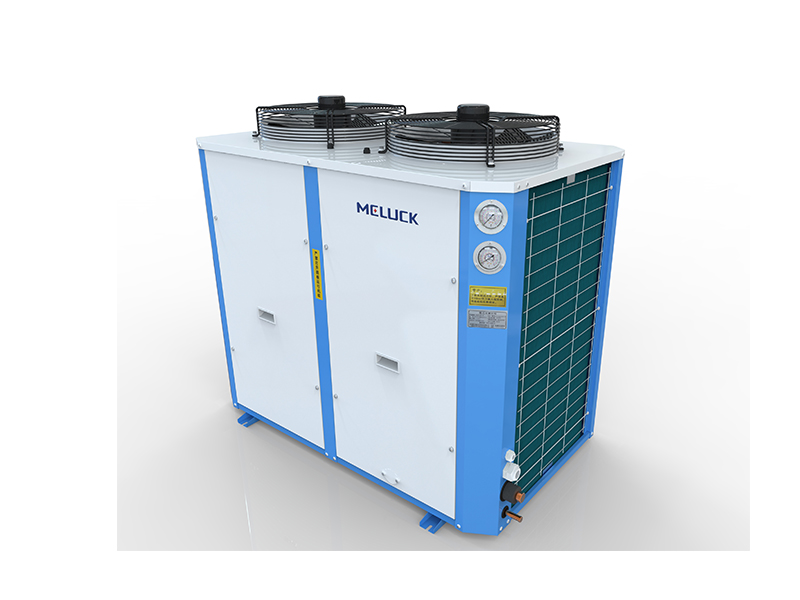
A parallel rack is only as good as the heat rejection behind it. The condenser must be selected for the design ambient, and the compressor room must supply enough air or water to reject heat without recirculation. In hot climates, a rack that meets capacity on a mild day can lose capacity when the ambient rises and the condenser cannot condense at the expected pressure. The plant layout should show air paths, fan discharge, service clearance, and the space needed to remove a compressor or receiver.
Heat rejection and compressor room airflow belong in the same review because a rack that cannot reject heat at design ambient will not hold capacity on the hottest day. <Compressor Room Airflow for Cold Storage: Design Factors> covers airflow factors for cold storage compressor rooms.
Service access is part of the same layout decision. Valves, filters, sight glasses, controllers, and Electrical terminals need room for a technician with tools, not just room for the steel frame. A rack pushed into a corner may pass a drawing review and still fail at the first repair. Clearance around the condenser and compressor frame should be agreed before the plant room is cast or the roof structure is fixed.
Service clearance is not a cosmetic layout issue because a rack with blocked valve access turns a minor repair into a room shutdown. <Condensing Unit Installation Clearance: Key Spacing Rules> covers clearance rules for condensing unit installation.
How to Vet a Parallel Condensing Unit Manufacturer
The title manufacturer is used loosely in this market. Some suppliers assemble bought-in compressors, controls, and vessels. Others fabricate the frame, wire the panel, and run the rack in their own test bay. Both models can deliver a working system, but the buyer needs to know which model is being offered and who owns the interfaces. The evidence below separates a supplier with engineering control from one that mainly passes catalogue items through.
| Evidence | What to request | Why it matters |
|---|---|---|
| Compressor traceability | Serial numbers, country of origin, supplier invoice, and warranty terms | Prevents mixed, rebuilt, or undocumented compressors from entering a new rack |
| Rack engineering | P&ID, pipe sizing, oil balance concept, control narrative, and load calculation | Shows whether the supplier designed the system or only bolted parts together |
| Pressure and electrical compliance | Vessel certificates, PED or local pressure approval where applicable, and IEC 60335-2-89 declaration | Connects the rack to the site's legal and insurance acceptance |
| Factory test | Test procedure, records, witness option, leak test, control simulation, and alarm checks | Catches assembly faults before the rack is shipped |
| Documentation | O&M manuals, wiring diagrams, setpoints, alarm list, and spare parts list | Supports local maintenance after handover |
| Service and references | Nearest technician, response path, and similar projects with contactable owners | Tests whether support exists after the sale, not only during the quotation |
A manufacturer that also supplies cold room panels, evaporators, and controls can coordinate interfaces more easily, but breadth does not replace project engineering. The buyer should still ask who calculated the load, who selected the compressor steps, and who signs the commissioning report. Those answers matter more than a long product catalogue.
Factory Acceptance and Handover Checks
Factory acceptance should test the rack as a system. The review normally includes pressure testing, leak testing, electrical inspection, control simulation, oil charge verification, alarm and interlock checks, and confirmation of setpoints. The witness should be able to see the test procedure before the unit is energized and receive the records afterward. Design, testing, marking, and documentation should follow the applicable edition of EN 378-2 [6], with local requirements added where they are stricter.
Handover is more than a shipping list. The package should include as-built drawings, the final refrigerant and oil charge, control parameters, alarm codes, spare parts recommendations, and a maintenance schedule. The operator should know what to check daily, what to record weekly, and which alarms require a stop rather than a reset. If the project has remote monitoring, the handover should confirm who receives alarms and how the response is logged.
A practical acceptance sequence has five gates. First, confirm the mechanical completion and pressure test. Second, verify electrical insulation, rotation, and safety interlocks. Third, run the control simulation and prove the stage sequence. Fourth, check oil and refrigerant charge against the design record. Fifth, witness a pull-down or loaded run within the limits the site can safely provide. A rack that passes only a static inspection is not yet accepted.
Matching Rack Capacity to Real Project Loads
Large cold room projects usually contain several temperature zones, and a parallel rack should be matched to the zone or group of zones it can actually serve. In the Manta seafood project, the cold chain included blast freezing at -35°C, frozen storage at -18°C, ice storage at -10°C, a processing room at 5°C to 10°C, and a 10 ton per day flake ice system. Each zone used its own Bitzer refrigeration systems rather than one rack trying to hold every temperature. That zoning kept the suction conditions and defrost logic manageable.
The Cairo french fry project shows the same principle at a larger capacity. Frozen finished product storage at -20°C used Bitzer 75HP systems, the bulk frozen store used another Bitzer 75HP system, packaging at 5°C to 10°C used a Bitzer 25HP unit, and the -35°C blast freezer used a Bitzer 125HP system. The lesson is not that every project needs those capacities. The lesson is that capacity should follow the process zones and their load profiles, not a single total horsepower figure.

A parallel rack can serve one zone or a group of zones with similar suction requirements. It is not a substitute for temperature zoning. If a chiller room and a freezer room share one suction group, the control compromise usually appears as either poor temperature control or unnecessary compressor cycling. Separate suction levels or a dedicated rack are often the cleaner answer when the temperatures differ widely.
The room envelope also affects rack selection because insulation, door openings, and infiltration change the load. High-density PIR or PUR panels reduce heat gain, but they do not remove the need to calculate door and defrost loads. A rack selected only from room volume will be either oversized or short of capacity at the worst hour.

Plan the Rack Around the Room Load
Send the room temperature, product load, design ambient, refrigerant preference, electrical supply, and available plant footprint to MELUCK at meluck@meluckcooling.com or +86 173 6989 3087. The engineering team can review the load profile and indicate whether a parallel rack or separate condensing units fit the project. Include the site country and the maintenance team's capability, because those details affect component choice and documentation. A useful reply starts with the actual operating envelope, not a catalogue horsepower.
FAQ
What load size justifies a parallel condensing unit?
There is no single horsepower threshold. The decision depends on load diversity, part-load hours, redundancy needs, plant space, and local service capability. A steady load at near full capacity may suit separate condensing units. Several rooms with staggered schedules and a need for staged capacity are stronger candidates for a parallel rack.
How many compressors should a parallel rack have?
The count should follow the load duration curve, not a rule of thumb. More compressor steps can improve part-load match, but they also add control logic, oil equalization, and maintenance tasks. A small rack with two or three steps may cover a modest load range. A wider range may justify more steps if the design can keep oil return and lead and lag rotation under control.
Can a parallel rack serve freezer and chiller rooms at the same time?
A single suction group should not be expected to hold both chiller and freezer duty without separate suction levels or a dedicated rack. Shared condensing may be possible, but refrigerant and oil management need careful design. The temperature difference, defrost method, and control sequence usually decide whether one rack is practical.
What should I check in a manufacturer's factory test?
Ask for the test procedure and records before the rack is energized. Check pressure and leak tests, electrical inspection, control simulation, oil charge, alarm and interlock checks, and final setpoints. Confirm who witnesses the test and how deviations are closed. A clear test record is more useful than a photo of the finished skid.
References
[1] ISO 5149-1:2014, "Refrigerating systems and heat pumps: Safety and environmental requirements: Part 1: Definitions, classification and selection criteria," ISO, 2014.
[2] ASHRAE 15-2022, "Safety Standard for Refrigeration Systems," ASHRAE, 2022.
[3] IEC 60335-2-89:2019, "Household and similar electrical appliances: Safety: Part 2-89: Particular requirements for commercial refrigerating appliances with an incorporated or remote refrigerant unit or compressor," IEC, 2019.
[4] Regulation (EU) 2024/573 of the European Parliament and of the Council on fluorinated greenhouse gases, Official Journal of the European Union, 2024.
[5] Directive 2014/68/EU on the harmonisation of the laws of the Member States relating to the making available on the market of pressure equipment, Official Journal of the European Union, 2014.
[6] EN 378-2:2016, "Refrigerating systems and heat pumps: Safety and environmental requirements: Part 2: Design, construction, testing, marking and documentation," CEN, 2016.
If you're interested, check out these related articles:
Cold Room Zoning for Meat Packaging: Condensing Unit Guide
Industrial Flake Ice for Concrete Cooling in Dam Construction
Brazil Cold Room Projects: Meat and Fruit Cold Chain Design
Import Cold Chain Compliance: Cold Room Standards for Exporters
With over 15 years of experience as a MELUCK refrigeration engineer, I specialize in the design of cold storage, chillers, ice makers, and cold chain energy-saving systems, providing technical support to distributors and engineering companies worldwide.

meluck