
Invotech Condensing Unit: Budget Option for Small Cold Rooms
A budget condensing unit saves money only when it matches the room it serves. The Invotech condensing unit range, 2HP to 7HP air-cooled with scroll compressors, is built for medium-temperature duty: small chiller rooms holding fresh meat, dairy, produce, beverages or supermarket back-room stock at roughly -5°C to +5°C. Inside that envelope it is a sensible low-capital choice with few parts to fail. Outside it, on frozen storage or in a plant room that reaches 45°C, the label on the unit stops predicting what the room will do. The deciding factor is not the price list. It is whether the quoted capacity was measured at the conditions you will actually run.
Where an Invotech Condensing Unit Fits in a Small Cold Room
The 2HP to 7HP range is a medium-temperature, air-cooled condensing unit built around an Invotech scroll compressor. Medium temperature here means an evaporating temperature held between about -5°C and +5°C, which in a well-insulated room supports a holding temperature near 0°C to +8°C. That covers a butcher's chiller, a dairy and deli back room, a beverage store, a small produce room, and the stock space behind supermarket display cases.
A butcher's chiller carries a heavier product load per square metre than a general store room, and the unit has to recover after each delivery rather than simply hold temperature.
<Cold Room for Butcher Shops: Chiller and Freezer Specs> covers chiller and freezer specification for small retail meat rooms.
The boundary is temperature, not brand. Frozen storage at -18°C and below needs a low-temperature unit with different oil, a larger displacement for the same frame, and a defrost cycle that a medium-temperature controller does not run. A blast freezer needs more again. Pushing a medium-temperature unit toward frozen duty does not produce a cheap freezer; it produces a compressor that runs continuously, trips on overload, or fails early.
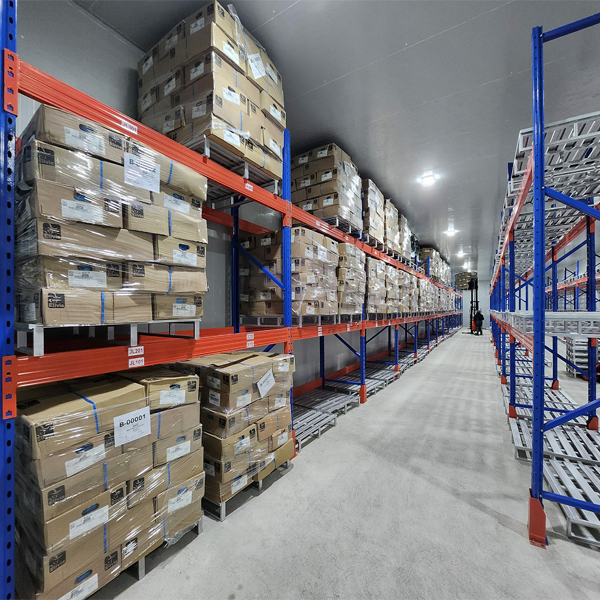
Two other limits are worth knowing before the price comparison starts. Long refrigerant runs with a large vertical rise make oil return harder on a compact scroll unit, so a plant room far from the evaporator changes the selection. Heavy door traffic or an open loading dock adds infiltration load that a small frame may not hold during peak hours.
Why the Horsepower Label Is Not the Capacity You Get
A compressor's horsepower describes its displacement and motor size. Cooling capacity is a separate number, and it moves with the operating conditions. An air-cooled condensing unit rejects heat to the air around it. When that air is at 32°C, the compressor may hold a condensing temperature of roughly 45°C to 50°C. When the same unit sits in a plant room at 43°C, condensing temperature climbs with it, capacity falls and power draw rises. The compressor has not changed. The rating point has.
That is why two quotes for a "3HP unit" can differ by a wide margin and both be honest. To compare them, the capacity figure needs four things attached: the evaporating temperature, the ambient or condensing temperature, the refrigerant, and whether the number includes the evaporator fan and defrost load. Without those, horsepower is a shipping label, not a specification.
Ask each supplier for the capacity table at your design ambient and your target room temperature, then compare at those two points only. Ask a second question: what happens in the hottest week of the year, not the annual average? A unit selected on a mild ambient figure will run short of capacity exactly when the product load peaks.
Oversizing is not the safe answer either. A small chiller room with a unit far above its load reaches setpoint quickly, then cycles. Short cycles hold temperature but do a poor job of pulling humidity, and a room that never dehumidifies feels wet and shortens shelf life on fresh produce and meat.
The room load itself has parts that are easy to forget: transmission through panels and floor, product pull-down, infiltration through doors, lights and people, and defrost. A quote built only on room volume ignores four of the five. If the calculated load exceeds the largest frame in this range, the honest answer is a bigger machine rather than a thinner margin. Medium-temperature reciprocating units in frames up to 20HP and beyond cover that step up.

Scroll or Reciprocating Compressor for a Small Chiller Room
| Option | Typical duty | Service model | Do not choose when |
|---|---|---|---|
| Invotech scroll condensing unit, 2HP to 7HP | Medium temperature, small chiller rooms, daytime operation | Hermetic compressor, replaced rather than rebuilt | The room needs frozen storage, or the load exceeds the range |
| Bitzer reciprocating condensing unit, medium temperature | Small to large chiller rooms, heavier duty cycles | Semi-hermetic, internals serviceable on site | Capital budget is the binding constraint and running hours are low |
| Bitzer low-temperature condensing unit | Frozen storage at -18°C to -25°C | Semi-hermetic, serviceable | The room only holds fresh product |
| Monoblock refrigeration unit | Very small rooms, fast installation, no refrigerant pipework | Sealed unit, wall or ceiling mounted | The room is large, or the outdoor position is severe |
The scroll compressor in the Invotech range is hermetic: the shell is welded and the working parts are not accessible. Fewer moving parts means fewer failure paths, and the price reflects simpler manufacture. It also means a failure is handled by replacement rather than repair, so the question to ask is how quickly a replacement compressor can reach the site.
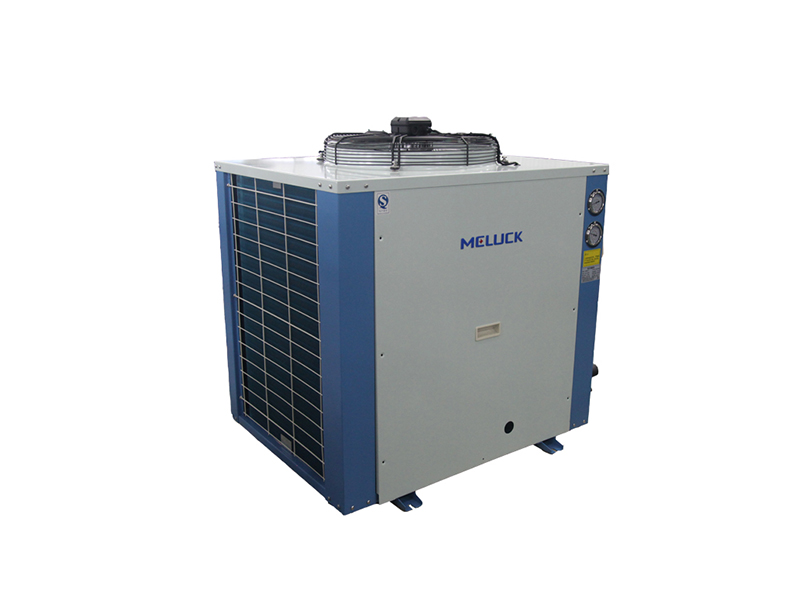
A semi-hermetic reciprocating machine can be opened. Valve plates, gaskets and pistons are serviceable, which matters in a plant where downtime is measured in lost product. That serviceability is what the extra capital buys, and it is worth it only where the duty cycle or the consequences of a stop justify it.
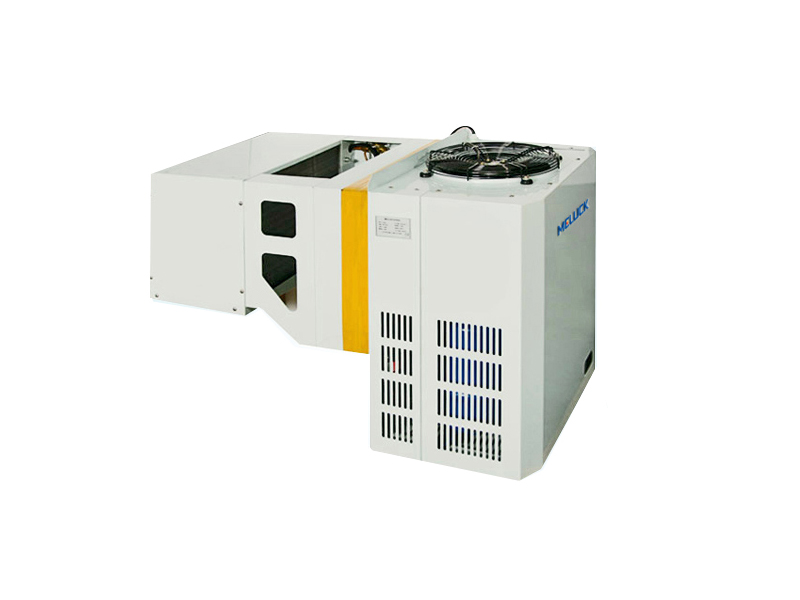
A monoblock unit removes the split system altogether: condenser and evaporator in one casing, no refrigerant pipework to braze or leak-test. For a room of a few square metres it is often the cheapest way to get reliable cooling. Its capacity ceiling and the wall space it occupies are the trade-offs.
Judge the choice on hours, temperature and consequence, not on brand hierarchy. A shop chiller that runs ten hours a day with an overnight pull-down is a different risk from a distribution room that must hold 0°C to +4°C through a weekend.
How to Check the Installation Site Before the Unit Arrives
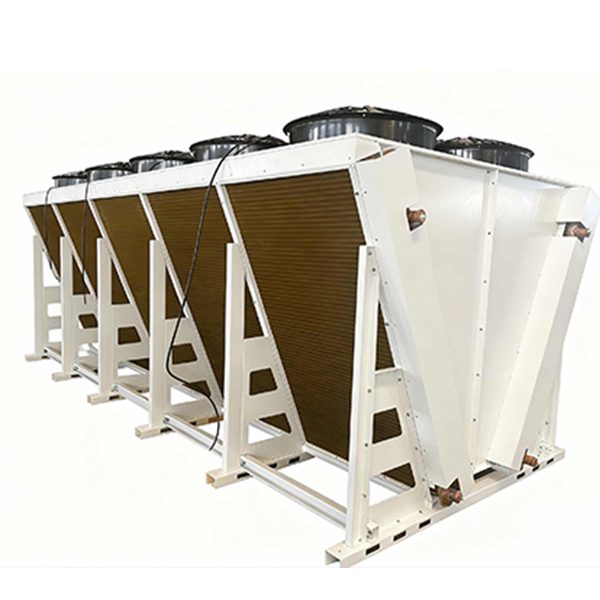
An air-cooled condensing unit is a heat exchanger that has to breathe. The manufacturer's clearance figures assume free air movement around the coil and a discharge path that does not return into the intake. A unit pushed into a corner, tucked under a low roof, or placed beside a wall that holds afternoon sun will run at a higher condensing temperature than the one used for its rating.
The most useful site measurement is also the simplest. Take the air temperature at the proposed unit position at the hottest hour you can observe, in the season that matters. If that reading is five degrees above the ambient you gave the supplier, the capacity table you received no longer describes your installation.
Other checks cost nothing before delivery: confirm the electrical supply at the wall rather than at the meter, confirm the refrigerant run length and vertical rise against the supplier's limit, confirm service access to the compressor and control panel, confirm the condensate path, and confirm that the mounting surface carries the weight without transmitting vibration into a neighbouring room.
<Compressor Room Airflow for Cold Storage: Design Factors> covers intake and discharge arrangements that keep a plant room within its design ambient.
On a roof or in a shared plant area, check what else discharges nearby. Hot air from another condenser, a generator radiator or a kitchen extract will find the intake of a low-mounted unit.
What to Put in the RFQ Before You Compare Prices
| RFQ field | What to request | Why it matters if it is missing |
|---|---|---|
| Capacity basis | Cooling capacity at your target room temperature and design ambient, with refrigerant stated | Two 3HP quotes become incomparable, and the weaker one shows up as a summer shortfall |
| Electrical supply | Site voltage, phase and frequency, plus the unit's rated supply | A three-phase unit on a single-phase supply cannot be commissioned at all |
| Refrigerant | The refrigerant the unit is built and charged for, and the charge quantity | A refrigerant that is hard to buy locally turns a cheap unit into a stranded asset |
| Ambient | The hottest air temperature at the unit position, not the annual average | Capacity falls as ambient rises, so the unit is selected on the wrong basis |
| Controls | Controller type, remote panel or not, alarm output and temperature logging | Retrofitting a controller costs more than specifying it once |
| Warranty and spares | Compressor warranty term, who performs it, and lead time on a replacement compressor | Parts-only cover with slow freight leaves the room down for weeks |
Reject this RFQ line: Invotech condensing unit, 3HP, best price.
Replace it with: Invotech air-cooled scroll condensing unit, medium-temperature duty, capacity stated at 0°C room temperature and 43°C ambient, refrigerant stated, three-phase supply confirmed, controller with alarm output, compressor warranty term and replacement lead time stated.
A supplier that answers in capacity at your conditions is easier to compare than one that answers with a price. MELUCK supplies the Invotech 2HP to 7HP range alongside Bitzer reciprocating units, which makes it possible to quote both options on the same rating basis and see what the extra capital actually buys.
What the Lower Price Leaves Out on Warranty and Spare Parts
Purchase price is the smallest part of what a condensing unit costs over ten years. The larger parts are electricity, service and the cost of a stop. A budget unit can win on all three if it is correctly sized and installed in a ventilated position, and it can lose on all three if it is not.
Warranty terms on a small condensing unit usually separate the compressor from the rest of the assembly. Ask which parts are covered, for how long, whether labour and refrigerant are included, whether the warranty survives commissioning by a third-party contractor, and what evidence a claim requires. A commissioning sheet and a temperature log answer most claims faster than a written description of the fault.
<Cold Room Equipment Warranties: A Buyer’s Guide to Guarantees> covers what cold room equipment guarantees typically include and exclude.
The spare that matters is the compressor. Ask for the current lead time on a replacement scroll compressor for the exact model, and for the controller and fan motor as well. A unit that costs less at purchase but adds three weeks of downtime has not saved anything.
Running cost responds to things the buyer controls: condenser cleanliness, ambient at the unit position, setpoint discipline and door management. A cheap unit in a hot corner can consume more than a better unit in a ventilated one, and the electricity bill will show it every month long after the purchase invoice is forgotten.
Send the Room Data Before You Compare Prices
Quotes become comparable when they are built on the same inputs. Send these and any supplier can price the right frame rather than the nearest one in stock: room dimensions and panel thickness, product type and daily throughput, target room temperature, the hottest ambient at the unit position, electrical supply voltage phase and frequency, refrigerant run length and vertical rise, defrost requirement, and whether a remote controller or alarm output is needed.
Email meluck@meluckcooling.com or call +8617369893087 with those figures. The MELUCK team will match a frame to the duty, state the capacity at your conditions, and quote the Invotech range against a reciprocating alternative so the difference is visible. If the room turns out to need frozen duty, that will be said plainly rather than solved with a larger medium-temperature unit.
FAQ
Can an Invotech condensing unit run a freezer room at -18°C?
No. The 2HP to 7HP Invotech range is a medium-temperature unit, and frozen storage needs a low-temperature machine with different oil, greater displacement for the same frame, and an automatic defrost cycle. Trying to reach -18°C with a medium-temperature unit usually ends in continuous running, overload trips, or an early compressor failure. If the product must be frozen, specify a low-temperature reciprocating or two-stage unit instead of stretching this range.
How do I size a 2HP to 7HP unit for my room?
Start from the load, not the room volume. Add transmission through panels and floor, product pull-down, infiltration, lights and people, and defrost, then apply a margin you can justify. Send that load with your target room temperature and the hottest ambient at the unit position, and ask for capacity at those two points. Compare frames only on that basis, because a horsepower figure alone does not describe what the unit will deliver in your plant room.
Is a scroll compressor harder to repair than a semi-hermetic?
Harder to repair, not necessarily less reliable. The scroll compressor is hermetic, so a failure is handled by replacement rather than an on-site rebuild. It has fewer moving parts and no valve plates to service. The practical question is spare lead time: ask the supplier how quickly an exact replacement compressor can reach your site, and hold that answer against the lower purchase price before you decide.
Will the unit hold capacity at 45°C ambient?
Capacity falls as ambient rises, because condensing temperature follows the air around the unit. At 45°C the same compressor delivers less cooling and draws more power than at 32°C. Select from a capacity table built at your real ambient, improve ventilation at the unit position, or step up a frame size. A unit chosen on a mild ambient figure will fall short during your hottest week.
What electrical supply does a small condensing unit need?
It depends on the frame and the market. Smaller frames are often available in single phase, while larger frames in the 2HP to 7HP band generally need three phase. Confirm voltage, phase and frequency at the wall, not from the utility bill, and state it in the RFQ. Buyers in 60Hz markets should confirm the unit is built for that frequency rather than adapted afterwards.
If you're interested, check out these related articles:
Flake Ice for Chemical Reactor Cooling: Flow & Hygiene
Cold Storage and Flake Ice Systems for Fish Landing Stations
Cold Room for Tuna Loining and Processing at -60°C Deep Freeze
With over 15 years of experience as a MELUCK refrigeration engineer, I specialize in the design of cold storage, chillers, ice makers, and cold chain energy-saving systems, providing technical support to distributors and engineering companies worldwide.

meluck