
How to Verify a Cold Room Supplier Before Signing a Contract
A cold room purchase commits a business to more than equipment. It commits the operation to a supplier's documentation quality, component choices, installation standards, and after-sales response. If a proposal looks good only on price, the real cost may not appear until commissioning fails or warranty support goes quiet. A structured verification process can prevent that outcome before the contract is signed.
The best way to verify a cold room supplier before signing a contract is to move from commercial promises to verifiable evidence. The checks below cover legal identity, certification, component traceability, panel quality, refrigerant compliance, past projects, and the exact technical information that should appear in the inquiry.
Start With Business Identity and Certification Evidence
Before reviewing technical drawings, confirm that the supplier exists as a registered legal entity and holds certifications relevant to your product and destination market. Ask for a business license or export registration document with the legal name, registered address, and company registration number. If the supplier is an exporter, verify that the export documents match the company name on the quotation and the bank account details.
For quality management, ask for an ISO 9001:2015 certificate [1]. The certificate should show the scope covering cold room manufacturing or refrigeration equipment supply, the issuing body, the certificate number, and the expiry date. A valid ISO 9001 certificate points to a documented quality system, but it is not a substitute for checking the actual production process. For food-related cold rooms, ISO 22000:2018 is more useful because it links food safety management to operational controls [2].
For CE-marked equipment entering the European Economic Area, request the EU declaration of conformity and the technical file references. CE marking is a manufacturer declaration that the product meets applicable directives, but it must be supported by the correct harmonized standards and declared conformity route [3]. Check that the declaration names the specific cold room panel, condensing unit, door, or refrigeration system, not a generic product category.
A red flag at this stage is a supplier that sends logos without certificate numbers or says the certificate is available only after payment. Verification should be possible before signing, not after the deposit.
Verify Component Traceability and Branded Parts
A cold room supplier's final quality depends heavily on the components inside the system. Ask for the original compressor and condensing unit models, serial number ranges, and evidence that the units are procured from authorized channels. For condensing units, request the declared cooling capacity, design evaporating temperature, compressor model, and whether the unit has been tested under a recognized rating standard such as AHRI Standard 540 [4]. This reduces the risk of mismatched capacity or counterfeit compressors.
If the supplier offers Bitzer, Copeland, or another known brand, the quotation should specify the exact compressor model and condensing unit model, not only the brand name. Original component declarations, manufacturer serial numbers, and warranty registration are stronger evidence than a logo on a webpage.
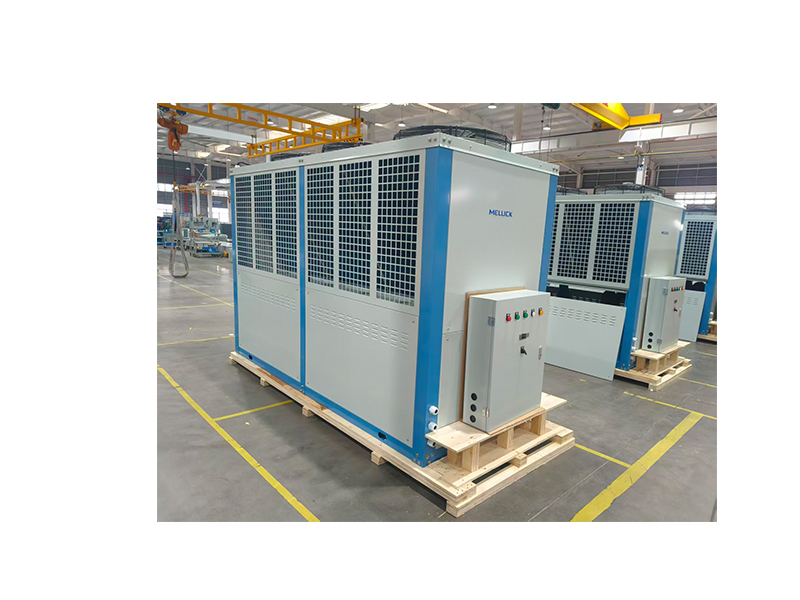
Ask whether the compressor and condensing unit are factory assembled or assembled locally with loose components. In some markets, locally assembled units can be acceptable if the assembly is tested and documented, but the buyer should know that before signing because it affects warranty responsibility and spare parts support.
Check Cold Room Panel Quality and Fire Performance
Insulation panels determine long-term energy use, temperature stability, and fire safety. The supplier should state whether the panels are PU or PIR, the foam density, the metal skin thickness, and the overall panel thickness. For freezer rooms and blast freezers, panel thickness must be matched to the design temperature, not copied from a chiller room specification.
Fire performance should be verified by an actual test classification, not by statements such as fireproof or flame retardant. Under EN 13501-1, construction products are classified by their reaction to fire, which provides a more comparable basis than brand-level claims [5]. Ask for the classification report or test certificate for the specific panel type and thickness.
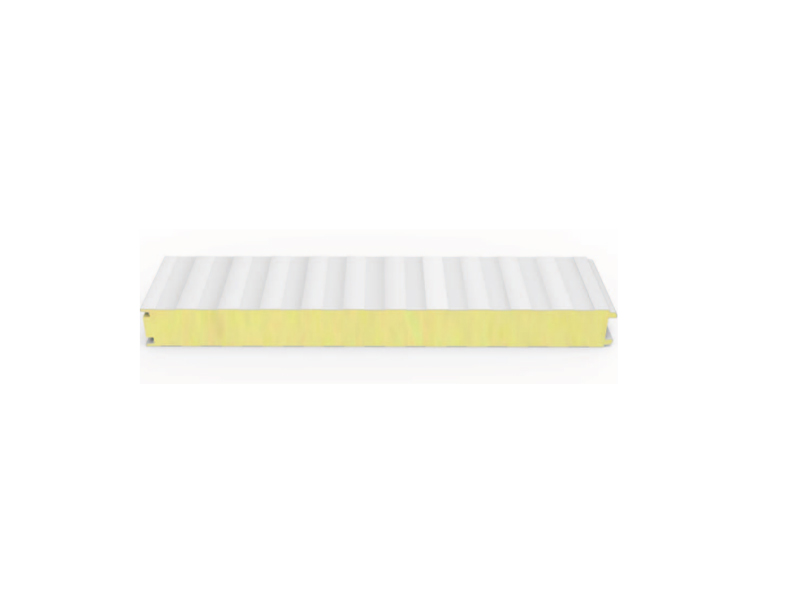
Panel density and connection details also matter. Cam-lock or slip-joint connections need to be comparable across suppliers; a lower panel price can hide thinner steel skins, lower foam density, or fewer internal structural reinforcements. A short video call showing the panel production line, cutting equipment, and foam injection process can reveal more than a polished brochure.
Confirm Refrigerant Compliance and Regional Requirements
Refrigerant choice affects future servicing and legal compliance. If the room will be installed in the European market, confirm the refrigerant charge, GWP, leak-check obligations, and whether the proposed refrigerant is restricted under Regulation (EU) No 517/2014 [6]. Ask for the refrigerant type, charge quantity, and a statement of compliance instead of accepting a generic specification.
For destination markets outside the EU, ask about local voltage, frequency, ambient temperature, and certification requirements. A supplier with experience in 60Hz markets should be able to confirm whether the condensing unit motors, controls, and defrost settings are matched to 60Hz operation. If the supplier cannot explain frequency and ambient performance, the quotation may be based on a standard domestic specification rather than the actual project site.
If you have a supplier proposal in hand and want a technical second opinion, email the engineering review request to meluck@meluckcooling.com with the room size, product load, holding temperature, climate data, and voltage/frequency. Ask for a compliance comparison against the destination standard instead of a price-only quotation, and route the final commercial discussion to the inquiry form at the end of this guide.
Validate Past Projects and After-Sales Capacity
References are most useful when they match the buyer's application and operating environment. Ask the supplier for completed projects in the same product category, temperature range, ambient climate, and power supply. A project in a temperate city does not automatically prove capability for a hot coastal site or a 60Hz network.
Request reference contacts, installation photos, commissioning logs, and a brief note on after-sales response. Not every supplier can share client contact details for privacy reasons, but photos with visible room dimensions, component tags, and control panel readings are still useful. A multi-zone seafood and flake ice facility in Manta, Ecuador, for example, was easier to approve because the buyer received commissioning logs, compressor serial numbers, and site photos before the first payment. That type of evidence is practical and does not require a long factory visit.
After-sales obligations are best checked through the exact wording of guarantee clauses. <Cold Room Equipment Warranties: A Buyer’s Guide to Guarantees> covers guarantee structures and the clauses buyers most often overlook.
Installation spacing is one of the easiest issues to confirm before equipment arrives, but it is also one of the most frequently rejected at commissioning. <Condensing Unit Installation Clearance: Key Spacing Rules> covers the key spacing rules.
Reliability depends on whether the supplier has designed redundancy into the system, not only on the compressor brand. <Refrigeration System Reliability for Critical Cold Rooms> covers how to assess design choices for mission-critical rooms.
For after-sales, confirm the response time, warranty period, spare parts availability, remote support policy, and whether the supplier can provide installation supervision or training. Ask where spare parts are stocked and how long the buyer must wait for critical components. A clear after-sales section in the contract is worth more than a fast quotation.
Build a Technical Inquiry Before Signing
A detailed technical inquiry forces the supplier to move beyond marketing language. The table below can be sent to any supplier and used to compare responses across multiple bids.
| Inquiry item | Ask for | Why it matters |
|---|---|---|
| Cooling capacity | Rated capacity at the design evaporating temperature and ambient temperature | Confirms the unit is sized for the room load |
| Compressor model | Exact brand, model, and serial number evidence | Reduces counterfeit and mismatch risk |
| Panel specification | PU or PIR, density, skin thickness, total thickness | Determines energy use and structural life |
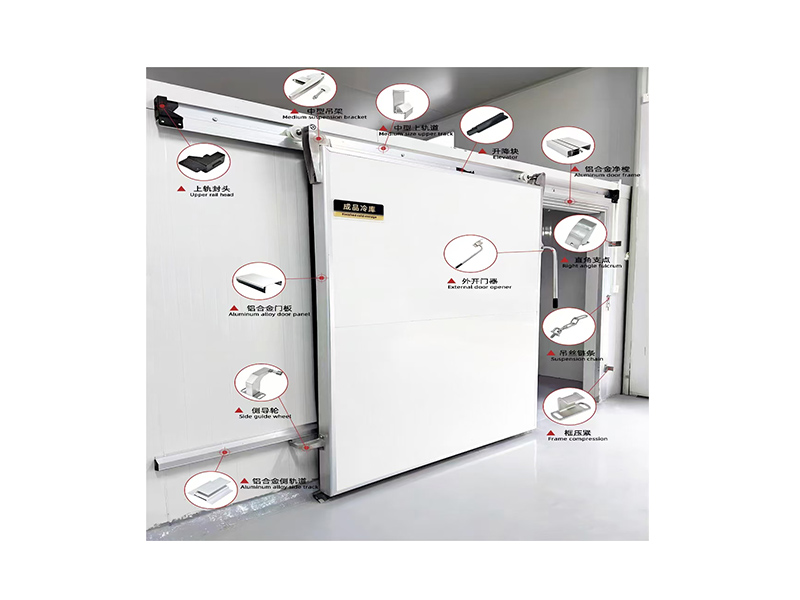
| Door type | Sliding or sectional, heated frame where needed | Affects daily traffic and cold loss |
| Refrigerant | Type, charge, and GWP | Affects legal compliance and service |
| Power supply | Voltage, phase, frequency, and protection settings | Confirms compatibility with site |
| Warranty | Compressor warranty, parts warranty, and exclusions | Clarifies who bears failure risk |
| Installation support | Supervision, training, commissioning, and clearance drawings | Prevents site delays and incorrect setup |
| Spare parts | Stocked parts list, lead time, and critical spares package | Protects uptime after handover |
| Compliance documents | Test reports, certificates, and declaration of conformity | Supports import clearance and insurance |
Ask the supplier to complete the table and attach supporting documents. If a supplier avoids specific numbers, fails to name the compressor model, or does not confirm panel thickness before payment, that is a stronger signal than a low price.
Contract Checklist Before Signing
Use the final contract review as a closing filter. The contract should include the exact equipment list with model numbers, panel thickness and density, door sizes, compressor warranty, delivery terms, commissioning scope, training, payment milestones tied to verifiable milestones, and the after-sales response commitment.
Do not sign a contract that only says one cold room or complete refrigeration system without an itemized bill of materials. A clear itemized list reduces future disputes and makes it easier to inspect the goods at the factory or on arrival.
Ready to Verify Your Cold Room Supplier?
If you are evaluating a cold room proposal or need a technical comparison against your project conditions, contact Shanghai Meluck Refrigeration Equipment Co., Ltd. Send the room dimensions, product type, holding temperature, ambient climate, and power supply to meluck@meluckcooling.com. For project-specific confirmation or a detailed technical review, call +8617369893087.
Frequently Asked Questions
What documents should I ask for before signing a cold room supplier contract?
Ask for a business license or company registration, ISO 9001:2015 or ISO 22000:2018 certificate, product test reports, panel fire classification, declaration of conformity for the destination market, compressor model declarations, and a named warranty statement. Request certificate numbers and expiry dates, not logos alone.
How can I confirm that a supplier uses original branded compressors?
Ask for the exact compressor and condensing unit model numbers, serial number ranges, manufacturer warranty registration, and procurement records from an authorized channel. Use the manufacturer's serial number verification where available and check that the quotation names the full model, not just the brand.
What is the difference between PU and PIR cold room panels?
PU panels are cost-effective and widely used, while PIR panels generally provide better fire resistance and improved insulation performance at equivalent thickness. For cold rooms with stricter fire requirements or freezer applications, PIR is often the safer choice. Ask for fire classification reports instead of general fireproof claims.
Is CE certification enough for my country?
Not automatically. CE marking covers the European Economic Area and must be supported by the correct directives, harmonized standards, and a declaration of conformity. Buyers outside the EEA should also confirm local certification, voltage, frequency, and import requirements with the supplier or a local engineer.
How do I verify a supplier's past projects if I cannot visit the factory?
Request reference contacts, site photos, commissioning logs, component serial numbers, and case summaries from projects with similar temperature zones and operating conditions. A video call showing the production line, testing area, and packaged goods can also reduce risk without an in-person visit.
References
[1] International Organization for Standardization. ISO 9001:2015, Quality management systems - Requirements. Geneva: ISO, 2015. https://www.iso.org/standard/62085.html
[2] International Organization for Standardization. ISO 22000:2018, Food safety management systems - Requirements for any organization in the food chain. Geneva: ISO, 2018. https://www.iso.org/standard/65464.html
[3] European Parliament and Council. Regulation (EC) No 765/2008 setting out the requirements for accreditation and market surveillance relating to the marketing of products. Official Journal of the European Union, 2008. https://eur-lex.europa.eu/legal-content/EN/TXT/?uri=CELEX%3A32008R0765
[4] Air-Conditioning, Heating, and Refrigeration Institute. AHRI Standard 540-2020, Performance Rating of Positive Displacement Refrigerant Compressors and Compressor Units. Arlington, VA: AHRI, 2020.
[5] European Committee for Standardization. EN 13501-1:2018, Fire classification of construction products and building elements - Part 1: Classification using data from reaction to fire tests. Brussels: CEN, 2018.
[6] European Parliament and Council. Regulation (EU) No 517/2014 on fluorinated greenhouse gases. Official Journal of the European Union, 2014. https://eur-lex.europa.eu/legal-content/EN/TXT/?uri=CELEX%3A32014R0517
If you're interested, check out these related articles:
Cold Room Equipment Warranties: A Buyer’s Guide to Guarantees
Cold Room for Butcher Shops: Chiller and Freezer Specs
Cold Room for African Processing Zones: Sourcing and Setup
With over 15 years of experience as a MELUCK refrigeration engineer, I specialize in the design of cold storage, chillers, ice makers, and cold chain energy-saving systems, providing technical support to distributors and engineering companies worldwide.

meluck