
How to Achieve Precise Commercial Cold Room Temperature Control
Precise cold room temperature control depends less on a low setpoint than on how three parts of the system work together: refrigeration capacity, air pattern inside the room, and sensor and control strategy. For products such as fresh produce, meat, dairy, and packaged food, even a few degrees of drift can increase spoilage, weight loss, or safety risk. The real objective is to hold the product zone within a defined band under normal door traffic and ambient load. That means the design should start from the product tolerance, then move into equipment selection, air distribution, control settings, and maintenance. When one of those elements is weak, adding more refrigeration often hides the problem without fixing it.
Start With the Product Setpoint and Tolerance
Precise control begins with a clear product requirement, not with a cold room temperature displayed on a single dial. A storage room does not need one uniform number. It needs a setpoint and an acceptable excursion. For example, a fresh produce room may operate at 10°C while a blast freezer may need -35°C, and a frozen storage room may need -18°C or below.
| Application | Setpoint or band | Control priority |
|---|---|---|
| Avocado pre-cooling | 10°C with ±0.5°C tolerance | Slow respiration and avoid peel damage |
| Tomato storage | 8°C to 12°C | Prevent chill injury and mold |
| Food processing and packaging | 5°C to 10°C | Keep work areas safe without freezing |
| Blast freezing | -35°C | Fast heat removal, not long-term storage |
| Frozen storage | -18°C or lower | Preserve long-term quality stability |
The values in the table are supplied project examples, not universal settings for every product. The correct band depends on product physiology, package heat load, and local food safety requirements. Set the control target inside the allowed band so that normal cycling and defrost do not carry the room outside the limit.

A narrow tolerance requires more than a low setpoint. <Blood Bank Cold Room: Ultra-Precise Temperature Control> covers how ultra-precise systems maintain stable conditions for sensitive stored products.
Match Capacity to the Actual Cooling Load
The second common mistake in commercial cold rooms is selecting a condensing unit by room volume alone. The actual load comes from transmission through panels, product respiration or field heat, infiltration through doors, defrost heat, fan motors, lighting, workers, and pull-down. If the unit is oversized, it short-cycles and swings above and below setpoint. If it is undersized, it cannot recover after loading or during high ambient conditions.
This is where a calculated load matters more than a rough estimate. In a MELUCK avocado pre-cooling project in Peru, the room measured 17 m x 12 m x 3.1 m and was held at 10°C with a ±0.5°C tolerance. The system used two Bitzer 20HP condensing units and two ceiling-mounted evaporators matched to the product load and the coastal climate. That configuration produced stable cooling instead of forcing a larger compressor to cycle on and off.
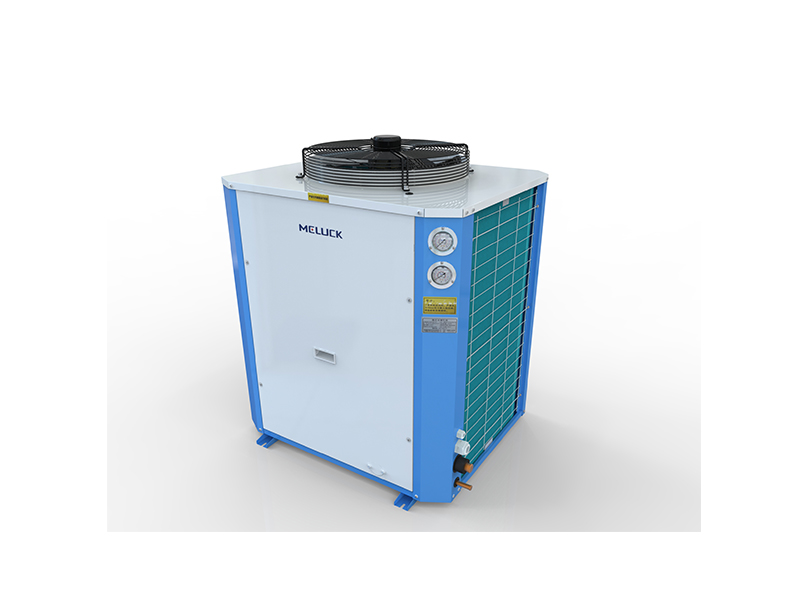
Temperature precision also depends on compressor staging or capacity control. A single large compressor may satisfy peak load but struggles during low-load periods. Parallel compressors or multiple smaller units allow the system to reduce capacity while keeping airflow and oil return stable.
Design Air Distribution Before Adding More Cooling
Uneven temperature inside a cold room often looks like a capacity problem when it is actually an airflow problem. Cold air may leave the evaporator and return through the same opening without mixing in the product zone. Product stacked against walls, pallets packed tightly together, or racks placed under a direct discharge can all create hot spots.
The supply air should reach the product and return to the coil after sweeping through the room. This usually means keeping pallets off walls, leaving air gaps between rows, and avoiding solid product barriers under the evaporator discharge. In rooms with high ceilings, a duct extension or air sock may be needed to move cold air into the far end. The target is not a lower thermostat reading. It is a consistent product temperature across the highest and lowest product locations.
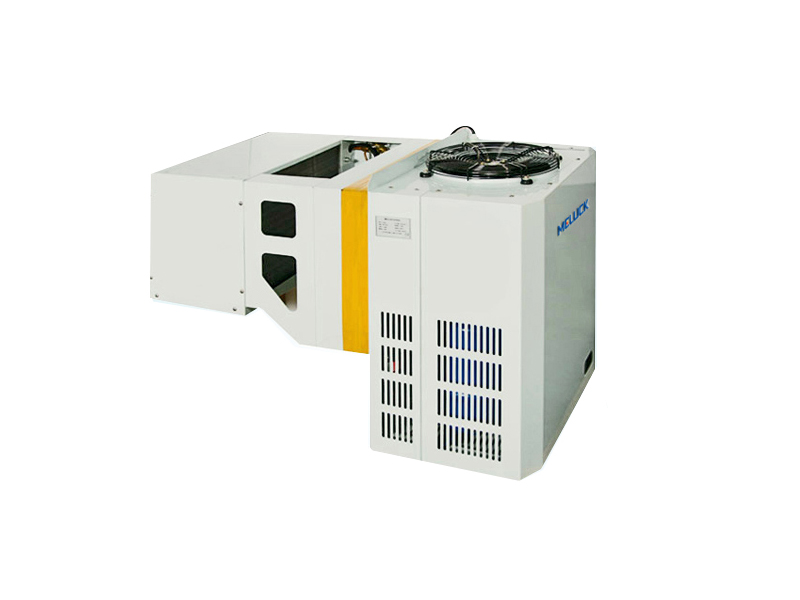
Air distribution problems often explain uneven product temperatures even when the control sensor reads correctly. <Green Coffee Storage: Temperature and Humidity Control> covers how air movement and humidity work together to preserve stored product.
Put Sensors at the Product, Not the Thermostat
A controller that is accurate at the wall may still misrepresent product temperature. The return air sensor or the controller display can read an average while warm fruit, fresh meat, or packed dairy sits in a poorly mixed corner. For precise control, place sensors or data loggers at the warmest and coldest product locations during commissioning.
The control differential and compressor start/stop settings also shape the temperature band. A narrow differential keeps the room closer to setpoint but increases compressor starts. A wider differential reduces starts but allows more drift. For a ±0.5°C product tolerance, the control band must be narrower than the allowed variation, and the control strategy should account for defrost and recovery time.
Defrost is another source of temperature movement. Electric defrost can create a short rise in air temperature, and fan delay prevents warm air from reaching product after defrost. The defrost duration should remove frost without turning the coil area into a heat source.
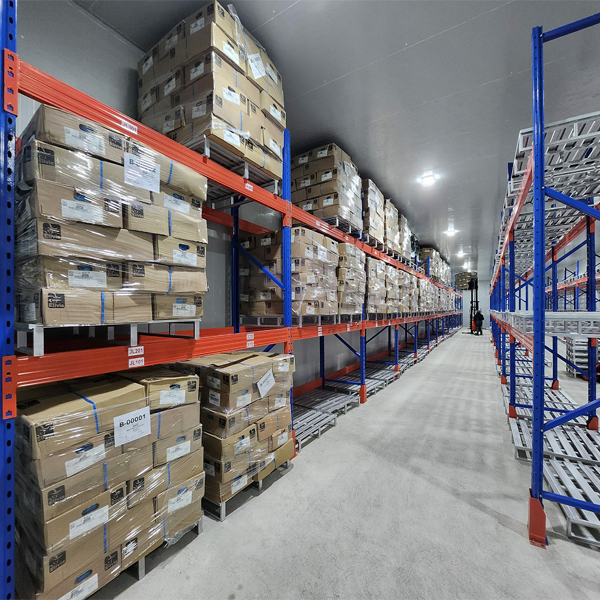
Different temperature zones also have different food safety and handling rules. <Cold Room for Hospital Food Service: Zones & Safety> covers zone-by-zone safety considerations for temperature-controlled food service areas.
Use Alarms, Defrost, and Maintenance to Keep the Band
Temperature precision is not a commissioning event. It requires an alarm strategy that warns the operator before product temperature moves too far. Alarm setpoints should be based on product risk, not on the compressor fault level. A room that normally runs at 10°C may need an alarm at 12°C, with a second alarm for extended door openings or compressor failure.
Maintenance also controls drift. A fouled evaporator reduces heat transfer and forces longer run times. Worn door gaskets raise infiltration. Low refrigerant charge changes superheat and capacity. A sensor that has shifted from its original position will create control errors even when the compressor is healthy. Monthly checks of coil cleanliness, door seals, defrost termination, and sensor calibration help keep the system inside the selected band.
For operators who need remote oversight, a controller with alarm outputs or remote monitoring can record temperature history and send alerts before a small fault becomes product loss. The principle is the same: the control loop includes the room, the equipment, and the maintenance routine, not only the setpoint.
Bring Your Required Tolerance to a Cold Room Engineer
If you are designing or upgrading a cold room, send the application details first: product type, room dimensions, required temperature band, door traffic, ambient climate, and available power. A correct load calculation and airflow design will do more for precision than choosing a colder compressor.
Contact MELUCK at meluck@meluckcooling.com or +8617369893087 with your temperature band and product profile. We can help match the condensing unit, evaporator, panel layout, and control strategy to the tolerance your operation actually needs.
FAQ
What is the best temperature sensor placement for a cold room?
Put the main product sensor at a location that represents the warmest product, usually near the return air path or a known hot spot, and use a separate high-limit sensor for alarm. During commissioning, verify the placement with a portable logger at several product positions. A single wall-mounted thermostat is not enough when the room has a narrow tolerance.
Why does my cold room temperature swing after the compressor stops?
Short cycling usually comes from an oversized unit, an oversized differential, or a sensor placed too close to the cold air discharge. The compressor stops before the product reaches the target, then restarts after a small rise. Check the control differential and move the sensor away from direct discharge if needed. A load calculation can also confirm whether the compressor is too large for the room.
Can a variable speed compressor improve temperature stability?
Yes. A variable speed or multi-stage compressor can better match the actual load during low-demand periods. This reduces the stop-start cycle and narrows the temperature band. The benefit depends on the ambient and product load range, so the compressor should be selected as part of the total system rather than as a standalone upgrade.
How often should I calibrate cold room temperature sensors?
Calibrate the control and alarm sensors during commissioning and then at least once or twice a year. High-risk applications may need more frequent checks. Compare the installed sensor with a calibrated reference thermometer placed in the same location. If the difference is larger than the allowed control offset, adjust or replace the sensor.
Does a lower setpoint make temperature control more precise?
Not necessarily. A lower setpoint can increase compressor run time and may hide an airflow or sensor problem, but it does not improve uniformity. Precision comes from matching capacity, air distribution, and control settings to the product band. If the room has hot spots, lowering the setpoint may just over-cool the air near the sensor while the problem area remains too warm.
If you're interested, check out these related articles:
Import Cold Chain Compliance: Cold Room Standards for Exporters
Cold Room for Butcher Shops: Chiller and Freezer Specs
Ecuador Multi-Temperature Cold Storage Project
Cold Room for Food Service: Compact Energy Efficient Options
Chiller Room Solutions -10C~10C
With over 15 years of experience as a MELUCK refrigeration engineer, I specialize in the design of cold storage, chillers, ice makers, and cold chain energy-saving systems, providing technical support to distributors and engineering companies worldwide.

meluck