
How to Plan a Cold Room Project Philippines for IQF Output
Cold room project Philippines planning looks simple on paper: pick a room size, add a compressor, and connect an IQF tunnel. In practice, the failure points are panel sealing, 60Hz power matching, and the freezer's pull-down capacity under humid conditions. I saw this in Manta, Ecuador when a seafood exporter needed five temperature zones, not one, and the blast freezer had to work as part of a closed loop with processing and frozen storage. The same applies to Philippine seafood, fruit, and prepared food projects because high humidity and salt air expose weak points quickly. The IQF freezer is not storage. It is a production step, and it should set the throughput for the entire room.
What Should a Cold Room Project Philippines Plan Include From Day One?
The first question is not how many square meters. It is how many temperature zones the product flow requires. A typical seafood line needs a receiving chiller at 0 to 4°C, a processing room near 5 to 10°C, a blast freezer or IQF tunnel at -30 to -40°C, and frozen storage at -18 to -25°C. Each zone has its own compressor load because air temperature, product load, door traffic, and defrost cycles are not the same. Without this separation, one compressor is forced to satisfy conflicting conditions and the room drifts.
For a Philippine project, I would also confirm the site has a stable 60Hz supply and enough space for condenser air discharge before the layout is fixed. These two items change panel and equipment positions more often than buyers expect.
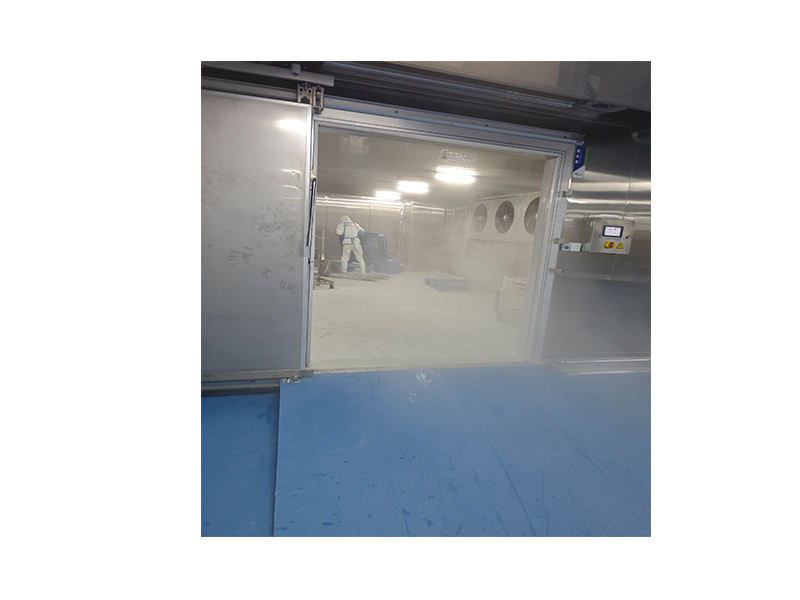
How Does IQF Freezing Fit a Philippine Seafood or Fruit Processing Line?
IQF means individual quick freezing. The product moves through a tunnel on a conveyor, high-velocity cold air freezes each piece separately, and the result is a loose product that does not clump in the bag. For shrimp, diced mango, berries, or dumplings, this is more important than total room capacity because the freezer determines the kilograms per hour you can move into storage.
The common mistake is treating the tunnel as cold storage. It is not. Storage rooms hold product. An IQF tunnel is a processing machine with a cycle time of roughly 5 to 30 minutes depending on product thickness, belt load, and setpoint. Once the tunnel reaches its throughput limit, adding more storage does not increase output.
A quick comparison for project planning:
| Condition | IQF tunnel | Blast freezer room |
| Freezing method | Product moves on a conveyor | Product is loaded in batches on trays or carts |
| Typical setpoint | -30 to -40°C | -30 to -40°C |
| Best fit | Shrimp, diced fruit, berries, dumplings | Whole fish, blocks, irregular packs |
| Planning unit | kg per hour | batch cycle time |
Many Philippine lines run both. The IQF tunnel handles export-grade individually frozen product, and a blast freezer room handles larger whole fish or overflow batches that would jam a conveyor. If you plan for export, this division matters before you buy, because the compressor and evaporator sizing are separate.
Which Panels and Insulation Hold Up in Philippine Humidity?
In warm, humid coastal air, panel joints are the weak point. I prefer PIR panels with slip-joint connections for freezer and IQF rooms because the thermal performance and fire rating are better than standard PUR. The B1 rating matters when the room sits inside a food plant with processing equipment nearby. The real failure, though, is moisture ingress at seams. Warm air entering a freezer joint becomes ice inside the panel, reduces insulation value, and creates frosting on the outer surface. Over years this degrades the panel and drives up running cost.
Floor insulation is also required for freezer rooms in the Philippines. A concrete slab in contact with tropical ground constantly pulls heat into the room unless a vapor barrier and insulated floor are part of the design. I have seen projects where the wall and ceiling were specified correctly and the floor was left out, and the result was condensation at the base of panels and short compressor cycles.

How Do You Select Condensing Units for 60Hz Philippine Power?
The first point is to confirm the compressor and fan motors are rated for 60Hz. Some 50Hz equipment exported into the Philippines runs at higher speed, pulls more current, and shortens motor life if it was not designed for that frequency. For a cold room project in the Philippines, I ask for the capacity curve at 60Hz, not the standard 50Hz rating sheet.
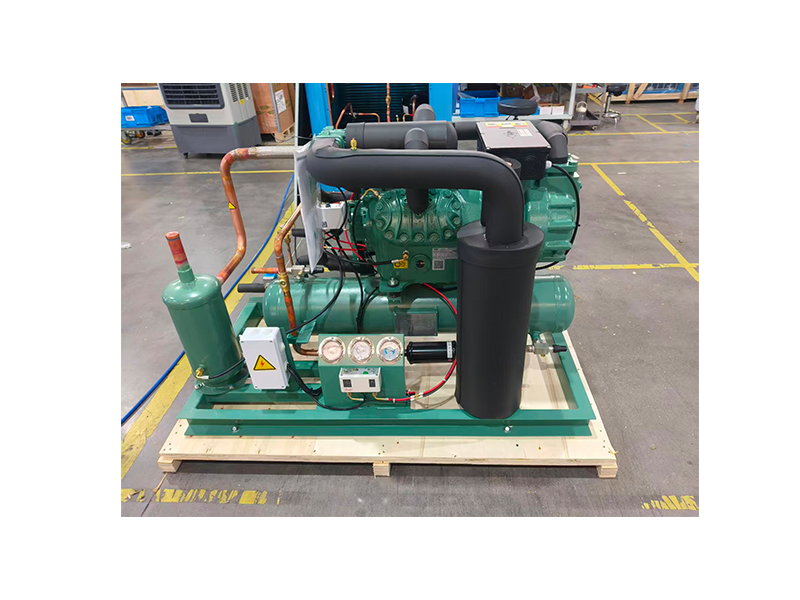
For frozen storage, a low-temperature condensing unit matched to the room load is the straightforward choice. For an IQF tunnel or blast freezer at -35°C or lower, a Bitzer two-stage unit is usually justified because it handles deep evaporation with better oil return and lower compression ratios per stage. We use these units in blast freezer and IQF systems where product must reach export-grade core temperature quickly.
Ambient heat and salt air also change condenser selection. I specify coated fins or a service interval that includes coil washing, because a corroded condenser raises head pressure and cuts capacity during the hottest part of the day.
If your project includes an IQF tunnel below -30°C, confirm the compressor, evaporator, and defrost arrangement together before you buy the panels. Send your target kg/h and product type to meluck@meluckcooling.com and I will check the pairing against your load profile.
What Should You Verify Before the First Production Run?
Commissioning is where the design proves itself or fails. We verify pull-down time from ambient to setpoint with a normal product load, defrost water drainage, door seal alignment, temperature alarm routing, and compressor current draw at 60Hz. The most important test for an IQF line is to run product through the tunnel, not to check temperature with an empty belt. Static room tests miss belt speed, airflow gaps, and frost accumulation that only appear under load.
We also train operators on controller setpoints, manual defrost, and the alarm chain before handover. A cold room that depends on one technician is a risk. The shift staff should know what a high-pressure alarm means and who to call.
If you are still comparing supplier scope, send your room dimensions, product type, and target kg/h to meluck@meluckcooling.com or call +8617369893087. We will confirm the equipment pairing and the commissioning points to check before you place an order.
What Do Buyers Ask About Cold Room and IQF Projects in the Philippines?
How long does an IQF tunnel take to freeze shrimp?
Most shrimp lines freeze individual pieces in roughly 10 to 20 minutes at a setpoint around -35°C. The exact time depends on belt loading, piece size, and whether the product is glazed before freezing. A thicker layer on the belt slows heat transfer and extends the cycle, so capacity in kg/h cannot be separated from product thickness. The safer planning method is to test one batch at your intended belt speed and core temperature instead of relying on a catalog cycle time alone.
Do I need a separate blast freezer if I already have an IQF tunnel?
Many processors assume an IQF tunnel removes the need for a blast freezer. That holds only if every product is conveyor-friendly. Whole fish, irregular packs, and large meat portions may not sit evenly on a belt, and forcing them through an IQF tunnel creates uneven freezing and wasted capacity. A batch blast freezer room is still the right tool for those products. The two systems also give you backup capacity when one line is down.
Can I run a 50Hz condensing unit on Philippine 60Hz power?
It depends on whether the compressor and fan motors were tested and rated for 60Hz. Some units can operate on 60Hz, but the motor speed, current draw, and capacity all change from the 50Hz rating. If the supplier cannot supply a 60Hz performance curve, do not assume the equipment will be reliable. For a new cold room project in the Philippines, specify 60Hz-rated equipment from the start.
What documentation should I prepare for food export?
In projects I have worked on, the documentation requirement usually surfaces before installation, often as a buyer ask for temperature logs, panel fire certification, or compressor test records. The exact format depends on the destination and the food safety system your customer follows. If your buyer requires HACCP documentation or a specific temperature log, send the requirement to meluck@meluckcooling.com and we will confirm the control system can produce the record format you need.
If you're interested, check out these related articles:
Peru Avocado Pre-Cooling Cold Storage - Meluck
Ecuador Multi-Temperature Cold Storage Project - Meluck
Egypt French Fries Cold Storage Project - Meluck
With over 15 years of experience as a MELUCK refrigeration engineer, I specialize in the design of cold storage, chillers, ice makers, and cold chain energy-saving systems, providing technical support to distributors and engineering companies worldwide.

meluck