
Cold Room for Food Processing: Multi-Zone Temperature Design Guide
A food processing plant rarely needs one refrigeration setting; it needs a chain of settings that follows product from receiving to dispatch. A single temperature forces operators to choose between a room cold enough for storage and a room warm enough for staff, and neither choice remains correct across the production day. Multi-zone temperature design solves this by dividing the facility into distinct thermal environments: chilled receiving, cooled processing, rapid freezing, frozen holding, and temperature-controlled packing. Each zone gets its own setpoint, airflow profile, and refrigeration capacity, matched to the thermal load at that step. When zones work together, the plant protects shelf life, reduces product loss, and keeps audit documentation consistent.
For a plant-specific zone load calculation, send your process flow, room dimensions, and target throughput to the inquiry contact at the end of this guide.
Why Multi-Zone Design Determines Food Safety and Yield
Food safety regulation requires that perishable product does not remain in the temperature danger zone between 5°C and 60°C longer than the permitted limit. Codex Alimentarius General Principles of Food Hygiene state that cooling must be sufficient to limit microbial growth, and EU Regulation (EC) No 852/2004 requires food business operators to maintain temperature-controlled rooms at levels that prevent hazard development [1][2].
A single-zone approach forces compromise. Raw receiving usually needs 0°C to 4°C. A processing room where staff cut, trim, and package for hours must balance product safety with worker comfort, typically operating at 5°C to 12°C. A blast freezer must reach -30°C to -40°C to freeze quickly, while frozen storage runs at -18°C to -25°C. Each band carries its own load profile, defrost behavior, and airflow requirement.
| Zone | Typical Setpoint | Primary Purpose |
|---|---|---|
| Receiving and pre-cooling | 0°C to +4°C | Remove field heat, stabilize product |
| Chilled processing | +5°C to +12°C | Cutting, trimming, packing |
| Chilled storage | 0°C to +4°C | Short-term fresh holding |
| Blast freezing | -30°C to -40°C | Rapid core temperature drop |
| Frozen storage | -18°C to -25°C | Long-term frozen holding |
| Ice storage and flake ice | -10°C to -5°C | Prevent ice melting and caking |
The same multi-zone logic applies to meat, produce, and prepared food plants in hot climates. > Cold Room Projects in Mexico: Food Processing Cold Storage covers food processing cold storage projects built for multiple temperature bands under one roof.
Zone-by-Zone Temperature and Equipment Configuration
Receiving and Pre-Cooling: 0°C to +4°C
Pre-cooling slows respiration and microbial growth before product reaches the processing line. Rapid temperature pulldown at receiving protects color, texture, and shelf life, especially for meat, poultry, seafood, and field-heated produce. A medium-temperature chiller room with high-sensible-capacity air coolers handles this band well. The air cooler evaporator must manage latent heat from wet product through controlled airflow and reliable condensate drainage.

Chilled Processing: 5°C to +12°C
The processing room is where temperature logic meets workflow. Air temperature usually stays at 8°C to 12°C for raw meat and poultry lines, and 5°C to 10°C for high-risk, short shelf-life products, with product temperature held below the legal target. This zone needs a medium-temperature condensing unit sized for heavy door openings, staff heat, and intermittent washdown loads. Processing rooms are where temperature and workflow intersect. > Processing Room Solutions for Food Plants covers hygienic design for 5°C to 15°C production environments.
Blast Freezing: -30°C to -40°C
Blast freezing locks product structure by driving the core temperature down quickly, forming smaller ice crystals and reducing drip loss at thaw. The blast freezer room requires low-temperature condensing capacity or two-stage compression, often with evaporation temperatures down to -45°C or lower. A Bitzer 2-Stage 16HP Semi-hermetic Condensing Unit is one option when the process must reach ultra-low conditions without overloading a single-stage circuit.
A documented multi-zone build shows how horsepower scales with each zone. In a completed Cairo French fries plant, the design used a -35°C blast freezer with a Bitzer 125HP system, a 5°C to 10°C packaging area on a 25HP unit, and -20°C storage on 75HP systems. > Egypt French Fries Cold Storage Project covers a -35°C blast freezer, a 5°C to 10°C packaging area, and -20°C frozen storage in one facility.
Frozen Storage: -18°C to -25°C
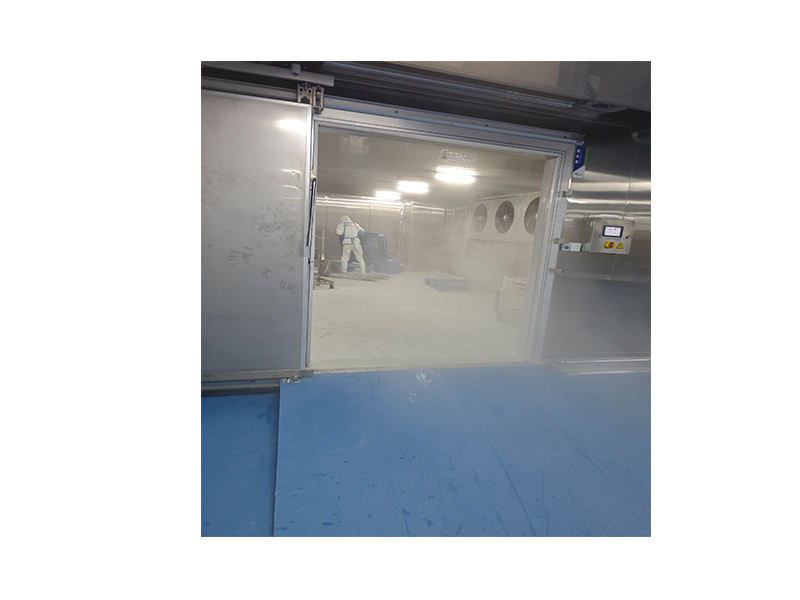
Frozen storage holds finished product at -18°C, the widely accepted commercial frozen temperature referenced in food standards and cold chain guidance [2]. A freezer room with high-density insulation and low-temperature capacity prevents temperature drift during peak pull-down and nightly restocking. For load-matched capacity, a Bitzer 34HP Condensing Unit Freezer serves medium-scale frozen holding rooms operating from -18°C to -30°C evaporation.
Ice Storage and Auxiliary Zones: -10°C to -5°C
Auxiliary zones are easy to overlook. Ice storage rooms hold flake or block ice without melting and agglomeration, while dock vestibules and staging areas need cooling only at the edges of the temperature envelope. These zones can share a smaller medium-temperature circuit rather than duplicating larger systems.
Refrigeration System Selection for Multi-Zone Plants
System selection starts with a room-by-room load calculation, not a rule-of-thumb horsepower choice. ASHRAE Refrigeration guidance recommends calculating transmission load, product load, infiltration, lighting, equipment, and occupancy for each zone, then applying a safety factor for peak ambient conditions [3]. Mixing medium-temperature and low-temperature circuits on a common rack is possible, but zone stability improves when chilled and frozen loads are separated.
| Parameter | Chilled Processing | Blast Freezer | Frozen Storage |
|---|---|---|---|
| Evaporating temperature | -5°C to -10°C | -35°C to -45°C | -25°C to -35°C |
| Compressor type | Semi-hermetic reciprocating | Two-stage semi-hermetic | Reciprocating or screw |
| Typical capacity range | 5 to 30 HP | 16 to 125 HP | 7 to 75 HP |
| Defrost method | Electric or off-cycle | Electric or hot gas | Electric |
| Refrigerant preference | R448A or R449A | R448A or R449A | R448A or R449A |
For larger chilled and frozen loads, parallel condensing units with PLC control offer staged capacity, and screw compressor condensing units cover high-volume low-temperature circuits. Some processing lines also need process cooling for water baths, jacketed vessels, or ingredient cooling, served separately by an air-cooled water chiller rather than the cold room circuit.
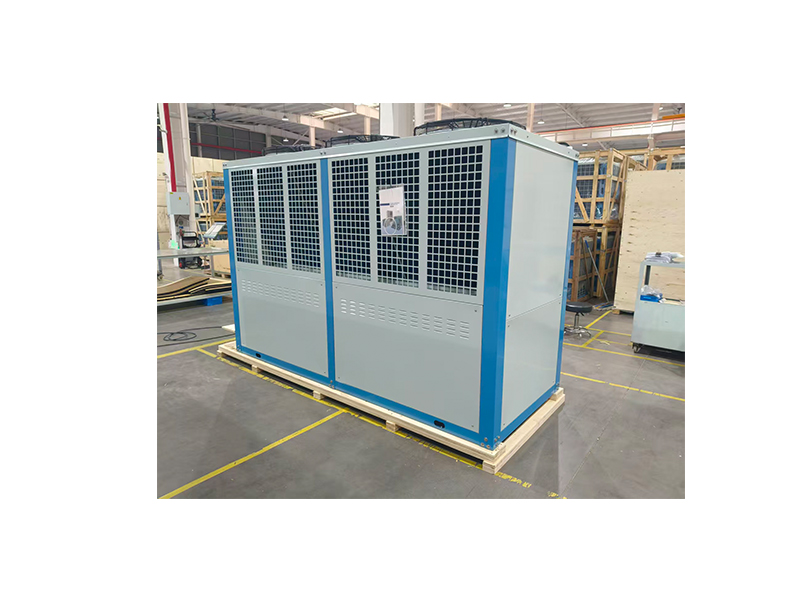

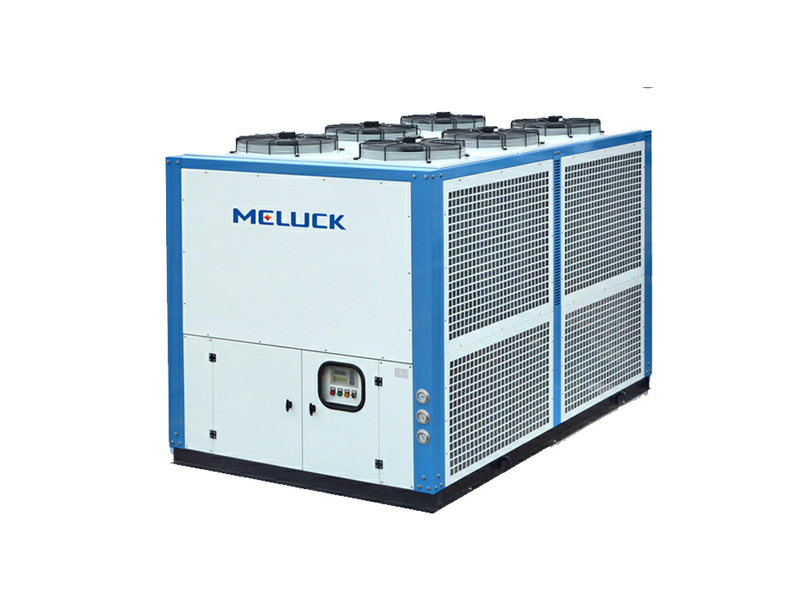
Most multi-zone projects stall at compressor selection because the load profile shifts between day and night. If you are selecting equipment for mixed chilled and frozen zones, email your room dimensions and product throughput to meluck@meluckcooling.com for a capacity check before you buy.
Insulation, Panels, and Envelope Design
The envelope determines how hard the refrigeration system must work. PIR cold room panels offer higher fire resistance and lower thermal conductivity than standard PUR panels, which matters in food plants where insurance and building codes are strict. Panel thickness typically increases from about 100 mm in chiller rooms to 150 mm or more in blast freezers and frozen storage.
| Envelope Element | Chiller Room | Freezer or Blast Freezer |
|---|---|---|
| Panel core | PUR or PIR, 100 mm | PIR, 120 to 150 mm |
| Floor insulation | Required where slab is exposed | Required, with vapor barrier |
| Door type | Manual sliding or swing | Insulated sliding |
| Air tightness | Gasket and sweep checks | Continuous gasket, thermal break |
Door selection affects both energy and workflow. A manual sliding door reduces floor obstruction and cold air loss in medium and large openings, while sectional doors suit high-traffic dock areas. Every opening adds infiltration load, so the zone load calculation must include realistic door cycles per shift.
Hygiene, Airflow, and Compliance Documentation
Multi-zone design is also a hygiene strategy. WHO food safety guidance emphasizes keeping raw and cooked products separated, maintaining cold temperatures, and limiting time in warm air [4]. In a multi-zone plant, airflow should move from clean to less-clean areas, condensate must drain away from product zones, and wall-floor junctions should be cleanable. Temperature controllers with alarm functions and automatic defrost records provide the documentation HACCP audits expect [1][2].
A compliant cold room does not rely on setpoint alone. Operators need daily temperature logs, deviation records, defrost timing, and maintenance checks that prove continuous control. When export inspection or buyer audits arrive, the zone map, setpoint list, and alarm history should tell the same story as the product temperature record.
Project Planning and Investment Logic
Multi-zone refrigeration costs more upfront than a single cold room, but the investment logic changes when product loss, rejection, and export failure are included. FAO has documented that weak cold chain infrastructure drives significant post-harvest and processing losses, particularly in markets where ambient temperatures are high and storage gaps force product into uncontrolled handling [5]. A plant that reduces spoilage by a few percentage points can recover the added equipment cost within a measurable payback period, especially when export buyers require documented temperature control.
Before committing to a build, define each zone's target temperature, daily throughput, batch size, door cycles, and peak summer ambient. Commissioning should verify pull-down time, holding stability, defrost recovery, and alarm response under load, not just at empty-room conditions. This is where a turnkey supplier with installation and training capacity reduces risk.
Plan your multi-zone cold room with equipment matched to the load. Send your process flow, zone map, and product throughput to Shanghai Meluck Refrigeration Equipment Co., Ltd at meluck@meluckcooling.com or +8617369893087. The engineering team supports installation, commissioning, and operator training abroad, with refrigeration products exported to more than 70 countries and a production base covering 130,000 square meters.
FAQ
What is the correct temperature for a food processing cold room?
The correct temperature depends on the zone. Chilled processing usually runs at 5°C to 12°C, chilled storage at 0°C to 4°C, blast freezing at -30°C to -40°C, and frozen storage at -18°C to -25°C. No single setpoint fits the entire plant [1][2].
How many temperature zones does a food processing plant need?
A basic plant may need four zones: receiving and pre-cooling, chilled processing, blast freezing, and frozen storage. Larger operations add ice storage, packaging rooms, and temperature-controlled staging. The zone count follows the process flow rather than a fixed formula.
What compressor type is used for blast freezing versus chilled processing?
Chilled processing typically uses semi-hermetic reciprocating condensing units in the 5 to 30 HP range. Blast freezers require low-temperature capacity or two-stage compression, often from 16 HP upward, with evaporation temperatures down to -45°C or lower [3].
Is PIR insulation worth the extra cost compared with PUR?
In food processing plants, PIR panels generally justify the cost because they provide higher fire resistance and lower thermal conductivity. The benefit is strongest in freezer and blast freezer envelopes where energy cost and building-code compliance are most sensitive.
How do I ensure cold room compliance for export markets?
Compliance requires zone-specific setpoints, continuous temperature monitoring, alarm records, defrost logs, and documented maintenance procedures. Buyers and inspectors expect the zone map and temperature history to match the product record [1][2].
References
[1] Codex Alimentarius Commission. General Principles of Food Hygiene, CXC 1-1969 (Rev. 2022). Rome: FAO/WHO.
[2] European Union. Regulation (EC) No 852/2004 on the hygiene of foodstuffs. Official Journal of the European Union.
[3] ASHRAE. ASHRAE Handbook: Refrigeration. Atlanta: American Society of Heating, Refrigerating and Air-Conditioning Engineers, 2022.
[4] World Health Organization. Five Keys to Safer Food. Geneva: WHO.
[5] Food and Agriculture Organization. Cold Chain Development for Food Loss Reduction. Rome: FAO.
If you're interested, check out these related articles:
Selecting a Condensing Unit for Tropical Climates
Cold Storage Project ROI: A Practical Financial Evaluation
Cold Room Projects in Thailand: Seafood and Fruit Cold Chain
With over 15 years of experience as a MELUCK refrigeration engineer, I specialize in the design of cold storage, chillers, ice makers, and cold chain energy-saving systems, providing technical support to distributors and engineering companies worldwide.

meluck