
Flake Ice Mine Cooling: Cut Heat Stress in Hot Mines
Deep underground mining pushes workers into environments where air temperatures regularly exceed 40°C, and heat stress becomes a daily safety and production bottleneck. Flake ice mine cooling offers a direct method to lower dry-bulb temperatures and reduce wet-bulb globe temperature (WBGT) at the working face. The real challenge isn’t producing ice — it’s sizing the system accurately, delivering ice where it’s needed, and integrating it with existing ventilation. From projects I’ve supported, a well-engineered flake ice plant can sharply reduce heat-related incidents, while an undersized unit makes almost no measurable difference. The divide is in the upfront engineering.
How Underground Heat Stress Affects Miners and Productivity
Heat stress in mines is not a comfort issue; it’s a safety and operational risk. When WBGT climbs above 28°C, worker alertness drops, core body temperature rises, and the probability of heat stroke escalates. In deep metal mines with geothermal gradients approaching 3°C per 100 meters, rock temperatures at the face can exceed 50°C. Ventilation alone — even with chilled air — often cannot keep WBGT within occupational exposure limits.
The direct costs show up in lost production time, increased accident rates, and long-term health claims. Mining operations that don’t address heat stress typically see a measurable decline in crew productivity during summer months or as workings deepen. Cooling the intake air is one part of the solution, but the real leverage comes from cooling the air and rock at the point of work. That’s where flake ice becomes useful: its high surface area and rapid phase change provide a high cooling density that chilled water or traditional ice types can’t match.
Why Flake Ice Outperforms Chilled Air and Chilled Water Alone
Three physical properties make flake ice more effective for mine cooling than alternative methods. First, flake ice has a latent heat of fusion of 334 kJ/kg, meaning each kilogram of ice absorbs 334 kilojoules of heat as it melts, beyond any sensible heat gain from sub-zero ice temperature. Second, the thin, flat shape maximizes surface area, so melting is fast and the cooling effect is delivered almost immediately when ice is placed in a forced air stream or mixed with water. Third, flake ice can be produced continuously on site with compact, automated machines that run independent of complex chilled water plant.
Compared to a chilled water system, which relies on a large refrigeration plant, cooling towers, and a network of insulated pipes, a flake ice plant simplifies the cooling loop: ice is produced at the surface, conveyed underground (typically pneumatically or by skip), and then melted in heat exchangers or directly into the ventilation air. That reduces the amount of insulated infrastructure that must be maintained underground. In mines where existing ventilation shafts cannot easily accommodate additional chilled water piping, ice conveying provides a drop-in cooling source.
Sizing a Flake Ice Plant for the Mine’s Cooling Load
The starting point for a flake ice plant is the total cooling load, in kilowatts-thermal, that must be extracted from the working areas. This load includes heat from rock strata (geothermal), machinery, blasting, and human metabolism. In a typical deep hard-rock mine, total heat load for a single production area may range from 500 kW to 2,000 kW, depending on depth and mechanization.
Ice production capacity is then calculated from the load using the latent heat of fusion, accounting for a 15–20 percent safety factor and melting efficiency. For example, a 1,500 kW cooling load requires roughly 4.5 metric tons of ice per hour, or about 110 tons of flake ice per day. The table below provides approximate capacity benchmarks for different mine scenarios.
| Mine Depth (m) | Heat Load per Section (kW) | Recommended Ice Plant (tons/day) |
|---|---|---|
| 1,000–1,500 | 500–800 | 50–70 |
| 1,500–2,000 | 800–1,500 | 100–140 |
| >2,000 | 1,500–2,500 | 180–250 |
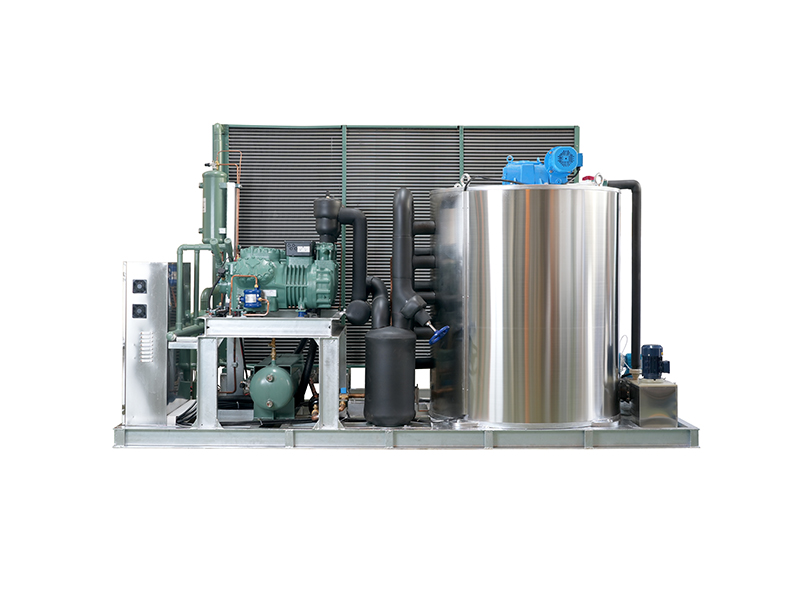
A common mistake I see in proposals is sizing the ice plant based on “rule of thumb” numbers that ignore water availability, the ambient temperature at the surface, and the actual delivery distance underground. For instance, a mine planning to sink a new ventilation shaft may have a much lower surface water temperature than one recycling all process water, which affects ice machine refrigeration efficiency. I always recommend running a site-specific load calculation before committing to a machine size.
If your mine has variable heat loads across different levels or seasonal swings, confirming capacity with a thermal survey avoids oversizing and unnecessary capital expense. Send your basic parameters — depth, number of workers per shift, primary heat sources — to meluck@meluckcooling.com and we’ll help you size a plant that matches real conditions, not just textbook estimates.
Integrating Flake Ice With Mine Ventilation and Water Systems
Once ice is produced at the surface, the next engineering step is conveying it underground. The most common method is a pneumatic ice transport system: ice is blown through a dedicated pipeline from the surface ice storage bin down to a melting chamber or directly into the ventilation airflow. These pipelines need to be sized to prevent blockages — a 150 mm diameter pipe can typically handle up to 10 tons per hour with the right air velocity.
At the delivery point, flake ice is either mixed directly with service water to produce chilled water for cooling sprays, or placed in an intake air chamber where ventilation air passes over the ice, cooling it before it reaches the working face. The latter method, while less efficient in terms of cooling distribution, avoids the complexity of underground pumping and is often preferred in smaller operations.
One constraint that’s easy to overlook is water chemistry. Surface water high in dissolved solids or hardness will scale the evaporator surfaces of the flake ice machine, reducing output and increasing defrost cycles. A water treatment step — even a simple reverse osmosis unit — significantly extends the machine’s operating window between cleaning and maintains ice production capacity over a 24/7 duty cycle, which is typical for mining.
Operating Challenges in the Mine Environment
A mining environment introduces specific operational stresses on flake ice equipment. Dust is the most persistent. Fine particulate from crushing and transport can contaminate the ice if the machine is located near ventilation raises or surface stockpiles. Placing the ice plant in an enclosed, slightly pressurized building helps, but regular cleaning of air-cooled condensers is still required.
Ambient temperature at the surface is another factor. Flake ice machines are rated for a specific condensing temperature range, often 35°C to 43°C ambient. In tropical or arid mining regions where surface shade temperatures exceed 45°C, the machine’s rated capacity drops. Our experience in high-ambient projects shows that selecting a machine with oversized condensers, or using a water-cooled condensing option, preserves nameplate ice output even during the hottest months.
Choosing a Flake Ice Machine Supplier for Mining Applications
Suppliers accustomed to food processing or retail ice applications often underestimate the durability and duty cycle required for mining. A flake ice machine in a mine may run 8,000 hours a year, often in dusty, high-temperature conditions. Key points to check include the evaporator shell material (stainless steel 304 or 316L for corrosion resistance with mine water), the compressor brand and warranty terms, and whether the control system supports remote monitoring — useful when the ice plant is located at a satellite site.
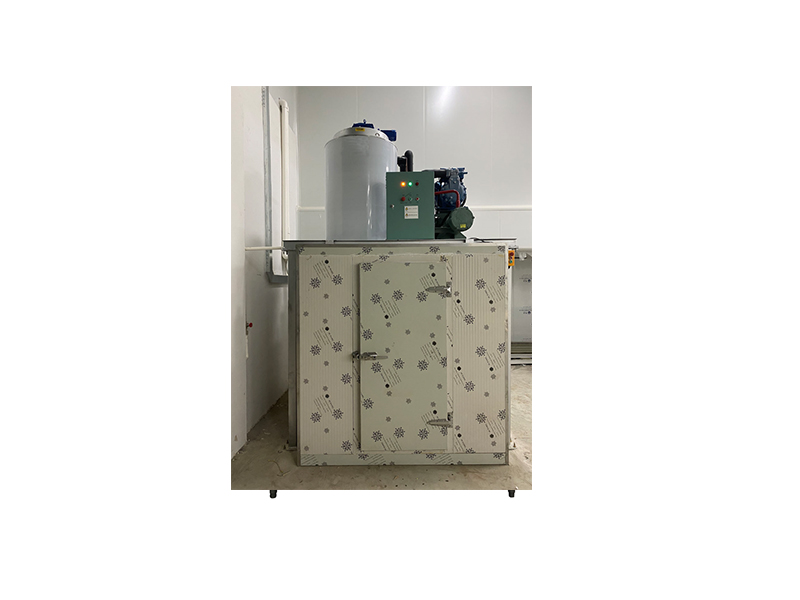
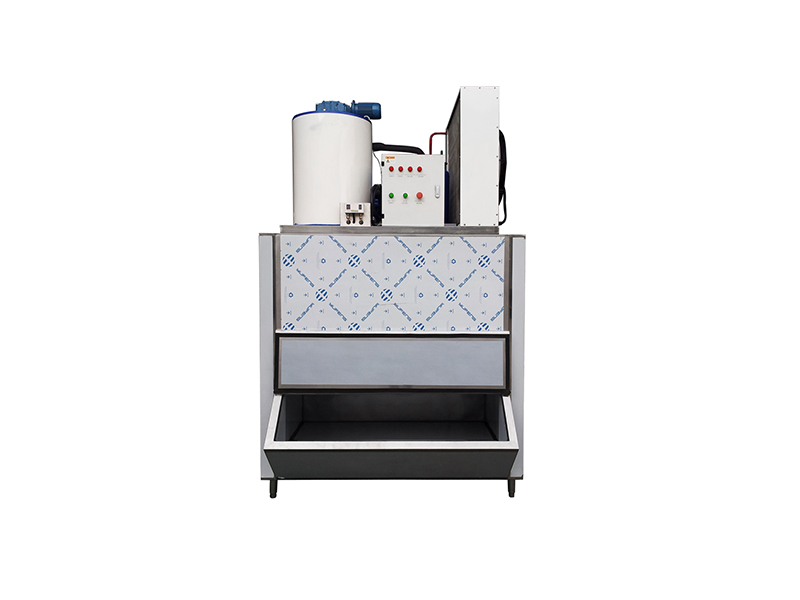
MELUCK’s flake ice machines range from 0.5-ton-day units for small-scale cooling up to 10-ton-day and larger systems that serve full mine sections. All machines use stainless steel evaporators and can be specified with Bitzer or Copeland semi-hermetic compressors, which are sealed units that tolerate vibration and dust better than open-drive designs. For mines where 24-hour operation is non-negotiable, we configure dual compressor or parallel systems to allow maintenance without shutting down ice production entirely.
Questions Mining Engineers Ask About Flake Ice
Does flake ice melt before it reaches the working face?
Melting loss in the transport pipeline is predictable and manageable. In a well-insulated pneumatic line, the melt fraction typically stays below 5 percent over a vertical distance of 1,000 meters. The key is sizing the ice as it leaves the plant — slightly larger, thicker flakes tolerate transport better than ultra-thin snow-like ice.
How does water quality affect ice machine life?
Hard water or high-TDS water accelerates scale formation on the evaporator and reduces heat transfer efficiency. A simple analysis of your site water (calcium hardness, silica, pH) can tell us whether pretreatment is needed. In most cases, a polyphosphate chemical injector or a small RO unit is sufficient to keep the evaporator clean.
Can flake ice be used with existing refrigeration equipment?
Flake ice machines are self-contained refrigeration systems; they don’t integrate directly with an existing chilled water plant. However, ice can supplement a chilled water system: ice is used for peak cooling loads while the central plant runs at a steady base load, reducing overall refrigeration capital cost.
What happens if the ice plant goes down?
For critical cooling, we recommend a parallel configuration: two smaller machines instead of one large one, so that half the capacity remains available during maintenance or failure. A backup diesel generator for the ice plant is also advisable in mines where power interruptions are common.
What’s the first step to evaluate flake ice for our mine?
Start with a heat load survey and a water quality analysis. Those two data points define everything else: machine size, conveying method, and whether water treatment is needed. Share your requirements with us at meluck@meluckcooling.com or call +8617369893087, and we’ll help you build a cooling plant specification that fits your mine’s conditions.
If you're interested, check out these related articles:
Freezer Room Solutions -25C~-18C - Meluck
Myanmar Potato Seed Cold Storage Project - Meluck
Blast Freezer Room Solutions -40C~-60C - Meluck
With over 15 years of experience as a MELUCK refrigeration engineer, I specialize in the design of cold storage, chillers, ice makers, and cold chain energy-saving systems, providing technical support to distributors and engineering companies worldwide.

meluck