
Cámara frigorífica para la miel: prevenir la cristalización y la fermentación
La miel cruda no es un producto frágil, pero sí es un producto de umbrales. Si la cámara de almacenamiento se desplaza hacia la franja de cristalización rápida, la miel se solidifica. Si la cámara es húmeda y los envases respiran, aumenta la humedad superficial y comienza la fermentación. Por lo tanto, una cámara frigorífica para miel tiene una sola función: mantener el producto fuera de esas condiciones dañinas y hacerlo sin oscilaciones de temperatura. Eso exige una especificación distinta de la de un enfriador de productos agrícolas general o una cámara congeladora.
Por qué la miel cruda necesita una cámara frigorífica
La miel cruda se mantiene estable cuando su actividad de agua se mantiene baja y la levadura permanece latente. La miel suele tener una actividad de agua de alrededor de 0,5–0,6, demasiado baja para que crezcan la mayoría de los organismos de deterioro [3]. El riesgo proviene de la capa superficial tras la absorción de humedad, no del interior de un bidón sellado.
The Codex honey standard permits up to 20% moisture for most honey, but processors who hold bulk raw honey for more than a few weeks usually prefer 17–18.5% because the margin protects against fermentation [1], [5]. When moisture rises or temperature climbs, osmophilic yeasts become active, producing carbon dioxide, alcohol, and a sour odor. A sealed cold room does not fix wet honey; it prevents normal losses by keeping temperature and humidity from crossing the thresholds that make borderline honey worse.
Honey Storage Temperature and Crystallization Control
The critical temperature rule is to avoid the 10–15°C band. Honey crystallizes most rapidly in that range, especially raw honey with a high glucose-to-fructose ratio such as canola, sunflower, and clover sources [2], [3]. A room that drifts to 12°C during defrost or door traffic can make graining worse than a warmer room while still using refrigeration power.
For long-term bulk storage, MELUCK commonly specifies a holding band of 4–7°C for sealed raw honey when fermentation control is the priority. This low-temperature hold reduces yeast activity and slows darkening, but it increases viscosity. Operators should plan for a warming room or drum heater at 35–40°C before bottling; temperatures above 45°C should be avoided because they can damage enzymes and accelerate HMF formation [4].
If the honey is already at 17% moisture or lower and will be bottled within two weeks, a dry 20–25°C storage room is often more practical than a cold room because the product remains pumpable and can be moved directly to the bottling line.
Garlic storage shares honey's sensitivity to condensation and surface moisture. <Cámara frigorífica para ajos: control de humedad y temperatura> covers humidity control strategies for long-term preservation.
Humidity Control: The Bigger Threat
Honey is hygroscopic. In coastal climates or a cold room with frequent door openings, exposed honey or loose drum lids can absorb moisture from the air. The absorbed water dilutes the surface layer and can restart fermentation even in a cool room. For that reason, the room should be held below 65% relative humidity, with 50–60% as the practical target for sealed bulk storage. Air-cooling equipment is only part of the answer; the vapor barrier in the panels, door gaskets, and floor sealing matter just as much as the compressor.
Temperature-sensitive commodities such as green coffee need similarly tight humidity control in tropical storage environments. <Almacenamiento de café verde: control de temperatura y humedad> covers the preservation envelope that protects flavor-sensitive stocks.
Cold Room Design and Refrigeration Selection
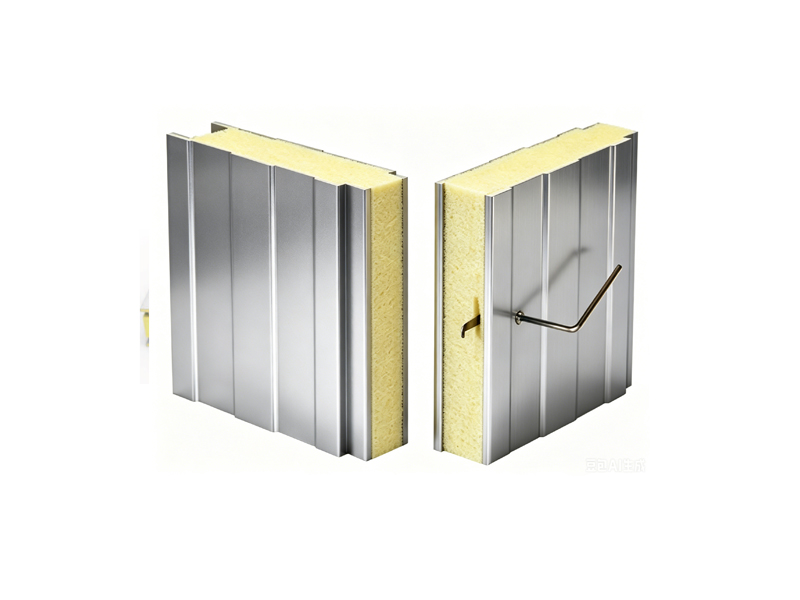
A honey cold room normally runs at chiller-side temperatures, so 100 mm PU or PIR panels are generally sufficient for the thermal load in most climates. The panel selection matters less for deep freezing than it does for preventing condensation on the inner face. Use panel joints with a proper vapor seal, insulated door frames, and a low-leakage door arrangement.
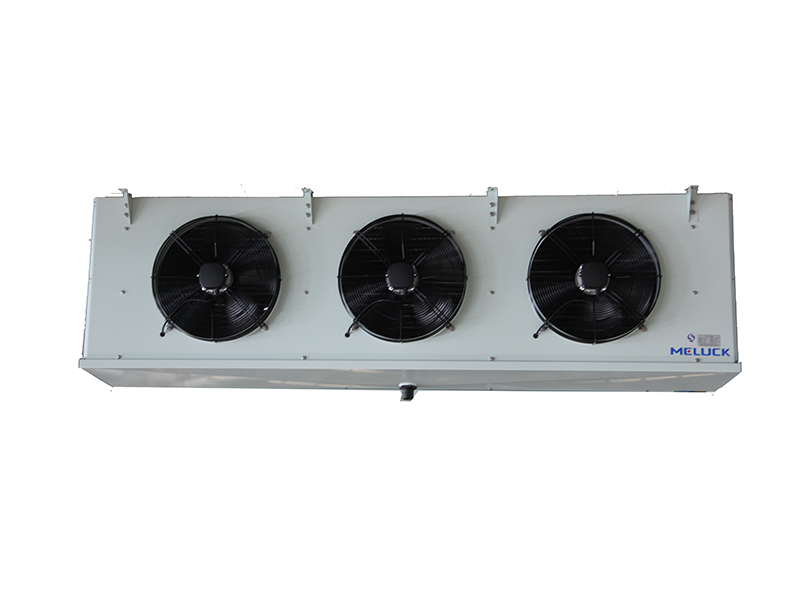
Select a chiller-rated air cooler with a temperature difference matched to the room, not a high-delta-T freezer evaporator. The goal is steady air movement that keeps the room uniform without stripping moisture from exposed product surfaces. Low-velocity, high-air-change designs work better than a small evaporator blowing a cold jet across the room.
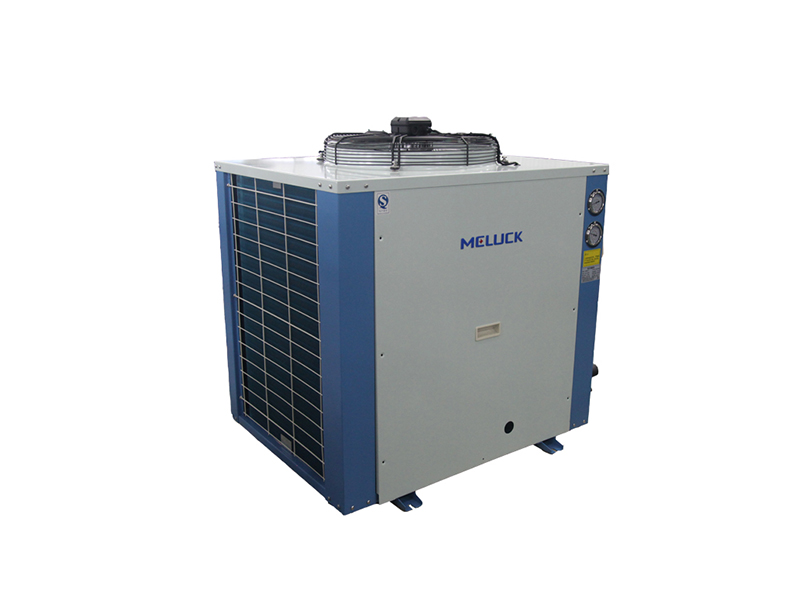
The refrigeration system should be sized for the room's pull-down requirement and for the amount of honey brought in warm. For small to medium honey drum rooms, a 3HP medium-temperature condensing unit is often the starting point, but capacity must be checked against drum mass, inlet temperature, and local ambient conditions. The control system should maintain the chosen setpoint without frequent defrost swings, and it should alarm on high or low temperature.
Bulb crops such as onion need similarly low-humidity, high-air-change designs to prevent spoilage in tropical cold rooms. <Ventilación en el almacenamiento en frío de cebollas: cómo prevenir el deterioro> covers ventilation rates that protect moisture-sensitive stored product.
Specifying a honey cold room starts with four data points: room size, drum or bucket count, honey moisture content, and target storage window. Email meluck@meluckcooling.com or call +8617369893087 with those details and the design team can recommend a matched panel thickness, evaporator, and condensing unit for your climate and power supply.
Daily Operation and Quality Protection
Daily operation should focus on recording temperature and humidity, checking door gaskets, and limiting warm-product addition. Add honey in small batches after pre-cooling if possible; adding a full load of 35°C drums to a 5°C room is a moisture and temperature swing event. Keep raw honey in food-grade airtight drums or sealed buckets and never store honey with onions, garlic, fuel, or strong-smelling produce because honey picks up odors quickly.
Defrost management matters. Electric or hot-gas defrost should be short enough to avoid raising room temperature into the 10–15°C crystallization band. Warm honey gently at 35–40°C only when it needs to be returned to liquid; higher temperatures hurt quality.
Ready to Specify a Honey Cold Room?
MELUCK builds honey storage rooms as part of wider cold chain projects, supplying the panel envelope, chiller air coolers, air-cooled condensing units, controls, and installation support. To get a focused recommendation, prepare the following before contacting us:
- Storage capacity and room dimensions
- Honey form: sealed drums, buckets, comb honey, or bottles
- Current moisture content and target storage period
- Site ambient temperature range and power frequency
Email meluck@meluckcooling.com or call +8617369893087 for equipment selection and cold room layout review.
Preguntas frecuentes
Should raw honey be stored in a cold room?
A cold room is useful for bulk raw honey when the main goal is to suppress fermentation and slow quality loss during long holding periods. For honey that will be bottled within days, a dry room at 20–25°C is often more practical because the product remains pumpable.
What temperature should a honey cold room maintain?
For long-term fermentation control, a setpoint of 4–7°C is common for sealed bulk honey. Avoid the 10–15°C range, where crystallization is fastest. Reserve 20–25°C for short-term, low-moisture ready-to-pack honey.
Does cold storage stop honey crystallization?
It slows crystallization when the room stays below the fast-crystallization band, but cold storage alone does not permanently prevent graining. Honey may still granulate slowly over months; it will need gentle warming before bottling.
What humidity level is safe for honey cold rooms?
Keep the room below 65% relative humidity, preferably 50–60%, and keep containers closed. Honey absorbs moisture quickly in humid air, and surface dilution can trigger fermentation in barrels with loose lids or damaged liners.
Can a walk-in chiller designed for vegetables be used for honey?
Only after checking three points: it must hold outside the 10–15°C band without frequent defrost swings, the door and panels must limit condensation, and the room must not be shared with strong-smelling produce that can taint honey. A dedicated room is usually safer.
Referencias
[1] Codex Alimentarius, “Standard for honey,” CODEX STAN 12-1981. [Online]. Available: https://www.fao.org/fao-who-codexalimentarius/codex-texts/list-standards/en/
[2] S. Bogdanov, “Honey as Nutrient and Functional Food,” Bee Product Science, 2016. [Online]. Available: https://www.bee-hexagon.net/honey/honey-as-nutrient-functional-food/
[3] J. W. White, Jr., “Physical characteristics of honey,” in Honey: A Comprehensive Survey, E. Crane, Ed. London, UK: Heinemann, 1975, pp. 207–239.
[4] FAO, “Honey processing,” in Beekeeping in the Tropics. Rome, Italy: Food and Agriculture Organization, 1990. [Online]. Available: https://www.fao.org/4/x5049e/x5049e00.htm
[5] European Union, “Council Directive 2001/110/EC relating to honey,” Off. J. Eur. Communities, L 10, 2002. [Online]. Available: https://eur-lex.europa.eu/legal-content/EN/TXT/?uri=CELEX:32001L0110
Si le interesa, consulte estos artículos relacionados:
Cámara frigorífica para empresas de catering: opciones portátiles frente a fijas
Proyecto de cámara frigorífica en EAU: equipos para el procesamiento de alimentos
Compresor Bitzer de dos etapas para cámaras frigoríficas de temperatura ultrabaja
Con más de 15 años de experiencia como ingeniero de refrigeración de MELUCK, me especializo en el diseño de almacenamiento en frío, enfriadoras, máquinas de hielo y sistemas de ahorro energético para la cadena de frío, y presto soporte técnico a distribuidores y empresas de ingeniería de todo el mundo.

meluck