
Remote Monitoring for Cold Rooms: Reduce Downtime and Loss
Remote monitoring for cold rooms turns a refrigeration system from something you check into something that tells you when it is beginning to fail. The real value is not the temperature displayed on a phone. It is the sequence of early warnings that arrives before product temperature rises. A high discharge pressure, a door left open, an incomplete defrost, a phase loss, or a compressor that cycles too often can all be detected while the room is still cold. That gives an operator time to act before stock is lost and before a small electrical or mechanical fault becomes a major repair.
What Cold Room Remote Monitoring Actually Controls
Remote monitoring is often sold as a temperature screen, but the most useful systems monitor the refrigeration circuit around the cold room. Room air temperature is a lagging indicator because the thermal mass of stored product changes slowly. The condensing unit and evaporator start to show stress earlier. A practical system reads compressor running status, suction and discharge pressure, evaporator fan operation, defrost progress, door position, and power supply condition. With those signals, an alarm can distinguish a routine defrost from a cooling failure and reduce false alerts.
| Channel | What it reveals | Early-warning value |
|---|---|---|
| Room air or return air temperature | Whether the room is holding the target set point | Confirms actual storage conditions, but may lag product core temperature |
| Product or simulated product temperature | The temperature the stored goods experience | Catches slow warming before air temperature rises enough |
| Discharge pressure | Condenser heat rejection and high-side load | Can show blocked condenser or fan failure before the room warms |
| Suction pressure | Evaporator load and refrigerant side condition | Can reveal low charge, ice build-up, or a failing expansion device |
| Door open state | Traffic and air infiltration | Identifies avoidable heat and moisture gain if a door is left open |
| Defrost status and fan current | Evaporator ice removal and airflow | Prevent incomplete defrost and blocked airflow from reducing capacity |
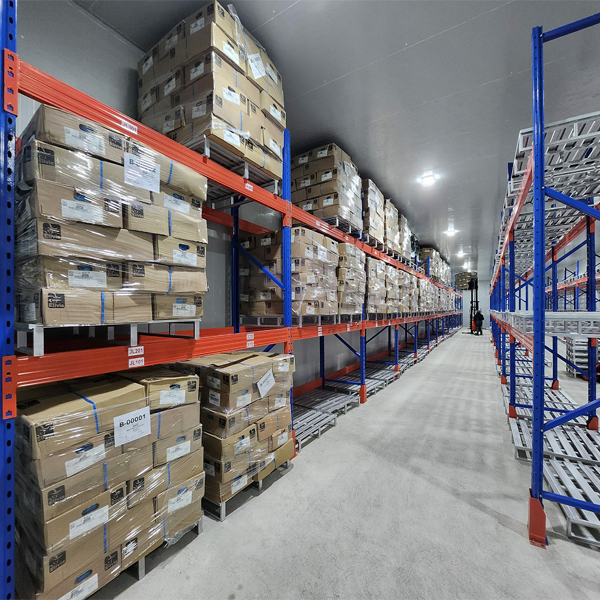
For a freezer room running at -18C to -25C, the sequence matters because product may have hours of thermal buffer. In a multi-zone seafood project with blast freezing, frozen storage, ice storage, and processing rooms, each zone needs different alarm limits. A single high-temperature rule creates false alarms in one room and misses a real fault in another.
How Smart Alarms Prevent Product Loss Before It Starts
Most product loss follows a chain of events. A condenser fan fails, discharge pressure rises, the compressor trips on high pressure, air temperature begins to rise, and only then does the storekeeper notice the problem. Remote monitoring shortens that chain at the first measurable point. The system sends a warning when discharge pressure exceeds the normal band for that ambient temperature, not only when the compressor has already stopped. This is the difference between a planned service call and an emergency.
Alarm levels should be tiered. A warning means a parameter has left the normal band but product is safe. A critical alarm means cooling has stopped, the room has crossed a food safety threshold, or power protection has operated. Warnings can go to the maintenance team by app or email. Critical alarms should also reach the site manager or on-call technician by SMS or phone. The contact list is part of the design, not an afterthought.
For freezer and blast freezer rooms holding export product, the alarm delay tolerance is short. Rapid temperature rise in a -25C frozen storage room may give more time than a blast freezer at -35C, but both need response plans and a spare-parts decision before an alarm arrives.
A monitoring upgrade is more valuable when the stored product is high value or export sensitive. <Freezer Room Solutions -25C~-18C> covers temperature and equipment choices for stable frozen storage rooms.
Sensor Placement and Data Quality
Placement changes what the data means. An air temperature sensor mounted near the door reads infiltration, not the average room. One mounted in the evaporator return air reads the room load. Product temperature simulation may use a probe in a container or a sensor embedded in the package. For high-value cargo, product core temperature is the safest acceptance point because air temperature can look acceptable while the center of the product remains too warm after a defrost or door opening.
Data quality also depends on recording, not just display. A system that only shows current values helps while someone is watching. A system that stores trend data helps after an incident, during a food safety audit, or when comparing energy use between shifts. The log should include timestamps, set points, actual values, alarm acknowledgements, and user actions. Without those fields, a temperature record proves less than it should.
Remote Access and PLC Control Options
Remote monitoring can be added in three ways. A standalone gateway can read the existing temperature controller or refrigeration controller through RS485, Modbus, or dry contacts and send data to a cloud platform. Factory-integrated PLC control is available on larger condensing units, where the compressor package already manages start-up, safety inputs, and operating hours. A third-party central controller can also be connected to existing probes and contactors, but it needs careful mapping so remote commands cannot override local safety switches.
Integration is strongest when the condensing unit reports its own data. In the MELUCK product range, for example, a Bitzer screw compressor condensing unit for low-temperature, large-capacity use can include a PLC touchscreen with optional remote monitoring, while parallel piston compressor packages use PLC intelligent control for staged capacity. That makes the remote platform a window into the same operating data the compressor controller already sees, rather than a separate set of add-on sensors.
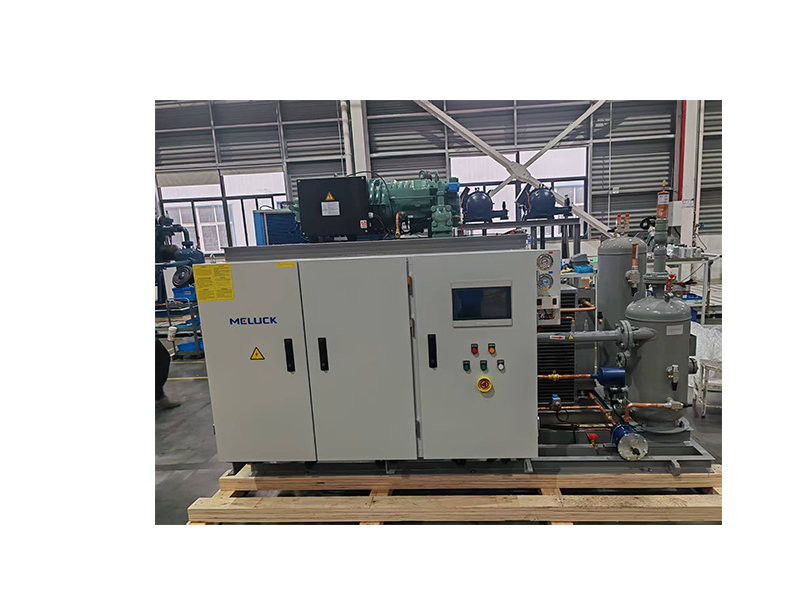
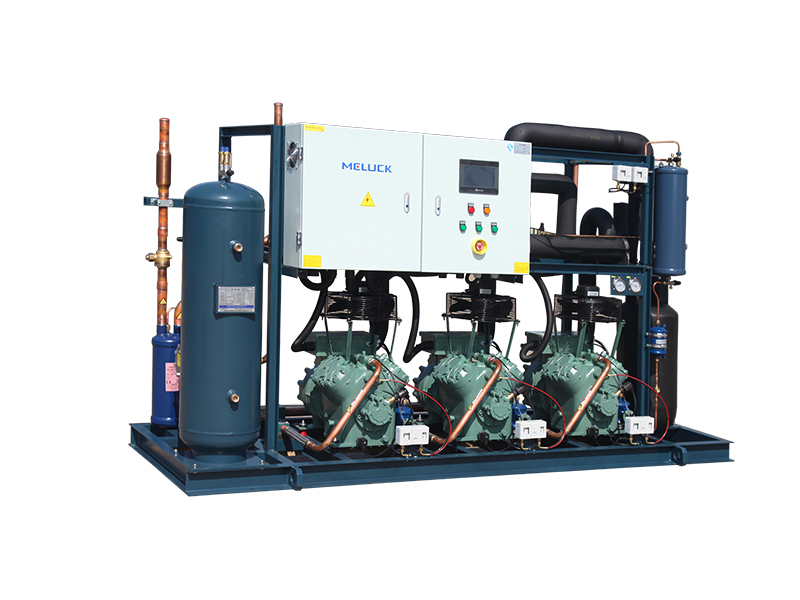
For most food storage sites, the practical interface is Modbus RTU or TCP, or a 4G gateway where local internet is not stable. Remote access should be one-way or permission-limited for control actions. Alarms and readings can be shared freely, but starting or stopping compressors from outside should require stronger authentication and should never bypass high-pressure, low-pressure, or refrigerant leak safety circuits. The most cost-effective upgrade often starts with monitoring only, then adds remote control after the operator validates the data.
How to Choose a New or Retrofitted System
Begin with the existing controller and condensing unit, not with a software demo. If the room already has a modern electronic controller with RS485 or Ethernet, a gateway may be enough. If the controller is electromechanical, the retrofit may need new sensors and an alarm module. If the site is going through a new compressor selection, factory-integrated monitoring can be included from the start and reduces wiring and compatibility work.
| Setup | Typical fit | Main limitation |
|---|---|---|
| Controller with RS485 or Modbus | Existing electronic controller | Retain controller and add a gateway |
| Standalone gateway with own sensors | Older or mechanical control | More wiring, but independent of the legacy panel |
| Factory-integrated PLC | New condensing unit or large multi-compressor package | Requires matching equipment selection |
| Cloud logger plus manual checks | Small single-room site with stable internet | Limited local alarm if the network fails |
Select alarm behavior as a specification, not as a feature. Define how many warning levels, who receives each level, how alarms are acknowledged, and what happens when power or network fails. A battery-powered alarm dialer or local siren should cover the period after a power failure. If the site has a generator, the monitoring system should share that backup circuit.
Existing equipment condition also matters. A monitoring package cannot correct a condensing unit with poor airflow or a freezing evaporator, but it can reveal those conditions earlier. The condensing unit should remain accessible for cleaning and service so the monitored pressures reflect stable operating conditions.
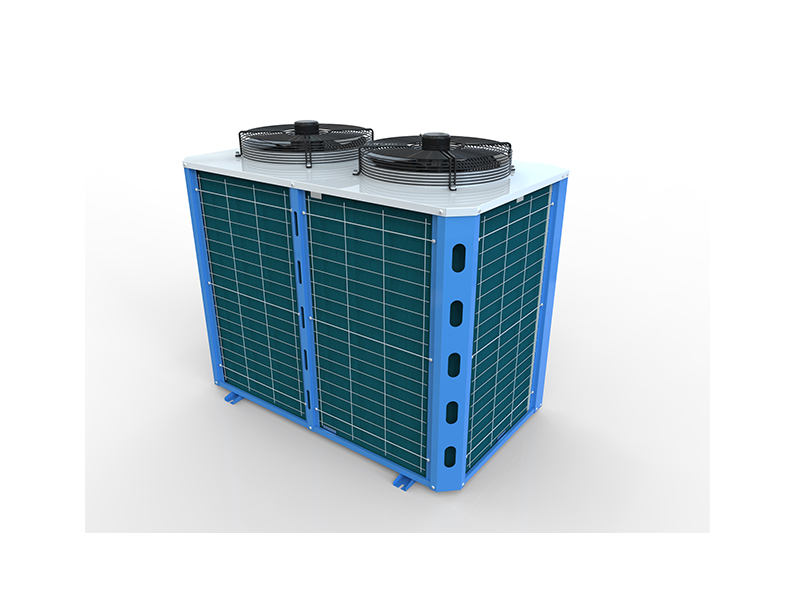
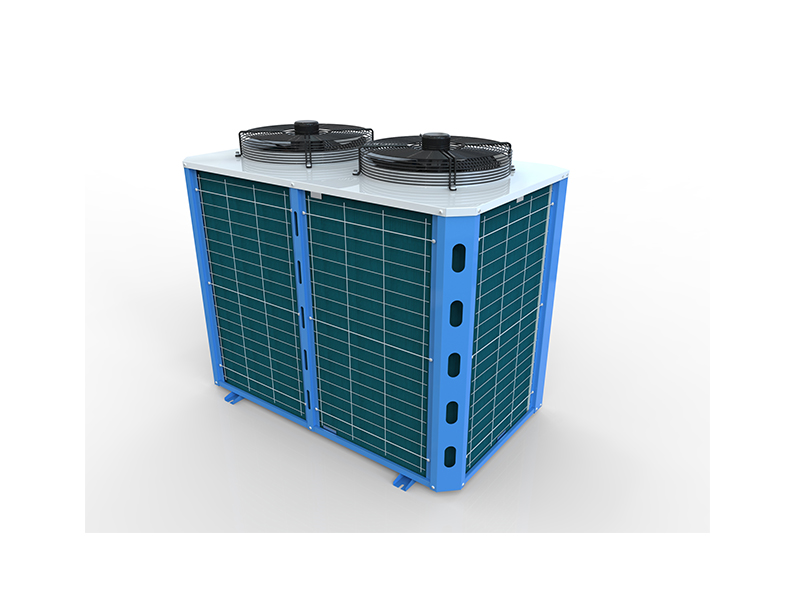
A remote monitoring system is only as reliable as the condensing unit it is connected to, including clearance around the unit for stable head pressure and service access. <Condensing Unit Installation Clearance: Key Spacing Rules> covers spacing rules that help condensing units run within predictable limits.
Questions to Ask Before Buying a Monitoring System
Treat remote monitoring like any other refrigeration control component and ask for the failure behaviour. A specification should answer these questions. Which inputs generate a warning, and which generate a critical alarm? Does the device store historical data locally if the network drops? Can it send SMS directly without cloud internet? Is the alarm output battery-backed? Which staff receives each alarm tier, and how is the contact list updated? Can the system record alarm acknowledgement time? These details determine whether the system works during the exact conditions when it is needed, which are often power interruptions and after-hours faults.
Payback is usually easier to calculate when one event is considered. A single product loss from a failed compressor, a long door opening, or an unnoticed power problem can exceed the cost difference between a display-only controller and a monitored system. In a food export cold store with multiple zones, preventing one mixed temperature deviation may also prevent rejected stock or a delayed shipment.
A monitoring upgrade is easier to justify when the loss it prevents is tied to product value and delivery risk. <Cold Storage Project ROI: A Practical Financial Evaluation> covers a practical financial evaluation method for cold storage investment and operating risk.
Plan Your Remote Monitoring Retrofit
Name the room temperature set point, stored product, existing condensing unit and controller model, door schedule, and whether the site has stable internet, GSM signal, or a generator. From that information, the engineering team can confirm whether a standalone gateway, controller upgrade, or factory-integrated PLC is the lower-risk path. Send the details to the MELUCK refrigeration engineering team at meluck@meluckcooling.com or call +8617369893087 for a focused recommendation without treating remote monitoring as a separate system from the refrigeration package.
FAQ
What is the difference between a temperature controller and remote monitoring?
A temperature controller keeps the room at the set point and may include a local alarm. Remote monitoring collects, transmits, stores, and escalates operating data from the controller or from separate sensors so the right person can respond from another location.
Can remote monitoring work when internet is unstable?
Yes, but not if the system depends only on a cloud connection. Look for local data logging, a 4G gateway, or a battery-backed alarm dialer that can send SMS without internet. The alarm path should continue to work during a network outage and after a power failure.
Does remote monitoring replace manual checks?
No. It reduces response time and creates a continuous record, but it does not replace visual checks for oil leaks, ice build-up, door seal damage, unusual noise, or blocked condenser airflow. Manual checks remain useful, especially for conditions a sensor cannot read.
What is the minimum setup for a small cold room?
A practical minimum is an electronic controller with high and low temperature alarms, a battery-backed alarm dialer or 4G unit, and a defined contact list. A small room can start with temperature monitoring and add pressure, door, and compressor status inputs as the business and risk level grow.
If you're interested, check out these related articles:
Cold Storage Financing in Emerging Markets: Leasing Guide
Flake Ice for Chemical Reactor Cooling: Flow & Hygiene
Cold Room for Chocolate Distribution: Bloom Prevention Guide
With over 15 years of experience as a MELUCK refrigeration engineer, I specialize in the design of cold storage, chillers, ice makers, and cold chain energy-saving systems, providing technical support to distributors and engineering companies worldwide.

meluck