
Скороморозильный аппарат IQF для переработки сыра и молочных продуктов: ключевые характеристики
Для производителей сыра индивидуальная быстрая заморозка (IQF) — это не просто продление срока хранения. Речь идёт о сохранении текстуры, влаги и подлинности продукта. А скороморозильный аппарат IQF для сыра и молочных продуктов замораживает каждый кусочек отдельно, не давая кубикам чеддера, палочкам моцареллы или тёртому сыру слипаться в комки и сохраняя их форму и текстуру во рту. Выбор правильного оборудования означает понимание того, как скорость замораживания, воздушный поток и производительность взаимодействуют с конкретным типом сыра. Как инженер-рефрижераторщик, работавший над систем холодовой цепи для производителей пищевой продукции по всему миру, могу сказать, что разница между успешной линией IQF и линией, ухудшающей качество продукта, сводится к техническим деталям выбора и интеграции морозильного оборудования, а не только к названию бренда.
Как работает IQF-замораживание сыра?
IQF, или индивидуальное быстрое замораживание, быстро замораживает отдельные кусочки сыра в потоке холодного воздуха, так что они остаются раздельными и сыпучими. Туннельный IQF-морозильник транспортирует кубики, палочки или тёртый сыр по перфорированной ленте, пока холодный воздух с высокой скоростью проходит через зону продукта, обычно при температуре от -30 °C до -40 °C. высокая скорость замораживания образует мелкие кристаллы льда внутри сырной матрицы, что защищает клеточную структуру и минимизирует миграцию влаги. Это критически важно для сыра, поскольку при более медленном замораживании крупные кристаллы льда разрывают белковую сеть, что приводит к ухудшению текстуры и потерям влаги после размораживания. Морозильники IQF с кипящим слоем идут дальше, взвешивая более мелкие кусочки в восходящем воздушном потоке и создавая движение, подобное кипению, которое замораживает отдельные частицы без контакта с лентой. Для продуктов из плавленого сыра, которые часто содержат эмульгаторы и имеют различную влажность, метод замораживания должен соответствовать размеру, плотности и активности воды продукта, чтобы сохранить его функциональные свойства.
Почему IQF критически важно для качества плавленого сыра?
Продукты из плавленого сыра сталкиваются с уникальными проблемами при замораживании. Палочки моцареллы, кубики сыра и тёртые смеси содержат влагу и жировые эмульсии, чувствительные к перепадам температуры. Обычный медленный морозильник вызвал бы слипание, повреждение поверхности и потери влаги при размораживании сыра. IQF предотвращает эти проблемы, замораживая каждый кусочек независимо, благодаря чему продукт сохраняет свою форму, вес и сенсорное качество. Для экспортёров молочной продукции и производителей пищевых продуктов это означает более высокий выход, меньше отклонённых партий и довольных конечных потребителей. В одном из наших проектов в области холодовой цепи — правда, для другого продукта — быстрое снижение температуры сократило дефекты качества примерно с 15 % до менее 4 %. Мы наблюдаем аналогичную картину всякий раз, когда быстрое замораживание применяется к продуктам с высоким содержанием влаги. Сыр не исключение: более быстрое замораживание даёт лучшую текстуру и более длительный срок годности.
Как выбрать туннельный IQF-морозильник для переработки сыра?
Выбор подходящего туннельного IQF-морозильника начинается с трёх параметров: тип продукта, требуемая производительность и заданная температура. Для сыра производительность обычно измеряется в килограммах в час. Небольшому заводу может потребоваться 300 кг/ч, а крупному переработчику — несколько линий. Учитывайте физические размеры продукта. Сырным палочкам требуется больше времени на ленте, чем мелкой стружке, поэтому время пребывания и скорость ленты становятся критичными. Длина туннеля и скорость воздушного потока должны соответствовать характеристикам замораживания продукта.
Ниже приведено сравнение двух распространённых типов IQF-морозильников, используемых для переработки сыра и молочных продуктов.
| Характеристика | Туннельный IQF-морозильник (например, IQF-300KGS) | Быстрозамораживающий аппарат с кипящим слоем |
|---|---|---|
| Метод замораживания | Перфорированная лента с высокоскоростным холодным воздухом | Восходящий воздушный поток удерживает частицы во взвешенном состоянии |
| Оптимально для | Стружка, палочки, кубики, кусочки неправильной формы | Small, uniform particles (e.g., grated cheese) |
| Throughput range | Up to 300 kg/h (scalable) | Higher volumes for granular products |
| Product handling | Gentle, minimal mechanical stress | Fluidization may cause abrasion in soft products |
| Typical application | Cheese cubes, mozzarella sticks | Fine shreds, diced cheese |
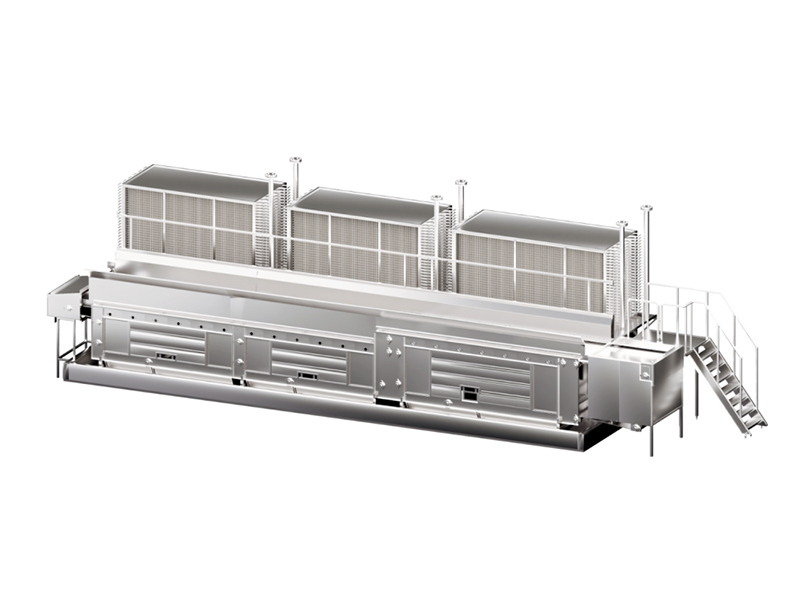
For processed cheese lines, a tunnel IQF freezer with adjustable belt speed and dual-temperature zones is often the best match because it provides the necessary control over dwell time and freezing intensity without risking product clumping.
If your production involves multiple cheese shapes and sizes, reaching out to determine the correct belt configuration and airflow design can prevent costly mistakes. You can send your product specifications to meluck@meluckcooling.com, and we’ll help you evaluate the right freezer parameters before you finalize your BOM.
How Do You Integrate an IQF Freezer into Your Dairy Processing Line?
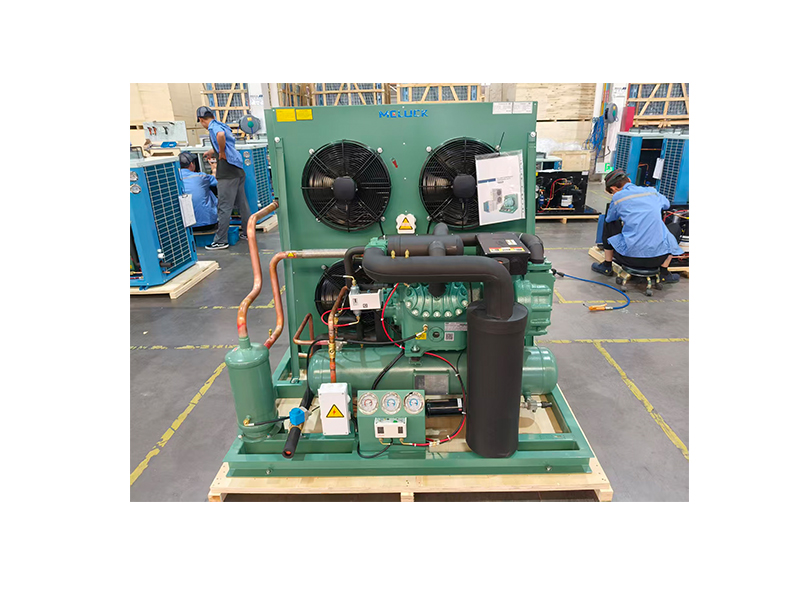
Integration should be viewed as part of the overall cold chain, not an isolated machine. The IQF freezer sits immediately after the forming or shredding station. Upstream, the cheese must be at a consistent temperature (typically 2–4 °C) to avoid a large heat load. Downstream, the frozen cheese drops directly into a cold storage room or packing area maintained at below -18 °C. The transfer between stations must be short and, ideally, enclosed to minimize heat infiltration. The condensing unit supplying the IQF freezer needs enough capacity for the peak load during startup pull-down. We often specify two-stage Bitzer semi-hermetic condensing units for tunnel freezers that operate at -35 °C or lower, because single-stage compression becomes inefficient and unreliable at those evaporating temperatures. A properly selected system also handles defrost cycles without affecting line speed.
What Are the Energy and Maintenance Requirements for IQF Freezers?
Energy consumption in an IQF tunnel freezer is driven by three factors: refrigeration compressor efficiency, insulation quality, and defrost frequency. Using a two-stage compressor with economizer can reduce annual electricity costs by 15–20 % compared to a standard single-stage unit at the same deep-freeze temperature. For maintenance, daily checks include belt alignment, airflow uniformity, and refrigerant charge verification. Frost accumulation on evaporator coils reduces heat transfer efficiency and must be managed with scheduled hot gas or electric defrost cycles. Food-grade lubricants and stainless steel construction on all food-contact surfaces simplify cleaning and meet HACCP requirements. In my experience, a well-maintained tunnel IQF freezer can run trouble-free for years with only periodic belt replacement and compressor oil changes.
How to Calculate IQF Freezer Capacity and ROI
Capacity calculation starts with the daily production volume. Determine how many kilograms of cheese you need to freeze per hour. Account for packaging and shift patterns. For example, if you produce 2,000 kg of cheese cubes per 8-hour shift, you need at least 250 kg/h throughput, with some buffer for startup and defrost time. Then calculate the heat load: the product's sensible heat above freezing, latent heat of fusion, and sensible heat below freezing. This determines the required refrigeration capacity and influences compressor selection. ROI comes from reduced product loss, improved export compliance, and labor savings. I have seen processors recover the additional cost of an IQF system over a conventional freezer within two to three years, purely through yield improvement and lower rejection rates.
Next Steps for Your IQF Cheese Processing Project
Getting the IQF freezer right is one of the most impactful investments a cheese processor can make. The wrong equipment leads to clumping, texture damage, and compromised export quality. The right one preserves product integrity and opens new markets. We have delivered integrated IQF freezing solutions for food processors across multiple continents, and we understand that each dairy product brings its own set of requirements. If you are planning a cheese IQF line, share your production capacity, cheese type, and desired throughput requirements with us. We will recommend a tunnel freezer configuration that matches your site conditions and budget. Reach out at meluck@meluckcooling.com or call +8617369893087.
Common Questions About IQF Cheese Freezing
Does IQF freezing damage cheese texture?
Not when done correctly. The rapid temperature drop forms tiny ice crystals that do not rupture the protein matrix, so the cheese retains its original texture after thawing. Damage occurs only when freezing is too slow or storage temperatures fluctuate. We have validated this principle repeatedly in projects where fast-freeze technology preserved delicate food structures, from french fries to avocado pulp.
What capacity IQF freezer do I need for cheese processing?
It depends on your daily throughput and number of shifts. For a small-to-medium processor, a 300 kg/h tunnel freezer is often sufficient, but if you run multiple lines or 24/7 production, larger or parallel units may be needed. Calculate your peak hourly output and add 20 % buffer for defrost cycles and production surges. Our engineers can help you size the system if you send your target production numbers.
Can I use a blast freezer instead of an IQF for cheese?
A blast freezer freezes cheese in bulk and causes pieces to freeze together, which then requires mechanical separation and often damages product integrity. IQF freezes each piece separately, preserving shape and free-flow characteristics. For cheese cubes, sticks, and shreds intended for retail or food service, IQF is the standard. Blast freezing is better suited for large blocks or raw material that will be further processed.
How much energy does an IQF tunnel freezer consume?
Energy consumption varies with freezing temperature, compressor type, and insulation. A typical 300 kg/h tunnel IQF freezer running at -35 °C with a two-stage Bitzer condensing unit might draw 60–80 kW. Using high-efficiency compressors and proper panel insulation can reduce this significantly. Annual electricity cost depends on local rates and operational hours, but our designs aim to return the investment through lower operational expenses within a few years.
How do I maintain food safety with IQF cheese freezing?
Follow HACCP principles: monitor air temperature continuously, record product core temperatures at regular intervals, and enforce cleaning schedules. Use stainless steel food-contact surfaces and food-grade lubricants. The system must be designed for easy access around the belt and evaporator for cleaning and inspection. If your program involves export to strict regulatory markets, it is worth confirming compliance documentation with your equipment supplier. Share your requirements and we’ll confirm available compliance documentation.
Если вам интересно, ознакомьтесь с этими статьями по теме:
Решения для шоковых морозильных камер -40C~-60C - Meluck
Мультитемпературный проект холодильного хранения в Эквадоре - Meluck
Предварительное охлаждение и холодильное хранение авокадо в Перу — Meluck
Решения для цехов пищевых производств - Meluck
Проект холодильного склада для картофеля фри в Египте - Meluck
Имея более чем 15-летний опыт работы инженером по холодильному оборудованию MELUCK, я специализируюсь на проектировании холодильных складов, чиллеров, льдогенераторов и энергосберегающих систем холодовой цепи, обеспечивая техническую поддержку дистрибьюторам и инжиниринговым компаниям по всему миру.

meluck