
Холодильное хранение фиников: температура и влажность для долгосрочного сохранения
Подбор правильных условий хранения для фиников — это не просто вопрос настройки термостата. Разница между плодами, которые месяцами сохраняют свою текстуру, цвет и рыночную стоимость, и плодами, которые тихо бродят или кристаллизуются на складе, часто сводится к тому, насколько точно температура и влажность сбалансированы с собственной дыхательной активностью плодов при сборе урожая. Дэвид Чжан (David Zhang), инженер по промышленному холодильному оборудованию, который вводил в эксплуатацию холодильным камерам в нескольких климатических зонах, объясняет, что большинство случаев порчи при хранении, которые он расследовал, восходят к одной из двух корневых причин: целевая влажность скопирована с универсальных условий хранения фруктов без учета низкой активности воды в финиках, либо холодильной системы рассчитанная только на температуру воздуха и игнорирующая скрытую тепловую нагрузку, вносимую нагретыми на поле плодами и окружающей инфильтрацией влаги. В этой статье на основе этого инженерного опыта изложены точные параметры хранения, необходимые упаковщикам и экспортерам фиников, конфигурации оборудования, обеспечивающие стабильность этих параметров в сезоны сбора урожая в жарком климате, и проектные решения, от которых зависит, прослужит ли холодильная камера долгие годы надежно или станет постоянным источником потерь продукции.
Как температура определяет срок хранения и качество фиников
Финики не относятся к особо хрупким плодам в поле, но после сбора урожая их поведение при хранении быстро меняется в зависимости от температуры. При температуре окружающей среды выше 30 °C ферментативное потемнение, брожение у сортов с высокой влажностью и выделение сиропа могут начаться в течение нескольких дней. Снижение температуры плодов до стабильного диапазона выигрывает время, но эта зависимость не линейна. Три диапазона хранения, применяемые в отрасли, отражают разные цели сохранности, а не постепенные этапы охлаждения.
| Диапазон хранения | Диапазон температур | Типичный срок хранения | Основное применение |
|---|---|---|---|
| Краткосрочное хранение свежих плодов | от 0 °C до +4 °C | От 1 до 3 месяцев | Розничная дистрибуция, хранение перед упаковкой |
| Среднесрочное коммерческое хранение | От -3 °C до 0 °C | От 6 до 8 месяцев | Консолидация экспортных партий, сезонные буферные запасы |
| Долгосрочное замораживание | От -18 °C до -20 °C | Более 12 месяцев | Хранение сырья крупными партиями, сохранение фиников для сиропа |
Большинство производителей фиников работают в среднесрочном диапазоне. целевую температуру хранения необходимо задавать с учётом содержания сахара в сорте, поскольку сахар действует как природный криопротектор, понижающий точку замерзания. У сортов с высоким содержанием сахара, таких как Medjool и Deglet Nour, фактическая точка замерзания ближе к -5 °C…-7 °C, а значит, уставку хранения можно безопасно установить на -3 °C без образования кристаллов льда в мякоти. Для полусухих сортов с более низкой концентрацией сахара чаще применяется рабочий диапазон от 0 °C до 2 °C.
Что я постоянно наблюдаю при выездах на объекты: температура плодов определяется не самой холодной температурой воздуха в камере. При высокой плотности укладки и неравномерном воздушном потоке сам продукт остывает в течение нескольких дней. На одной установке, которую я вводил в эксплуатацию на прибрежном перерабатывающем предприятии, хорошо откалиброванный контроллер показывал -1,5 °C на датчике обратного воздуха, скрывая перепад в 5 °C между паллетами у фронта воздухоохладителя и паллетами, плотно приставленными к дальней стене. Холодильная камера достигала уставки по дисплею, но плоды в дальнем углу так и не опустились ниже 4 °C. Холодильная камера, спроектированная для хранения фиников, должна учитывать это, сочетая правильно подобранную дальнобойность воздухоохладителя с расстояниями между паллетами, которые сохраняют беспрепятственный путь воздушного потока в каждом ряду — не только в первом.
Диапазон влажности, который предотвращает кристаллизацию и плесень
Контроль влажности для фиников требует более узкого диапазона, чем в большинстве случаев хранения фруктов. Свежие финики при сборе обычно содержат от 20 % до 30 % влаги, и цель состоит в том, чтобы удержать эту влагу, не создавая условий для конденсации. Равновесная относительная влажность для фиников с активностью воды около 0,6–0,7 соответствует условиям хранения при 65–75 % RH. Ниже 60 % поверхность плодов начинает терять влагу в воздух, и кристаллизация сахара становится заметной в виде белого налёта на поверхности уже через несколько недель. Выше 80 % резко возрастает риск развития плесени — особенно это касается мягких сортов, таких как Medjool, у которых морщинистая кожица создаёт благоприятную среду для грибных спор, присутствующих в полевой почве.
Maintaining this 65% to 75% RH band across the entire storage period requires attention to two interacting systems. The first is the evaporator coil selection. A cold room air cooler with a high temperature differential between the coil surface and the room air strips moisture aggressively during every cooling cycle. In a medium-term date storage room running at -2°C, an evaporator selected for a TD of 8 Kelvin rather than 6 Kelvin will condense more water vapor out of the airstream per hour, and unless a humidifier is installed on the control circuit, the room will drift steadily drier. I have measured RH values in the 45% to 55% range in date rooms where the cooler was specified purely on kW capacity without a humidity performance check — perfectly adequate for frozen meat storage, but destructive for dates.
The second is the door management and infiltration load. In hot, humid harvest regions such as the date-growing areas of the Arabian Peninsula or North Africa, each loading cycle introduces a pulse of outdoor air at 35°C to 45°C and 40% to 60% RH. That air, when cooled to -2°C, deposits moisture on the evaporator as frost. The defrost cycle then drains that water away from the room entirely. Over repeated door openings, the net effect is a gradual drying of the room atmosphere unless the defrost strategy and door operation are designed to minimize this effect. A strip curtain or rapid-close insulated door combined with an electric defrost that limits the coil heating period to 15 to 20 minutes per cycle keeps the moisture removal manageable. In projects where we have set up monitoring for date exporters, the single fastest way to stabilize RH has been to enforce strict door discipline during high-activity loading periods and pair that with an evaporator TD in the 6K to 7K range rather than the 8K to 10K range commonly specified for general frozen storage.
If you are specifying equipment for a date cold room in a region where the annual ambient humidity routinely exceeds 70% for multiple months, it is worth reviewing the defrost and door design with your equipment supplier before finalizing the panel and refrigeration order — reach out at meluck@meluckcooling.com for a technical review of your specific site conditions.
Equipment Selection for Date Palm Cold Storage in Hot Climates
The refrigeration hardware that works for a date cold room in a moderate European climate often underperforms or fails prematurely when the same design is applied to a facility in the Middle East, North Africa, or South Asia. The difference is not simply a matter of adding more compressor power; it is about heat rejection capacity, electrical component ratings, and the physical durability of the outdoor unit under sustained high-ambient operation.
Condensing Unit Sizing and Brand Considerations
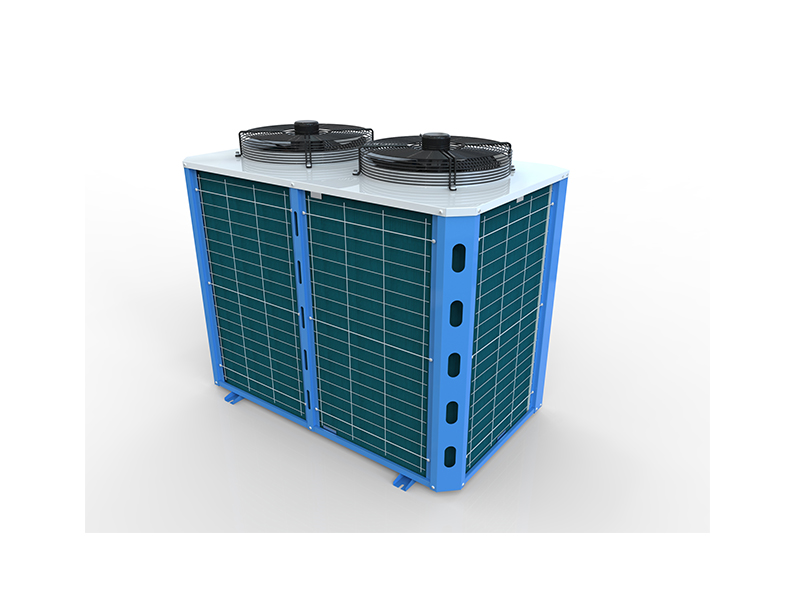
An air-cooled condensing unit installed outdoors for a date storage application must reject heat into ambient air that can reach 50°C at the condenser inlet during summer afternoons in key date-producing regions. A unit sized solely on nominal capacity at 32°C ambient will lose 25% to 35% of its cooling output at 45°C to 50°C. I have seen this mismatch repeatedly in projects where the condensing unit was selected from a catalog table without applying the ambient temperature derating factor. For a date cold room operating at -3°C with a design refrigeration load of 15kW, the installed condensing unit needs a catalog rating closer to 22kW to 24kW at standard conditions so that the derated output at peak ambient still meets the 15kW load.
Bitzer semi-hermetic reciprocating condensing units are our standard specification for these applications, and the reason goes beyond brand preference. The reciprocating compressor design handles high compression ratios at elevated condensing temperatures more stably than a scroll compressor under the same conditions, and the oil management system on industrial Bitzer models is engineered for continuous duty in the 40°C to 55°C ambient band. For smaller date storage rooms up to about 80 cubic meters of internal volume, a Bitzer 9HP or 12HP unit typically matches the load. For medium-scale commercial storage rooms in the 150 to 300 cubic meter range, the 20HP to 25HP Bitzer units with a receiver and a properly sized condenser coil perform reliably. For large date warehouses operating multiple storage chambers, parallel condensing units or Bitzer screw compressor units provide the capacity with the benefit of capacity modulation that avoids short cycling during low-load periods at night or in cooler months.
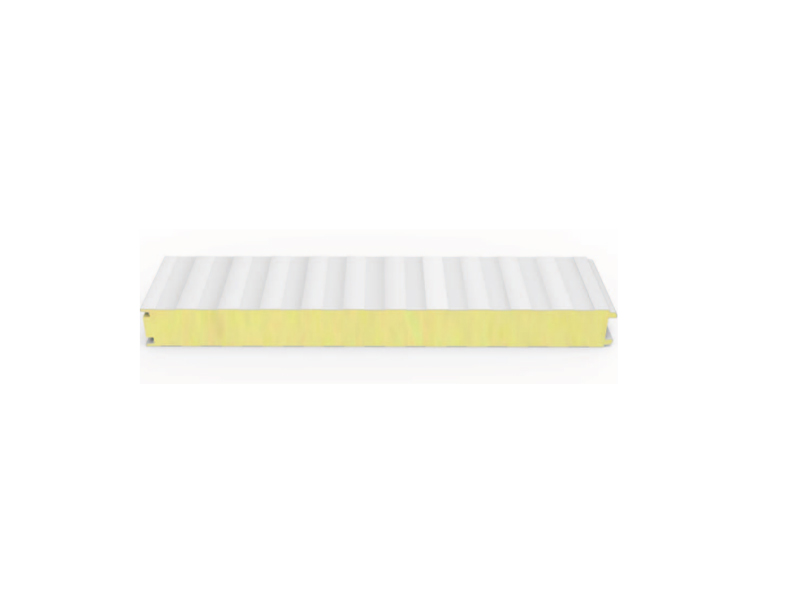
The insulation panel specification matters equally for hot-climate performance. A PU panel with a nominal 100mm thickness delivers an approximate U-value of 0.21 W/m²K. In a date storage room where the outside wall temperature can reach 40°C and the inside is held at -3°C, the heat transmission load alone is 9 W/m² through that wall surface. Across a 200m² total envelope for a medium warehouse room, that adds nearly 2kW of continuous cooling load before any product load is accounted for. Moving to PIR panels at the same thickness improves the U-value to roughly 0.17 W/m²K, cutting the transmission load by about 20% and paying back the panel cost difference over the first two to three years of electricity bills. PIR panels also carry a B1 fire rating, which matters for commercial insurance and food safety audit compliance in export-oriented facilities.
For evaporator selection, the date room needs a ceiling-mounted air cooler with a low airspeed and a defrost system matched to the operating temperature. At -3°C room temperature, the coil surface temperature sits well below 0°C, so frost will accumulate at a rate determined by the door infiltration and product respiration moisture. An electric defrost air cooler with a defrost termination thermostat set to cut out at about +8°C coil temperature limits the heat input to the room and reduces the temperature swing that the fruit experiences during each defrost cycle. For a date storage room designed for 6 to 8 months of holding, the temperature fluctuation from defrost should stay within 1°C to 2°C measured at the product. Larger temperature swings repeated daily over months accelerate the cumulative quality loss.
Cold Room Layout, Airflow, and Product Stacking for Uniform Cooling
The internal arrangement of a date cold room has a larger influence on product quality than most of the equipment specification decisions I have discussed so far. The core challenge is that date pallets or crates represent a high-density, low-porosity product mass. Air from the evaporator that strikes only the front face of the stack leaves the interior of the pallet at a higher temperature, and the temperature difference between the warmest and coldest fruit in the same storage room can exceed 6°C if the layout is not designed to direct airflow through the product rather than around it.
The most reliable configuration for medium-term date storage at -3°C uses a center-aisle layout with the air cooler mounted on the rear wall blowing longitudinally down the aisle. Pallets are arranged in two rows flanking the aisle, with a minimum 100mm gap between the pallet side and the wall to prevent short-circuiting. The distance between pallets along each row should be 50mm to 80mm to create channels for cross-flow. With a correctly sized air cooler producing a throw of 12 to 15 meters at the required air volume, this layout achieves airspeed across the pallet face of 0.3 to 0.5 m/s — enough to carry heat away without excessively drying the fruit surface.

Pallet height affects the airflow pattern as well. If pallets are stacked to within 300mm of the ceiling, the air from the evaporator cannot turn downward to reach the lower portion of the pallet face. Maintaining a minimum 400mm clearance between the top of the highest pallet and the ceiling soffit allows the air jet to develop properly. In rooms with a suspended evaporator, the clearance is measured from the bottom of the cooler housing. I have retrofitted date rooms where simply lowering the pallet stacking height by one layer eliminated a 4°C temperature stratification problem that had persisted for two harvest seasons.
For facilities that load and unload partial pallet quantities frequently over the storage period, a fixed racking system with designated air channels built into the rack design provides a more repeatable airflow pattern than floor-stacked pallets that shift position over time. The racking approach also simplifies the defrost management, because the air paths remain constant and the defrost heat distribution is predictable.
Harvest Handling Practices That Determine Whether Storage Pays Off
A perfectly engineered cold room cannot reverse damage that occurs in the 24 hours between harvest and cold storage loading. Dates harvested at 35°C ambient temperature and left in field bins under direct sun for several hours arrive at the cold room carrying a heat load several times higher than the steady-state storage load. The respiration rate of freshly harvested dates at 35°C is approximately 5 to 10 times the rate at the target storage temperature, which means the fruit is both generating internal heat and consuming its own sugars faster.
The most cost-effective improvement a date producer can make before investing in cold storage equipment is to implement a pre-cooling step that drops the fruit temperature from harvest temperature to below 10°C within four to six hours of picking. This can be done with forced-air cooling in a dedicated pre-cooling room, or by staging the field bins in a chilled holding area overnight before moving them into the storage room. The pre-cooling step removes the majority of the field heat and respiration load before the fruit enters the long-term storage environment, which reduces the peak refrigeration load the storage room must handle by 30% to 50% during loading days. For a facility receiving 5 tons of dates per day during harvest, that reduction in peak load allows the storage room condensing unit to be sized closer to the steady-state requirement rather than oversized for a loading event that only occurs for a few weeks annually.
The moisture content of dates at harvest also interacts with the storage humidity control. If the fruit enters the room with surface moisture from washing or from condensation during overnight field cooling, that moisture adds to the latent load on the evaporator and drives the room RH higher during the first few days of storage. The first 48 to 72 hours after loading typically show the highest frost accumulation rate on the evaporator, and the defrost frequency should be set higher during this initial period — once every 4 hours rather than once every 6 to 8 hours — to prevent the coil from icing over before the moisture load stabilizes.
Practical Refrigeration Engineering for Date Palm Cold Storage
Dates respond to storage conditions in measurable and commercially significant ways. The temperature and humidity bands that work are not especially wide, but they are well-defined: -3°C to 0°C for medium-term commercial storage, 65% to 75% RH to prevent both sugar crystallization at the low end and mold at the high end. The engineering decisions that hold those parameters steady over months of operation are where most cold room projects succeed or fail. A condensing unit rated for hot-climate operation, an evaporator selected with a TD in the 6K to 7K range rather than a higher generic value, PIR insulation panels sized for the local ambient conditions, and a pallet layout that ensures airflow through the product rather than around it — these are the specific, verifiable factors that distinguish a date cold room that preserves export quality from one that does not.
For date producers and exporters evaluating cold storage investments, the most productive next step is to confirm that the equipment specification matches the actual harvest conditions at your facility, including the peak ambient temperature, the daily product intake volume during harvest, and the floor space available for pre-cooling and storage. Share your facility requirements and target storage duration at meluck@meluckcooling.com or call +8617369893087 for a technical assessment of the equipment configuration that fits your operation.
Questions Date Exporters Ask About Cold Storage Equipment
Does date variety change the required storage temperature?
It changes the freezing point, which determines how low the setpoint can safely be set. High-sugar varieties such as Medjool and Deglet Nour freeze at approximately -5°C to -7°C, allowing storage at -3°C with no ice crystal risk. Lower-sugar semi-dry varieties freeze closer to -2°C to -3°C, so the safe operating band shifts upward to 0°C to 2°C. In projects where we have designed multi-variety date storage, the room is set to the more conservative target that protects the variety with the highest freezing point, and the storage duration expectations are adjusted accordingly.
How long can a date cold room hold fruit before quality loss is measurable?
At -3°C and 65% to 75% RH, the main quality degradation mechanisms — enzymatic browning, texture softening, and syrup separation — are slowed enough that 6 to 8 months of storage is routinely achieved with quality loss below what a commercial buyer can detect. I have monitored Deglet Nour lots at this condition where sugar crystallization on the surface became visible only after approximately 7 months, and then only on fruit at the pallet exterior where airflow was highest. The limiting factor is usually not the average storage condition but the cumulative effect of temperature and humidity fluctuation from door openings, defrost cycles, and seasonal ambient changes.
What is the most common equipment mistake in date cold room projects?
In my experience, the single most common mistake is selecting the condensing unit from a standard rating table without derating for the local peak ambient temperature. A unit that delivers 15kW at an ambient of 32°C delivers perhaps 10kW to 11kW at 48°C on the condenser inlet. The room pulls down slowly, the compressor runs at high discharge temperatures, and the system fails to hold the target temperature during the hottest part of the day. The fix is to specify the condensing unit based on the derated capacity at the site's design ambient temperature, not at the catalog's nominal rating point.
Do date cold rooms need a dedicated humidity control system?
In most medium-term commercial storage applications, the answer is that humidity is managed passively through evaporator selection and defrost strategy rather than through an active humidification system. The key is to limit the moisture removal from the air. Selecting an evaporator with a lower TD, minimizing door infiltration, and setting the defrost to terminate at a low coil temperature all contribute to holding the room RH in the 65% to 75% range without a separate humidifier. In extremely dry regions or in freezer-temperature storage below -18°C, an active humidifier becomes more important because the low coil temperature pulls moisture from the air very fast, and the air itself holds less moisture to begin with.
Is PIR panel insulation worth the extra cost for a date cold room in a hot climate?
I would say it pays for itself through reduced electricity consumption over two to three years of operation, especially if the cold room operates at -3°C or lower and is located in a region where the annual average ambient temperature exceeds 25°C. The improved U-value cuts the continuous heat transmission load by about 20% compared to a PU panel of the same thickness, which translates directly into lower compressor runtime and lower peak power demand. For an export-oriented facility that will run the cold room year-round, the operating cost savings typically outweigh the upfront panel cost difference. Share your project's location and room dimensions and we can run the specific heat load calculation to show the cost comparison for your case — contact us at meluck@meluckcooling.com.
Если вам интересно, ознакомьтесь с этими статьями по теме:
Решения для холодильных камер -10C~10C - Meluck
Решения для шоковых морозильных камер -40C~-60C - Meluck
Проект холодильного хранения семенного картофеля в Мьянме — Meluck
Решения для морозильных камер -25C~-18C - Meluck
Предварительное охлаждение и холодильное хранение авокадо в Перу — Meluck
Имея более чем 15-летний опыт работы инженером по холодильному оборудованию MELUCK, я специализируюсь на проектировании холодильных складов, чиллеров, льдогенераторов и энергосберегающих систем холодовой цепи, обеспечивая техническую поддержку дистрибьюторам и инжиниринговым компаниям по всему миру.

meluck