
Вентиляция в хранилищах лука: предотвращение порчи
Лук холодильное хранение ventilation is often treated as an afterthought, but in practice it determines whether your холодильная камера preserves your crop or quietly destroys it. Onions respire after harvest, releasing heat, moisture, and CO₂. Without a ventilation system engineered to remove that load, condensation builds, sprouting accelerates, and spoilage rates climb fast. I’ve seen well-built cold rooms lose 20% of stored onions within two months because the airflow design couldn’t keep up. This article breaks down the specific ventilation requirements for onion cold storage—air change rates, duct layout, and equipment selection—so you can avoid those losses.
Understanding Why Ventilation Is the Key to Onion Storage Success
Onion spoilage in cold storage almost always traces back to moisture. Even when the room temperature is held at the recommended 0°C to 2°C for long-term storage, the bulbs are alive and respiring. Respiration produces heat, water vapor, and carbon dioxide. If that moisture is not continually removed, the microclimate around each onion rises above the critical 70%–75% relative humidity threshold. The result is condensation on bulb surfaces, which triggers mold growth and premature sprouting.
In a poorly ventilated cold room, you also get temperature stratification. Cold air from the evaporator sinks to the floor, while the respiring onions generate a warm, humid layer near the top of the stacks. This gradient can differ by 3°C to 5°C between floor and ceiling, meaning top bins spoil while bottom bins freeze or dehydrate. Ventilation is the only way to homogenize conditions throughout the room. It also flushes out ethylene gas, which onions produce in small quantities and which accelerates aging in other stored produce.
In projects we’ve supported across hot climates—like the tomato cold storage we built in Myanmar and the avocado pre-cooling room in Peru—the same principle applied: the refrigeration system sets the temperature, but the air distribution determines whether the product actually stays in good condition. Onions are particularly sensitive because they store for months, not days, so small daily moisture accumulation adds up to large losses.
Airflow Requirements: Calculating Ventilation Rates for Onion Cold Rooms
Designing onion cold storage ventilation starts with understanding how much air the room needs to move. The goal is to remove the latent heat of respiration and carry away water vapor before it condenses. For onions at 0°C, respiration heat is typically 0.1–0.2 watts per kilogram, which translates into a moisture load of about 0.5–1.0 grams of water per kilogram per day. That may sound modest, but in a room holding 100 metric tons, it means 50 to 100 liters of water vapor released every day. Without mechanical ventilation, that water ends up dripping back onto the onions.
Air change rates are the practical metric. For long-term onion storage at 0°C to 2°C, I recommend 5 to 8 air changes per hour if the room is fully loaded and insulation is good. During the initial curing phase—when onions are still warm from the field and the outer skins need to dry—ventilation needs jump to 20 to 30 air changes per hour, ideally with some fresh air intake to exhaust field heat and surface moisture. The difference between these two modes is why a variable-speed fan or a two-stage ventilation control is critical.
To calculate the required airflow in cubic feet per minute (CFM), use the formula: CFM = (Air Changes per Hour × Room Volume in cubic feet) / 60. For a typical cold room 20 m long, 12 m wide, and 5 m high (total 1200 m³), 6 air changes per hour equate to 7200 m³/h, or about 4200 CFM. That figure then drives fan selection and duct sizing.
Designing the Ventilation System: Duct Layout, Air Distribution, and Pressure Control
Once the airflow rate is fixed, the next challenge is making sure that air reaches every corner of the room uniformly. The most common mistake I see in onion storage facilities is a single evaporator fan blowing straight down the middle, which leaves dead zones behind pallet stacks and along walls. Proper ventilation needs a ducted air distribution system or, at minimum, well-placed air socks or fabric ducts.
The design should create a slight negative pressure in the room relative to the outside, so that air infiltration is inward when the door opens, preventing warm humid outside air from rushing in and condensing on cold onions. This is achieved by exhausting slightly more air than is supplied, typically through a backdraft damper or adjustable louver on the exhaust fan.
Duct layout should place supply air at the ceiling level along one long wall and return air at floor level on the opposite side, establishing a horizontal cross-flow. For palletized onion storage, air must travel through the stack, so bins should be positioned to leave 300–400 mm gaps between rows and 200 mm from walls. Air velocity through the onion stack should be 0.05–0.10 m/s; higher speeds can desiccate the outer scales, while lower speeds allow moisture pockets.
In practical terms, that means selecting fans and ducts that deliver the required CFM at a static pressure that accounts for the resistance of the ducting, air socks, and the stacked onions themselves. Undersized ducts create excessive pressure drop and noise, while oversized ducts waste capital. A static pressure of 0.5 to 1.0 inches of water column is typical for a well-designed system.
Equipment Selection: Condensing Units, Air Coolers, and Controls
Ventilation in an onion cold room cannot be separated from the refrigeration system because the air cooler (evaporator) is the main dehumidification device. For onion storage, I prefer ceiling-mounted air coolers with a high sensible heat ratio and large coil surface area. A larger coil runs at a higher suction temperature and reduces the temperature difference between the coil and the room air, which avoids over-drying the onions while still condensing moisture.

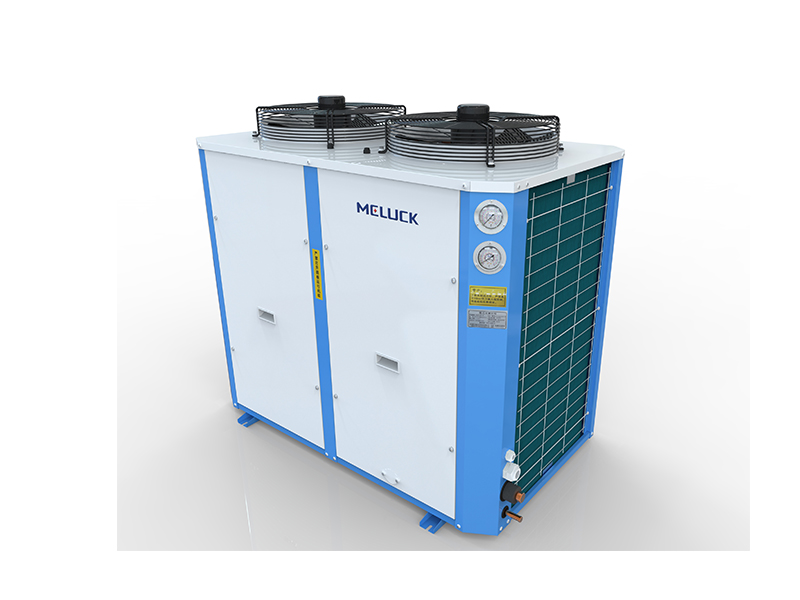
The matching condensing unit must handle the latent load from respiration without short-cycling. For a room of the size we discussed earlier, a Bitzer 15HP or 20HP reciprocating condensing unit with capacity control works reliably. Bitzer semi-hermetic compressors hold stable suction pressure even when the ventilation system modulates airflow, which prevents temperature swings that could shock the onions.
Controls are the third leg of the ventilation system. A temperature controller with a humidity sensor and a variable-speed drive on the evaporator fan can adjust airflow based on real-time conditions. When relative humidity rises above 75%, the fan speed increases; when it drops below 65%, the fan slows or stops to conserve moisture in the onion skins. This level of automation used to be expensive, but modern smart panels have made it accessible even for medium-scale storage projects.
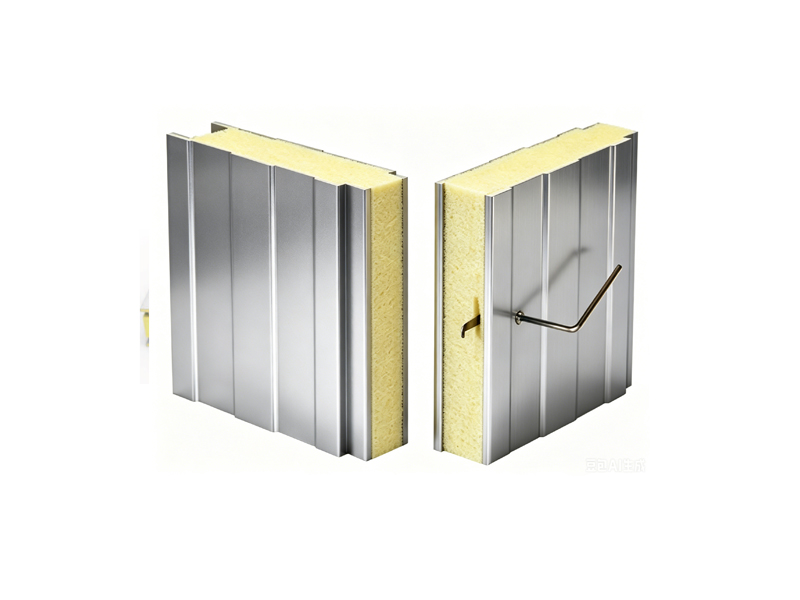
The cold room envelope matters too. PUR or PIR insulated panels with a cam-lock joint form an airtight shell that keeps the ventilation system efficient. We typically specify 100 mm panels for холодильная камераs and 150 mm for freezers, but for onion storage at 0°C, 100 mm PUR panels are sufficient if the door seals and floor insulation are intact.
Installation and Commissioning Checklist for Ventilation
Even a perfectly designed ventilation system fails if the installation is sloppy. I always walk through a checklist before an onion cold room is put into service. First, verify that all panel joints and door seals are airtight. Infiltration of warm outside air adds moisture load that the ventilation system was not sized to handle, and it is the single biggest cause of condensation near doors. Use a smoke pencil or thermal camera to find bypass paths.
Second, confirm fan rotation and airflow direction. A backward fan can create recirculation loops that trap moisture instead of exhausting it. Measure airflow at supply and return grilles with a hot-wire anemometer and compare to design values; deviations beyond 10% require damper adjustment or duct resealing.
Third, balance the exhaust and supply to achieve the target negative pressure. A manometer reading of 5–10 Pa negative inside the room relative to ambient is a good starting point, but it must be fine-tuned with the door closed and the room empty, then again under full load.
Fourth, run the system for 24 hours empty to verify that temperature and humidity control points are reached and stable. Check for hotspots and cold spots by placing data loggers at multiple heights and positions. The temperature variation across the room should be within ±0.5°C before onions are loaded.
Finally, document the baseline: record amp draws on fans and compressors, suction and discharge pressures, and room humidity at setpoint. These numbers become your reference for future preventive maintenance.
Preventing Common Ventilation Problems: Condensation, Hot Spots, and Sprouting
Condensation is the most visible red flag. If you see water droplets on the ceiling or upper wall panels, the room is over-humidified and ventilation is inadequate. Immediate corrective actions include increasing exhaust fan speed and checking for door seal leaks. Long-term, you may need to add a dehumidification coil or increase the cooling coil surface area.
Hot spots typically appear in the center of large onion stacks where air cannot penetrate. If a stack thermometer reads 3°C–5°C above room setpoint, you have a distribution problem. Remedy this by widening aisle spacing, installing portable circulation fans, or retrofitting air socks above the affected zone. In one project for a Myanmar tomato storage facility—a crop with similarly tight airflow demands—we had to add secondary ductwork after commissioning because the initial single-duct design left a 2°C gradient across the room. The fix was straightforward, but the lesson stuck: airflow design must anticipate the actual bin layout, not just the empty room.
Sprouting is the ultimate failure signal. When onion dormancy breaks, it is often because temperature fluctuations plus high humidity activated the bulbs' growth hormones. A ventilation system that maintains steady temperature and moisture removal suppresses sprouting for months. If sprouting appears earlier than expected, check the ventilation rate and the humidity control setpoint first, then the cooling system capacity. More often than not, the problem is air stagnation rather than insufficient refrigeration.
Key Ventilation Specifications for Onion Cold Storage
Before you finalize your cold room design, use this reference table to align your ventilation parameters with the onion storage phase.
| Storage Phase | Temperature (°C) | Относительная влажность | Air Changes per Hour | Air Velocity in Stack (m/s) | Fresh Air Intake |
|---|---|---|---|---|---|
| Curing (1–2 weeks) | 25–30 | 70–75% | 20–30 | 0.15–0.20 | 10–20% of total flow |
| Long-term storage | 0–2 | 65–70% | 5–8 | 0.05–0.10 | 0–5% |
| Pre-shipment (tempering) | 10–15 | 60–65% | 10–15 | 0.10–0.15 | 5–10% |
Protecting Your Onion Cold Storage Investment
Every successful onion storage operation I’ve been part of shares one trait: the owner understood that the ventilation system is not a secondary feature. It is as critical as the temperature setpoint and the insulation quality. When you are building a new cold room or upgrading an existing one, involve a refrigeration engineer who can calculate the exact airflow requirements for your expected load and bin configuration. Generic “rule of thumb” ventilation almost always leads to moisture problems that only become visible after the product is damaged.
If you’re planning an onion cold storage project and want to get the ventilation design right from the start, send your room dimensions, target capacity, and local climate conditions to meluck@meluckcooling.com or call +8617369893087. Our team will help you size the airflow system, select the matching Bitzer condensing unit and air cooler, and provide a full equipment list so you can move forward with confidence.
Common Questions About Onion Cold Storage Ventilation
What happens if I skip mechanical ventilation entirely?
In a sealed cold room without ventilation, the moisture from onion respiration accumulates over days and condenses on the coldest surface—usually the evaporator or ceiling. Within two to three weeks, you’ll see water dripping back onto the top bins, and mold will follow. I’ve measured a 15% weight loss and 30% spoilage rate in a room that relied only on natural convection. The cooling system ran harder to compensate, but condensation remained because the moisture had no exit path. Ventilation is the only way to extract that water vapor before it causes damage.
Can I use the same ventilation design for other root crops like potatoes or garlic?
Not directly. Onions, potatoes, and garlic all respire, but their optimal humidity and temperature ranges differ. Potato storage typically runs at 3°C–7°C with 90%–95% relative humidity, which requires much less dehumidification and gentler ventilation to avoid skin damage. Garlic cures in warmer, drier air. If you adapt an onion system for potatoes, you’ll over-dry the potatoes and cause shrinkage. Design the ventilation around the most sensitive crop in the room.
How do I know if my ventilation system is working properly after installation?
Place wireless temperature and humidity data loggers at the top, middle, and bottom of onion stacks in several locations. After 24 hours of operation under load, the temperature difference between the highest and lowest sensor should be within 1°C, and the relative humidity should not vary by more than 5% across the room. Also, check for condensation by wiping a dry paper towel on the ceiling and upper wall panels. If you pick up moisture, the ventilation rate or distribution is insufficient.
Does the type of cold room panels affect ventilation performance?
Yes, because panel air tightness directly influences ventilation efficiency. Cam-lock PUR or PIR panels create a sealed envelope that lets the ventilation system control air movement precisely. Tongue-and-groove panels, if not sealed properly, allow uncontrolled infiltration that can overload the dehumidification capacity and create condensation near joints. When we built a multi-temperature cold store in Ecuador, the slip-joint panel system was key to maintaining distinct humidity zones without cross-contamination. For onion storage, invest in panels with good airtightness ratings.
What’s the first thing I should check if my onions start sprouting earlier than expected?
Start by measuring the temperature variation across the room. If you find a 3°C–5°C difference between the coldest and warmest spots, your airflow distribution is likely the root cause. Warm pockets trigger sprouting even when the thermostat says the room is within range. Adjust fan speed or add circulation fans, then monitor for two weeks. If sprouting continues, next check the humidity control point and the defrost cycle of the air cooler—frequent defrosts can inject moisture into the room. In most cases, restoring uniform airflow solves the problem. If your room still has issues after these checks, share your sensor data and room layout with our team at meluck@meluckcooling.com and we’ll help diagnose the cause.
Если вам интересно, ознакомьтесь с этими статьями по теме:
Проект холодильного склада для картофеля фри в Египте - Meluck
Предварительное охлаждение и холодильное хранение авокадо в Перу — Meluck
Решения для морозильных камер -25C~-18C - Meluck
Решения для холодильных камер -10C~10C - Meluck
Имея более чем 15-летний опыт работы инженером по холодильному оборудованию MELUCK, я специализируюсь на проектировании холодильных складов, чиллеров, льдогенераторов и энергосберегающих систем холодовой цепи, обеспечивая техническую поддержку дистрибьюторам и инжиниринговым компаниям по всему миру.

meluck