
Холодильная камера для африканских зон переработки: закупка и монтаж
Установка холодильная камера в африканской зоне пищевой переработки — это не просто покупка холодильного агрегата и его включение. Стабильность электроснабжения, тепловая нагрузка от окружающей среды, местные специалисты по обслуживанию и длительные сроки поставки запасных частей определяют каждое решение о выборе оборудования. Я участвовал в холодильное хранение проектах от Египта до Эквадора, и разрыв между тем, что предлагает каталог, и тем, что работает на объекте, зачастую велик. Однако, когда вы приводите в соответствие основные принципы проектирования холодильных систем и реальные условия африканской перерабатывающей среды, результатом становится система, обеспечивающая надёжный круглогодичный контроль температуры при экономически оправданных затратах.
Приведение проекта холодильной системы в соответствие с реальными условиями африканских зон переработки
Зоны переработки в Африке сталкиваются с условиями, к которым стандартные коммерческие холодильные камеры не рассчитаны. Температура окружающей среды в тени регулярно превышает 35 °C, а в прибрежных зонах, таких как Манта, Эквадор (проект, который мы выполнили для экспортёра морепродуктов), влажность и насыщенный солью воздух быстро разрушают необработанные металлические компоненты. В глубине материка, на заводе по переработке картофеля фри в Каире, пыль и жара в совокупности сокращали срок службы конденсатора, пока мы не применили оребрённые змеевики повышенной прочности и защитные покрытия.
Для африканских применений в пищевой переработке холодильная камера должна начинаться с компрессорно-конденсаторного агрегата, рассчитанного на работу при высокой температуре окружающей среды. Полугерметичные поршневые компрессоры Bitzer зарекомендовали себя на всех наших установках, поскольку температура их нагнетаемого газа остаётся в безопасных пределах даже при температуре воздуха на входе в конденсатор 45 °C. Сам конденсатор должен иметь большую поверхность отвода тепла, чем агрегат той же номинальной производительности для умеренного климата. Как правило, мы выбираем воздушные конденсаторы с расчётным температурным напором не менее 12 °C и указываем ресивер, рассчитанный на полную заправку системы, чтобы агрегат мог работать при высоком давлении конденсации без аварийного отключения.

Панельная изоляция — вторая половина уравнения. В перерабатывающем помещении с температурой 10 °C теплоприток через стены и потолок является наибольшей единичной тепловой нагрузкой после дыхания продукта. Для африканских условий мы рекомендуем панели PIR, а не стандартные PUR, потому что более низкая теплопроводность первых (0,018–0,022 Вт/м·К против 0,022–0,028 Вт/м·К у PUR) и лучшая огнестойкость (класс B1) имеют значение, когда в здании могут размещаться несколько арендаторов. Панели PIR толщиной 100 мм достаточно для холодильной камеры с температурой от 0 °C до 8 °C; для морозильной камеры, работающей при -20 °C, мы переходим на 150 мм. Дополнительные затраты окупаются за счёт снижения электропотребления в течение 18 месяцев в большинстве африканских регионов.
Основное холодильное оборудование для холодильной камеры в зоне переработки
Перечень оборудования для холодильной камеры в зоне переработки прост, но соответствие каждого компонента конкретной производительности зоны и типу продукта предотвращает избыточную мощность и потери энергии.
| Применение | Рекомендуемый компрессорно-конденсаторный агрегат | Диапазон мощности, л.с. | Диапазон температур |
|---|---|---|---|
| Малое помещение для переработки (до 100 м³) | Поршневой Bitzer 4–7 л.с. (4DES-5Y, 4VES-7Y) | 4–7 л.с. | от -5 °C до 5 °C |
| Среднее помещение для переработки с охлаждением (100–300 м³) | Поршневой Bitzer 9–15 л.с. (4PE-12Y, 4PE-15Y) | 9–15 л.с. | от 0 °C до 8 °C |
| Крупное помещение для хранения замороженных продуктов (300+ м³) | Поршневой Bitzer 20–50 л.с. (4NE-20Y, 6HE-44Y) или параллельные компрессорные агрегаты | 20–50 л.с. | от -18 °C до -25 °C |
| Скороморозильная камера для быстрой заморозки | Двухступенчатый Bitzer 16 л.с. или 20 л.с. полугерметичный | 16–20 л.с. | от -35 °C до -50 °C |
Для средних и крупных зон заморозки площадью более 500 м³ параллельные компрессорно-конденсаторные агрегаты с тремя или четырьмя поршневыми компрессорами Bitzer на общей раме обеспечивают ступенчатое регулирование производительности, которое снижает частоту включений и выключений компрессоров и пики энергопотребления. Мы применили такую конфигурацию в египетских камерах для хранения замороженных продуктов (каждая 15 м x 16 м x 9,6 м), и система поддерживала -20 °C при 75 л.с. на агрегат в самые жаркие месяцы без коротких циклов.
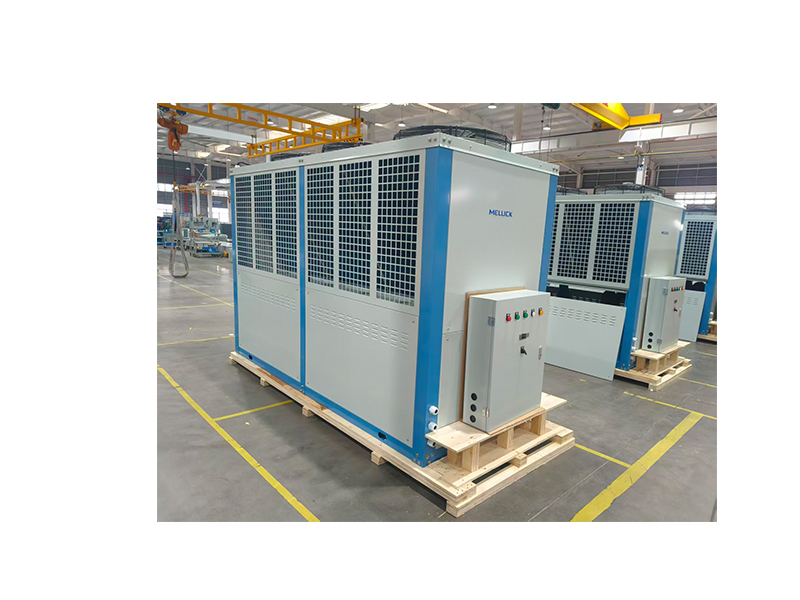
Выбор испарителя зависит от температурного режима помещения. Для помещений для переработки, поддерживаемых при температуре от 5 °C до 10 °C, воздухоохладители серии DL с температурным напором испарения 6–8 K обеспечивают мягкое обезвоживание, которое не подсушивает поверхность продукта. Морозильная камераиспользуют агрегаты серии DD с электрической оттайкой, а для скороморозильных камер при -35 °C и ниже требуются высокоскоростные воздухоохладители серии DJ, рассчитанные на быстрый рост инея. В эквадорском проекте по переработке морепродуктов мы комплектовали компрессорно-конденсаторные агрегаты Bitzer мощностью 40 л.с. специальными воздухоохладителями для скорой заморозки, которые могли охладить камеру от температуры окружающей среды до -35 °C менее чем за четыре часа при полной загрузке лотков с креветками.
Закупка оборудования для Африки: на что обратить внимание помимо технической спецификации
Компрессорно-конденсаторный агрегат, безупречно работающий в Шанхае, может выйти из строя в Луанде, если поставщик не учёл логистические реалии и особенности технической поддержки на африканских рынках. Я всегда советую покупателям оценивать три вещи помимо технических характеристик.
First, inspect the manufacturer's track record in the specific climate, not just the region. We have installed Bitzer-based systems in Cairo's 40°C summers, on Ecuador's coast, and in Myanmar's monsoon conditions. The compressors are the same, but the condenser sizing, refrigerant charge, and control logic differ. A supplier who only ships standard kits without adjusting for ambient design temperature is asking for trouble. Ask for a heat load calculation tailored to your site, not a generic chart.
Second, confirm that the supplier can provide commissioning support and operator training on-site. In our Myanmar tomato cold room project, the local staff had never operated a digital temperature controller. We spent two days walking them through setpoints, alarm thresholds, and daily log sheets. That training is the difference between a cold room that runs for a decade and one that fails in the first wet season because someone disabled the defrost cycle.

Third, evaluate spare parts availability. Compressor valve plates, contactor coils, fan motors, and door gaskets are consumables in any industrial cold room. A supplier who cannot air-freight a critical spare to an African capital within five days creates a risk that outweighs a small upfront cost saving. We keep a dedicated stock of Bitzer spare parts for our existing African installations, and we include a recommended spare parts list with every shipment so the on-site team can hold the essentials locally.
If your processing zone involves blast freezing below -35°C or multiple temperature zones, the compressor selection is not straightforward. It is worth confirming the exact heat load and capacity with an engineer before finalizing the order. Reach out at meluck@meluckcooling.com with your product types and throughput.
Installation and Setup: Getting It Right the First Time
A processing zone cold room is a semi-permanent structure. The slab preparation, drainage, and vapor sealing are as important as the refrigeration hardware.
Start with a level concrete floor that can bear the weight of loaded pallet jacks and forklifts if the room is drive-in. In a freezer, thermal expansion and contraction will crack an unreinforced slab within months. We require a minimum 150 mm reinforced concrete base with a vapor barrier underneath to prevent ground moisture from freezing and heaving the slab. Floor insulation (100 mm XPS or PIR) with a wearing slab on top is mandatory for rooms operating below freezing, or the ground will eventually become an ice block and lift the walls.
Panel assembly should use cam-lock or slip-joint connections rather than simple tongue-and-groove to maintain airtightness over years of thermal cycling. In the Egypt French fries plant, we used PIR panels with a concealed cam-lock system, and the 9.6-meter-high walls went up in three days with a small crew.

Electrical supply in African processing zones often fluctuates. We always recommend a phase monitor, undervoltage relay, and a correctly sized voltage stabilizer ahead of the compressor control panel. A short power glitch that momentarily reverses a three-phase scroll compressor can cause mechanical damage before the thermal overload trips. For remote sites, a generator with an automatic transfer switch is the only safe option, and the refrigeration system must include a delay timer to prevent the compressor from restarting immediately against high head pressure after a power outage.
Cost and ROI: What to Expect for Your Processing Zone Cold Room
Cold room costs are driven by four factors: insulation thickness and panel type, compressor size and brand, installation complexity, and import duties. For a typical 200 m³ processing room maintaining 5°C, a complete system including panels, Bitzer condensing unit, evaporator, door, and electrical controls will range between USD 25,000 and USD 45,000 ex-works, depending on PIR vs PUR panels and compressor horsepower. A -20°C freezer of similar size with floor insulation and a larger condensing unit will be 40% to 60% higher due to the additional insulation and heavier compressor. Shipping and on-site installation add another 15% to 25% depending on distance and local labor costs.
The payback, however, is measured in product preservation. In our avocado cold room project in Peru, the packer was losing roughly 15% of harvested fruit to spoilage before installing a 10°C pre-cooling room. The cold room brought losses below 4% within the first season. Even with conservative market prices, that recovery paid for the entire installation in less than eight months. For a processing zone handling higher-value items like frozen fish fillets or prepared foods, a single export shipment rejected for temperature abuse can cost more than the cold room itself.
For a ballpark estimate tailored to your processing requirements, send your floor plan and temperature specifications to meluck@meluckcooling.com or call +8617369893087. We will prepare a preliminary equipment layout and budget.
Common Questions About Processing Zone Cold Room Sourcing
How do I choose between PIR and PUR panels for a processing zone?
PIR panels offer a higher fire rating (B1) and about 10% better thermal insulation than PUR of the same thickness. If the cold room is inside a shared processing building or will be inspected by international food safety auditors, PIR is the safer choice. PUR remains acceptable for standalone small холодильная камераs where cost is the primary constraint and there is no fire code requirement for insulated wall panels.
Can a processing zone cold room operate on a 60Hz power supply?
Yes, but you must specify 60Hz when ordering compressors and fan motors. Many African countries use 50Hz (Egypt, Kenya, Ghana, Ethiopia), but Nigeria and some West African nations run on 60Hz. We stock Bitzer and Copeland condensing units in both 50Hz and 60Hz configurations specifically to avoid the delivery delays that come with factory-order voltage changes. The unit's cooling capacity shifts slightly at 60Hz, so we recalculate the heat rejection to match the actual site frequency during the design phase.
How long does it take from order to a running cold room?
For a standard 100-300 m³ processing room, panel production and refrigeration unit assembly take four to five weeks. Ocean freight to major African ports adds two to four weeks depending on destination. On-site assembly, piping, vacuuming, charging, and commissioning typically require one to two weeks with a competent local crew and remote guidance. A turnkey project with our supervisor on-site extends the installation time by perhaps a day but reduces the likelihood of commissioning errors that surface months later.
Do I need a separate processing room and a storage cold room?
It depends on your throughput. If product moves continuously from processing to chilling without accumulating, a single room can serve both functions. However, if processing staff enter and exit frequently and the room door remains open for extended periods, the heat and moisture infiltration will cause temperature swings and frost buildup that affect stored product quality. In the Egyptian French fries plant, we separated the 5°C to 10°C packaging area from the -20°C finished goods storage with an insulated wall and high-speed strip curtains, which kept the evaporator defrost cycles to a predictable twice per day. If your production volume justifies it, the additional investment in separate zones almost always repays itself in reduced energy and better product consistency.
Share your project timeline and we can confirm equipment availability and shipping schedule to your port. Contact David Zhang at meluck@meluckcooling.com or +8617369893087.
Если вам интересно, ознакомьтесь с этими статьями по теме:
Решения для холодильных камер -10C~10C - Meluck
Решения для цехов пищевых производств - Meluck
Имея более чем 15-летний опыт работы инженером по холодильному оборудованию MELUCK, я специализируюсь на проектировании холодильных складов, чиллеров, льдогенераторов и энергосберегающих систем холодовой цепи, обеспечивая техническую поддержку дистрибьюторам и инжиниринговым компаниям по всему миру.

meluck