
Unidades condensadoras con compresor de tornillo Bitzer para almacenamiento de congelación profunda
For cold storage operators maintaining temperatures between -25°C and -40°C, choosing the right unidades condensadoras directly determines product quality, energy cost, and system uptime. When the cooling load exceeds what multiple reciprocating compressors can handle efficiently, a Bitzer screw compressor condensing unit becomes the practical choice for continuous, high-capacity deep freeze operation. I've seen too many projects where a mismatch between compressor type and actual load profile led to high running costs or premature failures. This guidance draws from more than a decade of commissioning these systems in demanding environments, from Ecuador's humid coast to Egypt's 45°C summers, to help you make a confident selection.
When Does a Screw Compressor Make Sense for Low-Temperature Cold Storage?
Screw compressors deliver their best value in applications where the refrigeration demand is steady, capacity requirements are large, and the system runs continuously. For cold rooms operating at -25°C to -40°C, the decision typically shifts toward screw when the total cooling load exceeds approximately 30 kW at an evaporating temperature of -35°C. Below that threshold, a single large reciprocating compressor or a small parallel rack may be more cost-effective.
One critical advantage that gets less attention is part-load behavior. Bitzer screw compressors, particularly the HSN series, use a stepless capacity control slide valve that adjusts from 100% down to about 25% while maintaining good electrical efficiency. Variable speed drive options push this even further. When a túnel de congelación transitions from initial pull-down to holding temperature, or when a storage freezer door is opened frequently, the compressor doesn't have to cycle on and off repeatedly. The continuous modulation reduces electrical peak charges, evens out the load on the power supply, and avoids the wear that comes from frequent motor starts.
From our project history, the pivot point where screw becomes the clear winner is often around 40 HP to 50 HP in low-temperature duty. Below that, we still use Bitzer reciprocating compressors with good results. Above that, the screw's combination of lower vibration, integrated oil management, and simpler mechanical layout starts to tilt the total cost of ownership in its favor, especially when you factor in the maintenance intervals over a ten-year life.
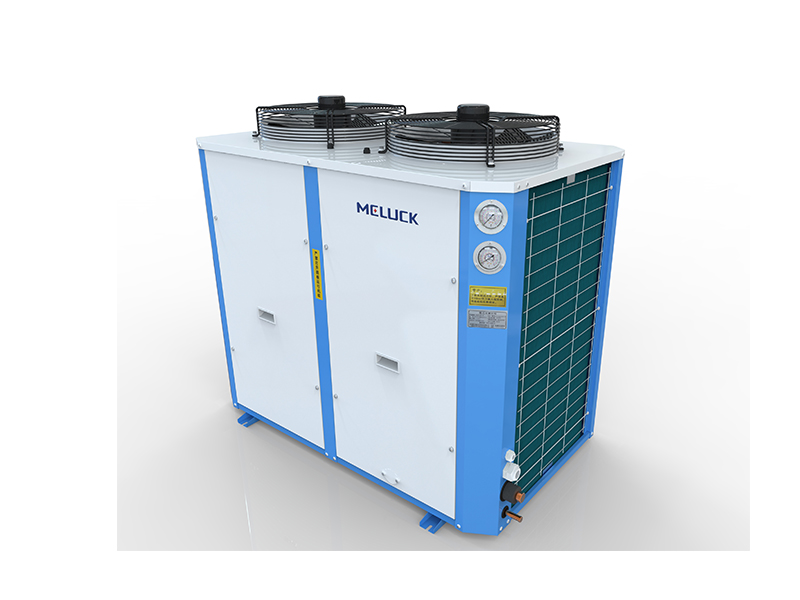
Key Technical Advantages of the Bitzer CSH/HSN Series
The Bitzer CSH and HSN semi-hermetic screw compressors share a common architecture but differ in their operating envelopes. The HSN series is specifically dimensioned for low-temperature applications with suction pressures corresponding to evaporating temperatures as low as -45°C in a single-stage configuration. For ultra-low temperature work below -45°C, a two-stage reciprocating unit may still be required, but for the -25°C to -40°C band where most commercial cámara congeladoras and many blast freezers operate, a properly selected HSN single-stage screw is a robust, factory-assembled package.
Several design details stand out in daily operation. The integrated oil separator vessel is sized generously, which helps maintain oil carryover well below 5 ppm even under varying suction conditions. The compressor body is inherently well-balanced, so vibration levels are roughly one-third of a comparable reciprocating compressor, a point that matters more than many realize when you are mounting the unit on a penthouse or mezzanine above a processing room. The direct-drive motor runs at 2,950 rpm (50 Hz) without gears, eliminating a common maintenance point, and the slide valve capacity control I mentioned earlier allows the system to start unloaded, reducing inrush current.
Our product line includes the Bitzer screw compressor condensing unit as a complete package with the compressor, oil separator, oil cooler (water-cooled or thermosyphon), air-cooled condenser pre-matched to the compressor's heat rejection, and a PLC color touchscreen controller as standard. Remote monitoring over Ethernet or RS485 is an optional but increasingly common addition, especially for cold stores in regions where a service technician is not minutes away.
| Specification | Typical Range for HSN Series |
|---|---|
| Tipo de compresor | Tornillo semihermético |
| Evaporating Temperature | -5°C to -45°C |
| Motor Size | 40 HP to 130 HP |
| Displacement (50 Hz) | 150 to 420 m³/h |
| Oil Cooling | Water, thermosyphon, or refrigerant injection |
| Capacity Control | Stepless slide valve, 100%–25% |
How to Select the Right Capacity for Your Freezer Room
Capacity selection is not simply a matter of matching the cooler's kilowatt rating to a compressor's catalog number at a single operating point. The compressor's capacity depends on the evaporating temperature and the condensing temperature, and both of those will shift with product load, door openings, and ambient weather.
The reliable approach starts with a proper refrigeration load calculation, including transmission gain through panels, product respiration and freezing loads, fan motors, and infiltration. Once you have the total cooling load at the design evaporating temperature (say -35°C), you then consult the Bitzer performance data for the candidate compressor at that suction condition and the expected maximum condensing temperature. For a direct-expansion freezer, the condensing temperature might be 15 K above the ambient, so in a Middle Eastern summer with 45°C outdoor air, the condensing temperature could be 60°C. A compressor that seems adequate on a cooler day might deliver 25% less capacity under those peak conditions, a margin you cannot afford to guess at.
For large freezer warehouses, we often size the screw unit to handle 85%–90% of the peak load and let a smaller reciprocating unit pick up the remainder, a strategy that gives good part-load efficiency and built-in redundancy. When we designed the blast freezer for the Egypt French fries project, the calculated heat load at -35°C came to nearly 130 kW during the initial pull-down phase. We selected a Bitzer 125 HP screw condensing unit, which delivered the required capacity with enough reserve to pull product down within the target time window, even on 50°C afternoons.
If your project involves variable product loads or multiple temperature zones, a tailored capacity analysis is essential. Share your design conditions and we can confirm the correct unit size.
| Aplicación | Suggested Bitzer Screw HP | Approx. Cooling Capacity at -35°C / +35°C |
|---|---|---|
| Small freezer, 200–500 m³ | 40–50 HP | 25–35 kW |
| Medium freezer, 500–1,500 m³ | 50–75 HP | 35–55 kW |
| Large freezer warehouse | 75–100 HP | 55–80 kW |
| Blast freezer, 2–5 tons/day | 100–130 HP | 80–110 kW |
Installation and Climate Considerations for Reliable Operation
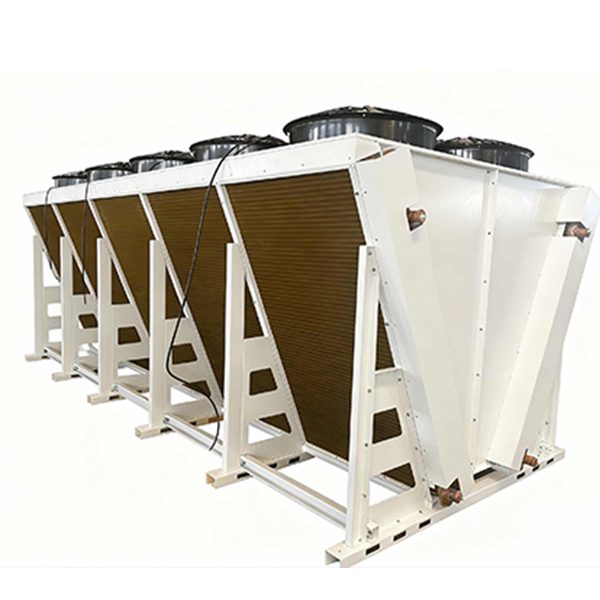
High ambient temperatures put condensing units under the most stress, and many installations fail not because the compressor is undersized but because the heat rejection is inadequate. When we install in tropical or desert climates, we oversize the air-cooled condenser surface by 20%–30% compared to a temperate-climate selection, and we position the unit to avoid recirculation of hot discharge air. In the Cairo French fries facility, the condensing unit sits on a shaded rooftop platform with 2 meters of clearance on all sides and a wind baffle to prevent the prevailing afternoon wind from pushing hot air back into the coil. That simple layout change reduced head pressure during peak hours by nearly 2 bar, which translated directly into lower energy consumption and better compressor reliability.
Electrical compatibility is another detail that catches buyers. Many of our export projects require 60 Hz power, and Bitzer screw compressors are available in 60 Hz configurations with adjusted motor windings to deliver the same cooling capacity as their 50 Hz counterparts. Confirm the supply voltage and frequency early in the specification process.
Remote monitoring, as mentioned, adds useful protection. We configure the PLC to send alarm notifications for high discharge temperature, low oil pressure, and phase loss, and to log trend data that a technician can review before traveling to the site. For a cold store holding 500 tons of frozen seafood, that visibility can be the difference between a quick reset and a total stock loss.
Real-World Outcomes: Bitzer Screw Units in Industrial Cold Storage
When the technology is correctly matched to the load, the operational results are straightforward. At the Egypt French fries processing plant, the 125 HP screw condensing unit on the -35°C blast freezer has maintained a consistent product pull-down time of under three hours for a 2-ton batch. The plant manager reported that product loss due to temperature fluctuation fell to below 2%, from over 8% with the previous undersized system. The unit runs 24 hours a day during the harvest season without tripping, and the slide valve modulation keeps the power draw steady rather than cycling up and down.
In our Ecuador multi-temperature cold storage project, while the heavy lifting was done by reciprocating compressors sized for the specific zones, the project validated the broader principle: matching the compressor type to the load profile, not just the peak kilowatts, determines long-term reliability. For that facility's blast freezer at -35°C we used a 40 HP reciprocating unit, but had the freezing volume been 30% larger the screw would have been the clear recommendation. The point is not to push screw everywhere but to recognize the threshold where its advantages become real and measurable.
For facilities that have already outgrown their existing compressor racks or are planning new construction in the 50 HP-and-above low-temperature range, a Bitzer screw condensing unit typically delivers a quieter, more compact, and easier-to-maintain installation than an equivalent parallel rack, and the energy efficiency at typical part-load conditions (where a large freezer spends most of its operating life) often covers the initial price difference within three to four years.
If you are designing a new cold storage facility or upgrading existing equipment for -25°C to -40°C operation, the difference between a generic selection and a system matched to your specific load profile can be significant in running costs and uptime. Let our engineering team provide a complementary capacity assessment and equipment recommendation based on your exact requirements. Contact us at meluck@meluckcooling.com or call +8617369893087.
Answers to Key Selection Questions
What is the difference between Bitzer CSH and HSN series, and which one fits a -35°C freezer?
The CSH series is optimized for medium- and high-temperature air conditioning and chiller duty, while the HSN series is built for low-temperature refrigeration with a strengthened bearing arrangement and a larger oil separator to handle the higher pressure ratios. For a -35°C freezer, you need the HSN. We use CSH only when the evaporating temperature stays above -10°C, so for any blast freezer or frozen storage application, the HSN is the factory-recommended screw platform.
Can a screw condensing unit operate reliably if the ambient temperature swings from 0°C to 45°C?
It depends on how the condenser and oil cooling are configured. In our hot-climate installations, we use a thermosyphon oil cooler that rejects heat into the condenser discharge line, combined with an oversized condenser, to keep the oil temperature within limits even at 45°C ambient. At the cold end, when ambient drops near 0°C, we add a head pressure control valve and sometimes a condenser fan speed controller to maintain minimum condensing pressure. With those measures, the same unit works across the full seasonal range.
Is the PLC touchscreen standard, or do I pay extra for remote monitoring?
The PLC touchscreen is included as part of the condensing unit package. It gives you local access to all operating parameters, alarm history, and capacity control settings. Remote monitoring over Ethernet or RS485 is an optional module, and I recommend it for any site where a technician is not permanently on duty. The incremental cost is modest compared to the value of catching a refrigerant leak or oil pressure drop before it escalates.
A reciprocating compressor is simpler, so why would I choose a screw?
That is a fair point if you are comparing a small 10 HP unit. But once you pass 40 HP, the screw is mechanically simpler in some ways: fewer moving parts, no pistons or wrist pins, no valve plates to fatigue. The oil management is internal, the vibration is lower, and you eliminate the frequent valve and gasket maintenance that reciprocating compressors require in industrial service. Over a ten-year life, the total maintenance hours for a screw are typically half of what a comparably sized reciprocating rack needs.
What maintenance does a Bitzer screw compressor condensing unit need in regular operation?
In projects we support, the routine schedule is light: monthly visual checks of oil level, vibration, and condenser cleanliness, quarterly check of electrical connections and control parameters, annual oil analysis and replacement of oil filters, and a full inspection of the capacity slide valve and motor bearings every 15,000 operating hours. The built-in controller tracks running hours and will flag when service items are due. If you share your operating conditions, we can supply a maintenance plan tailored to your specific site.
Si le interesa, consulte estos artículos relacionados:
Proyecto de almacenamiento en frío de patatas fritas en Egipto - Meluck
Proyecto de almacenamiento en frío de semilla de papa en Myanmar - Meluck
Soluciones para salas de refrigeración -10C~10C - Meluck
Soluciones de cámaras frigoríficas -25C~-18C - Meluck
Almacenamiento en frío con precooling de aguacate en Perú - Meluck
Con más de 15 años de experiencia como ingeniero de refrigeración de MELUCK, me especializo en el diseño de almacenamiento en frío, enfriadoras, máquinas de hielo y sistemas de ahorro energético para la cadena de frío, y presto soporte técnico a distribuidores y empresas de ingeniería de todo el mundo.

meluck