
Конфигурация холодильной камеры для морепродуктов: от шоковой заморозки до хранения
Температурные зоны холодильной камеры для морепродуктов: почему конфигурация имеет значение
Морепродукты портятся быстрее, чем почти любая другая категория продуктов. Правильно сконфигурированная холодильная камера для морепродуктов перемещает продукт через отдельные температурные зоны, каждая из которых выполняет свою задачу: охлаждение улова при поступлении, поддержание в цехах переработки температуры, достаточно низкой для подавления роста бактерий, быстрая заморозка продукта для сохранения текстуры и хранение замороженных запасов при стабильных отрицательных температурах.
Правильно спроектированное предприятие — это не одна камера. Это многозонная система, которая обычно включает приемную холодильную камеру с температурой от 0 °C до 4 °C, гигиенический цех переработки с температурой от 5 °C до 10 °C, шоковую заморозку с температурой от -35 °C до -40 °C и камеру холодильного хранения с температурой от -18 °C до -25 °C. Регламент ЕС 853/2004 требует, чтобы рыбная продукция при обработке хранилась при температуре тающего льда, а после замораживания — при -18 °C или ниже [1]. Эти пороговые значения являются требованиями экспортного соответствия, а не необязательными ориентирами.
The exact configuration depends on species, product form, and destination market. A shrimp export line needs IQF capability. A tuna loining operation may demand -60°C deep freeze. A wet fish market needs flake ice and short-term chilled holding. Identifying which zones your operation requires is the first engineering decision.
Receiving Chiller and Hygienic Processing Room Design
Seafood arriving at the facility must be pulled out of the danger zone quickly. The receiving chiller is designed to remove heat from inbound product and hold it until sorting. For most species, a receiving and short-term холодильная камера operating at 0°C to 4°C provides the right balance, with relative humidity maintained at 85% to 95% to limit surface drying and weight loss.
Processors often integrate the receiving chiller with flake ice application. Layers of flake ice over the catch provide faster surface contact cooling than air alone and protect product during sorting. A Льдогенератор чешуйчатого льда производительностью 5 тонн/сутки is a common match for mid-size facilities, with capacity tied to daily landing volume.
Cutting, trimming, and packaging cannot happen at ambient temperature, but workers also cannot operate effectively inside a freezer. The processing room is typically held at 5°C to 10°C, cool enough to slow spoilage while remaining practical for manual operations. The Codex Code of Practice for Fish and Fishery Products states that processing areas should be designed to prevent contamination and minimize time-temperature abuse [2].
Flooring must be non-slip and waterproof. Walls require smooth, cleanable surfaces. Lighting, drainage, and ventilation systems should resist corrosion because salt water and cleaning chemicals are both present. Designers commonly add 15% to 25% sensible cooling capacity above the base product load to offset heat from people and processing equipment.
Blast Freezing and Frozen Storage: The Export Cold Chain Core
Rapid freezing is the single most important factor for premium seafood quality. Slow freezing produces large ice crystals that rupture cell walls, leading to drip loss and a mushy texture after thawing. A камерой шоковой заморозки operating at -35°C to -40°C with high air velocity pulls product through the critical freezing zone quickly.
Two-stage Bitzer semi-hermetic condensing units are a proven choice for this application. With evaporation temperatures down to -50°C, they deliver the capacity required for rapid pulldown in seafood blast freezers. Dedicated blast морозильная камера evaporators with high-velocity airflow complete the system.
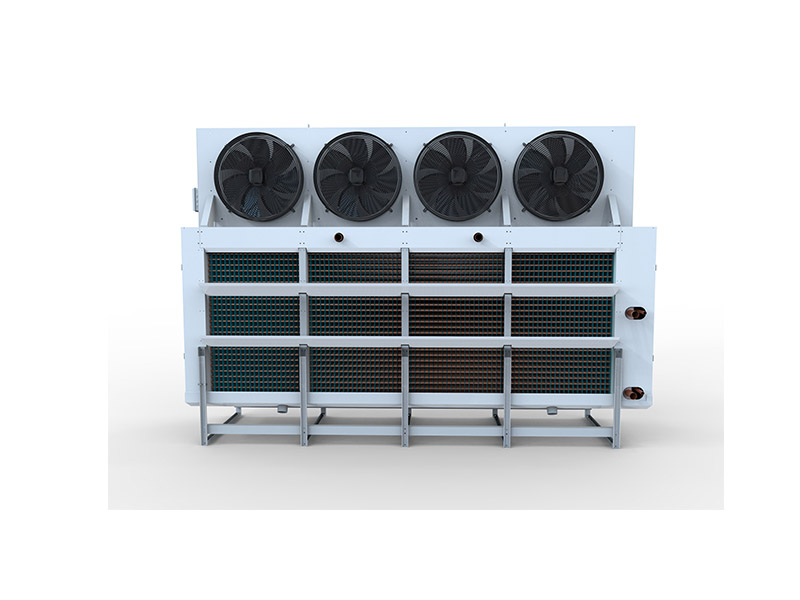
A blast freezer is only as effective as its air distribution and compressor capacity. <Холодильная камера для разделки и переработки тунца при глубокой заморозке -60 °C> covers the deeper freeze requirements when species like tuna demand even lower temperatures.
For export-grade shrimp and fish fillets, freezing time matters as much as final temperature. The Ecuador Manta project integrated three камерой шоковой заморозкиs, each 7 × 5 × 4 meters, with Bitzer 40HP compressors, locking in freshness quickly enough to meet South American and international export standards.
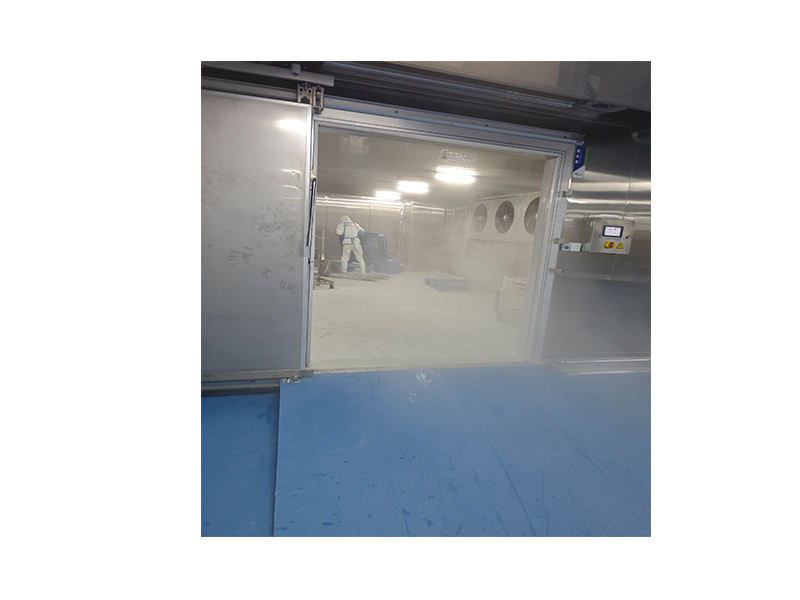
Once frozen, seafood enters long-term storage. Export-grade frozen storage rooms typically hold at -18°C to -25°C, depending on species, storage duration, and destination market. EU Regulation 853/2004 sets -18°C as the minimum for frozen fishery products [1]. For longer storage windows or premium species, -25°C provides a meaningful quality margin by slowing enzymatic degradation and oxidation.
Storage room configuration focuses on uniform air temperature and minimal fluctuation. High-density PU or Панели PIR для холодильных камер provide the thermal barrier, while ceiling-mounted air coolers maintain even air distribution. Door selection matters: раздвижные двери с ручным приводом или секционные воротаs with proper seals prevent warm air infiltration during forklift traffic.
Flake Ice Integration for Handling and Freshness
Flake ice is the workhorse cooling medium in seafood handling. Its thin, dry flakes conform to product surfaces, chill rapidly, and cushion delicate fillets. Unlike block ice, flake ice does not bruise product or create uneven temperature pockets.
Daily capacity should match peak landing volume. A 5-ton/day unit suits mid-scale processors, while a 10-ton/day flake ice machine supports larger export operations or multi-shift production. Food-grade stainless steel construction is essential for direct product contact.
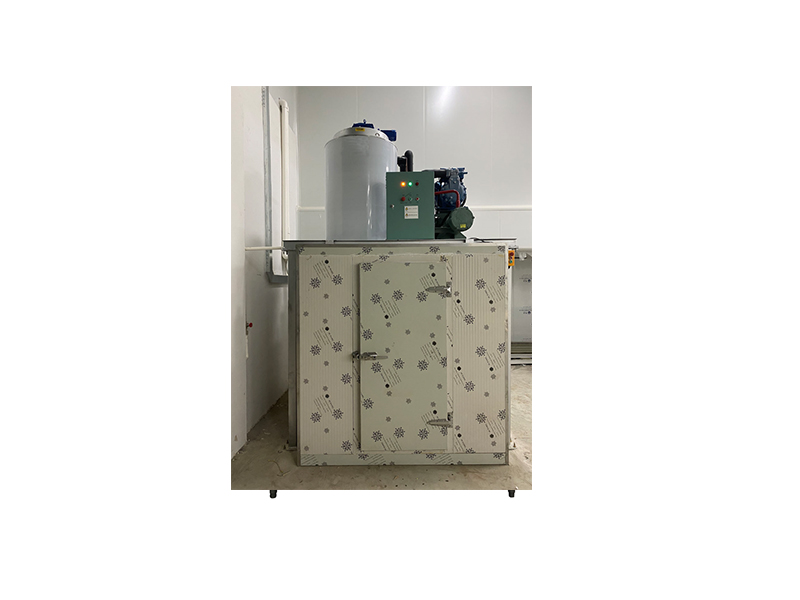
The ice storage room operates at -10°C to prevent agglomeration during standby. The Ecuador project dedicated a separate ice storage room at -10°C, sized 14 × 5 × 4 meters, with a Bitzer 7HP unit. This prevented the common problem of ice melting and fusing into blocks before use.
Refrigeration Equipment Selection by Zone
Matching compressor capacity to each zone's load is the core engineering task. Undersized compressors fail to hold temperature during peak production. Oversized units cycle frequently, reducing efficiency and component life. The following table summarizes common configurations for seafood cold room zones.
| Зона | Typical Temperature | Common Equipment Configuration |
|---|---|---|
| Receiving/Chiller | 0–4 °C | Bitzer 10HP-20HP medium-temperature condensing unit, DL series air cooler |
| цеховые решения | 5–10 °C | Bitzer 15HP-30HP medium-temperature unit, ceiling air cooler |
| Скороморозильный аппарат | От -35 °C до -40 °C | Bitzer 2-stage 16HP-40HP unit, dedicated blast freezer evaporator |
| Замороженное хранение | от -18 °C до -25 °C | Bitzer 34HP-75HP low-temperature unit, industrial ceiling air cooler |
| Хранение льда | -10 °C | Bitzer 7HP-12HP medium-temperature unit |
Original Bitzer semi-hermetic compressors are widely specified in seafood processing because of their service life under continuous operation and the availability of genuine spare parts across export markets. For large-capacity cold rooms, компрессорно-конденсаторные агрегаты с винтовым компрессором Bitzer with PLC control and optional remote monitoring offer better part-load efficiency.
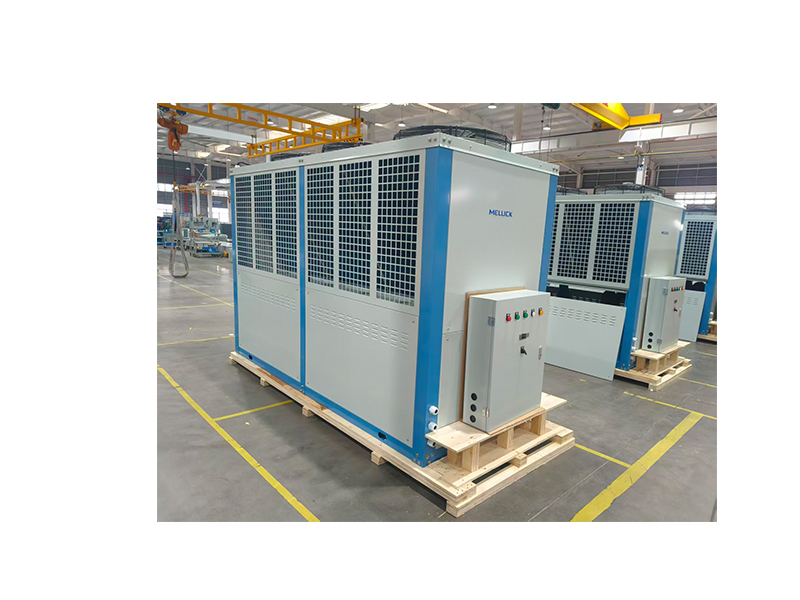
Hot coastal environments put extra pressure on condenser performance, especially when a facility runs 24/7 during peak season. <Проекты холодильных камер в Таиланде: холодовая цепь для морепродуктов и фруктов> covers how multi-zone seafood facilities are matched to tropical operating conditions.
Planning a seafood cold room? Send your daily processing volume, target temperatures, and site power supply to meluck@meluckcooling.com or call +8617369893087. Our engineers will recommend a matched compressor-evaporator set rather than a generic unit.
Food Safety, Hygiene, and Export Compliance
Export seafood facilities operate under serious regulatory scrutiny. HACCP plans must identify temperature control points, and cold room performance records become audit evidence. The Codex General Principles of Food Hygiene provides the HACCP framework of monitoring, corrective action, and verification for each critical control point [3].
Hygienic cold room design includes several practical measures:
- Coved floor-wall junctions that eliminate corners where bacteria collect.
- Stainless steel or food-grade PVC door liners and hardware that withstand chlorinated cleaning agents.
- Drainage that carries wash water out without allowing backflow.
- Lighting and control panels rated for wet, cold environments.
- Temperature monitoring with alarms and data logging for traceability.
Cellulose insulation is unsuitable for seafood cold rooms. Closed-cell PU or PIR panels resist moisture absorption and provide the sanitary, non-porous surface inspectors expect. PIR panels with a B1 fire rating add a margin for facilities where insurers or local codes require enhanced fire performance.

Turnkey Seafood Cold Room Projects: What to Expect
A turnkey project moves from site survey and thermal load calculation through panel production, refrigeration installation, commissioning, and operator training. For seafood processors, the value lies in having one engineering team accountable for the entire thermal envelope and refrigeration system.
In hot coastal climates, condenser selection directly determines runtime performance. <Проект многотемпературного холодильного склада в Эквадоре> covers a five-zone seafood facility that links blast freezing, processing, ice production, and storage into one closed loop.
The Ecuador project replaced scattered equipment with an integrated design and reduced operational complexity. The workflow-based zoning matched Bitzer compressor power and air cooler configurations to each zone's requirements, with original Bitzer systems engineered for Ecuador's coastal high-temperature, high-humidity climate and 24/7 continuous operation. Post-completion, the facility stabilized export product quality and reduced product loss.
Send Us Your Seafood Cold Room Requirements
Every seafood facility has a different species mix, throughput, and export destination. The cold room configuration that works for whitefish fillets is not the same one that works for shrimp IQF or tuna loining.
Tell us your daily processing volume, the temperature zones you need, and your site location. We respond with a preliminary equipment matching and capacity estimate, then refine the design through site survey and load calculation.
Contact David Zhang and the MELUCK engineering team at meluck@meluckcooling.com or call +8617369893087 to start the conversation.
Часто задаваемые вопросы
What temperature should a seafood blast freezer run at?
A seafood blast freezer commonly operates between -35°C and -40°C with high air velocity to freeze product rapidly. Frozen fishery products must reach -18°C or below under EU Regulation 853/2004 [1]. The colder the blast freezer, the faster the core temperature drops and the smaller the ice crystals formed in the tissue.
What is the difference between a processing room and a frozen storage room?
A processing room operates at 5°C to 10°C and is designed for workers to cut, trim, and package product in a cool, hygienic environment. A frozen storage room operates at -18°C to -25°C and is designed purely for long-term holding of already frozen product. They have different insulation, refrigeration, and airflow requirements.
Do I need flake ice if I have a cold room?
Flake ice complements the cold room rather than replacing it. Ice cools the catch quickly at the point of landing and protects it during sorting and transfer between zones. The cold room provides stable ambient holding. Most seafood processors run both systems.
How do I size the refrigeration system for a seafood processing room?
Sizing starts with product load, then adds heat from workers, lights, motors, and infiltration. A common approach is to calculate the product load by species and daily throughput, then apply sensible and latent heat additions for occupancy and equipment. A qualified engineer should verify the load calculation before equipment is specified.
What food safety standards apply to seafood cold rooms?
HACCP principles under Codex Alimentarius and destination-market regulations such as EU Regulation 853/2004 for the European market are the primary frameworks. Cold room temperature records, cleaning protocols, and material choices all become part of the audit trail.
What should I prepare before contacting a cold room supplier?
Prepare your daily processing volume by species, the temperature zones you need, your site power supply including voltage, phase, and frequency, available space, and your export destination market. This information allows the engineering team to propose a matched compressor-evaporator configuration instead of a generic unit.
Список литературы
[1] European Union, "Regulation (EC) No 853/2004 laying down specific hygiene rules for food of animal origin," Official Journal of the European Union, 2004.
[2] Codex Alimentarius Commission, "Code of Practice for Fish and Fishery Products," CXC 52-2003, FAO/WHO, 2003 (revised 2022).
[3] Codex Alimentarius Commission, "General Principles of Food Hygiene," CXC 1-1969, FAO/WHO, 1969 (revised 2020).
Если вам интересно, ознакомьтесь с этими статьями по теме:
Подбор размера и установка холодильной камеры для магазина у дома
Как спланировать проект холодильной камеры на Филиппинах для выпуска IQF
Холодильное хранение в Камбодже для переработки морепродуктов и риса
ROI проекта холодильного хранения: практическая финансовая оценка
Решения для холодильных камер для переработки и экспорта говядины в Аргентине
Имея более чем 15-летний опыт работы инженером по холодильному оборудованию MELUCK, я специализируюсь на проектировании холодильных складов, чиллеров, льдогенераторов и энергосберегающих систем холодовой цепи, обеспечивая техническую поддержку дистрибьюторам и инжиниринговым компаниям по всему миру.

meluck