
Холодильная камера для предварительного охлаждения авокадо: проектирование холодильной цепи
A dedicated холодильная камера for avocado pre-cooling is the first downstream decision that determines whether fruit arrives at the port in export condition. Avocados continue to respire after harvest, and without rapid removal of field heat, the ripening window becomes difficult to control. This guide explains how a pre-cooling chiller room should be configured for avocado export, using a Peruvian project as a reference.

Why Avocado Pre-Cooling Determines Export Quality
Avocado fruit is sensitive to both temperature and handling sequence. Harvested fruit carries field heat, and even a few hours of delay can accelerate softening, weight loss, and peel defects before container loading. Pre-cooling works by lowering pulp temperature quickly and then holding the fruit in a stable environment. The target is not simply a cold air temperature; it is uniform pulp temperature across the pallet stack. If air bypasses the center of a packed bin, visible ripening differences appear later at destination.
Core Design Parameters for an Avocado Pre-Cooling Chiller Room
Temperature Set Point and Uniformity
A practical pre-cooling set point for fresh avocado handling can be around 10°C during initial staging, with tight control to avoid wide swings. In a completed Peruvian project, the room was held at 10°C with a variation of ±0.5°C [1]. This level of stability helps slow respiration without pushing fruit into temperatures that create chilling injury on freshly harvested avocado. Export protocols differ by cultivar, maturity, and destination, so the final set point should be confirmed before the cooling load is calculated.
Airflow and Uniform Cooling
Unlike a long-term storage room, a pre-cooling room needs enough air movement to reach fruit in the center of crates or bins. Ceiling-mounted air coolers are positioned to distribute air across the top of the pallet racking and return air through the product zone. The Peru project used two ceiling-mounted evaporators matched to the room's short-term pulldown load [1]. This layout reduced hot spots and gave the operator more predictable cooling times before container loading.
Humidity and Latent Load
Avocado pre-cooling has a moisture load from field fruit and packing materials. High relative humidity limits weight loss and shrivel, but it also increases the latent load on the evaporator. The coil selection and defrost strategy should manage condensation without allowing water to collect on cartons or floor channels.
Insulation and Door Sealing
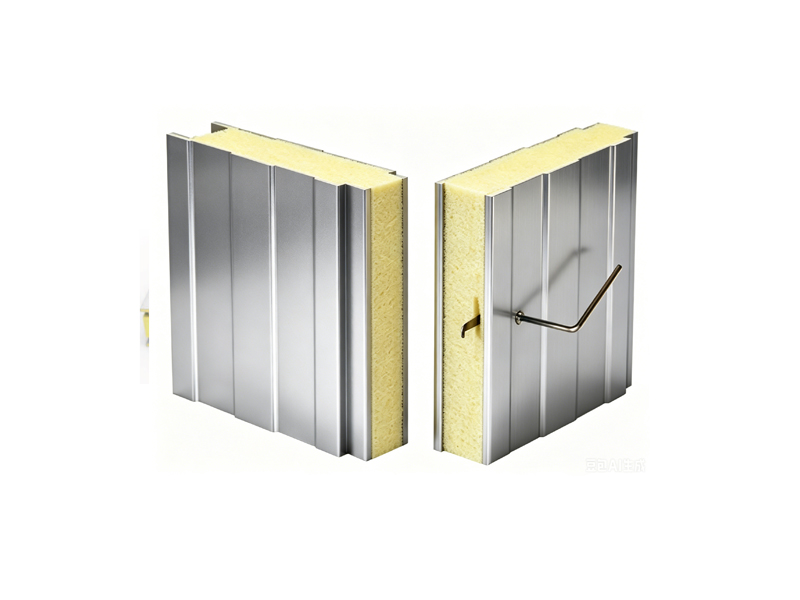
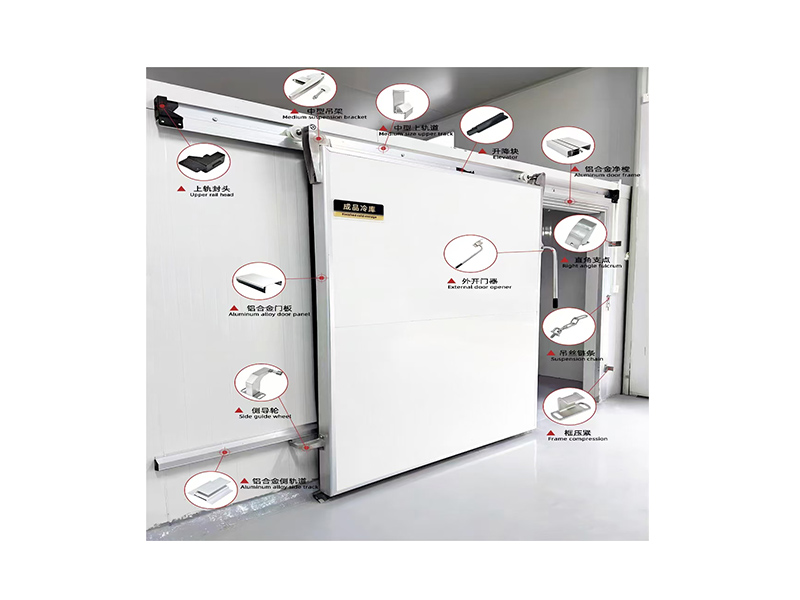
High-density PU sandwich panels were used for the avocado room in Peru, with an insulated sliding door to limit cold air loss during loading and unloading [1]. For a pre-cooling room, the door opening schedule matters because fruit moves in and out more frequently than in a reserve cold room. A properly sealed door and quick-closing workflow help the refrigeration system recover without long temperature excursions.
Холодопроизводительность и резервирование
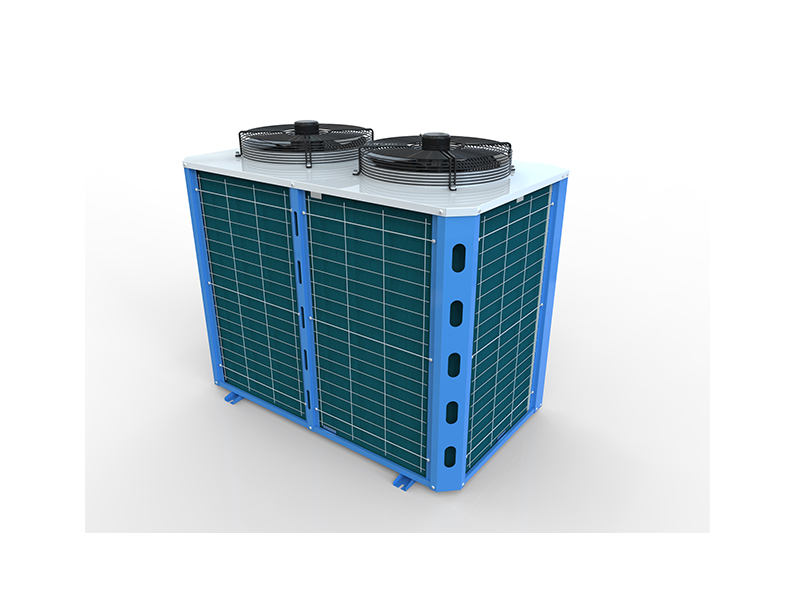
The Peruvian room measured 17 m by 12 m by 3.1 m and used two Bitzer 20HP air-cooled condensing units [1]. Two independent refrigeration circuits give the operator partial cooling if one unit is being serviced during peak harvest. Pre-cooling loads are higher than storage loads because the equipment must remove field heat, not just maintain temperature. Sizing should be based on the maximum daily harvest volume entering the room, not only the room volume.
Peru Case: Avocado Pre-Cooling Room for Export
The Peru case shows how a focused pre-cooling design changes export outcomes. Before the cold room was installed, the farm lost around 15% of harvested fruit to spoilage and quality defects. The new 17 m by 12 m by 3.1 m room, with high-density PU panels, an insulated sliding door, and two Bitzer 20HP condensing units paired with two ceiling-mounted evaporators, held the space at 10°C ±0.5°C. After commissioning, rejection and spoilage fell to below 4%, and the operation gained more flexibility in shipment scheduling [1].
A pre-cooling room reduces field heat, but the next stage of export planning is how the cold chain handles mixed product types. <Холодильная камера для импортёров и дистрибьюторов продуктов питания: множество SKU> covers multi-temperature zone design for importers who handle several commodities.
Fruit exporters often face similar post-harvest decisions across commodities. <Камера дозревания бананов или холодильное хранение для импортеров> covers the difference between ripening control and stable cold storage for fresh fruit importers.
For operations that export more than one commodity, the same pre-cooling principle applies across fresh produce and seafood. <Проект холодильной камеры в Марокко: холодовая цепь цитрусовых и морепродуктов> covers export cold chain design for mixed perishable handling.
For a pre-cooling room that matches a specific harvest schedule, send room dimensions, daily intake volume, and target set point to meluck@meluckcooling.com. A project engineer can review the pulldown load and recommend a room configuration before equipment procurement.
Equipment Selection for Avocado Pre-Cooling Rooms
A standard холодильная камера product range for 0°C to +8°C provides a base configuration, but avocado pre-cooling usually requires stronger pulldown capacity and careful airflow matching [2].
Компрессорно-конденсаторные агрегаты
Pre-cooling rooms require medium-temperature refrigeration capacity that can respond to a sharp load when warm field fruit enters the room. Original Bitzer semi-hermetic condensing units are widely used in export cold chain projects because of spare parts availability and consistent performance under hot ambient conditions [3]. The Peru room used two 20HP units, which gave capacity and service flexibility during peak harvest [1].
Useful reference: Компрессорно-конденсаторный агрегат Bitzer 20 л.с.
Evaporators and Air Coolers
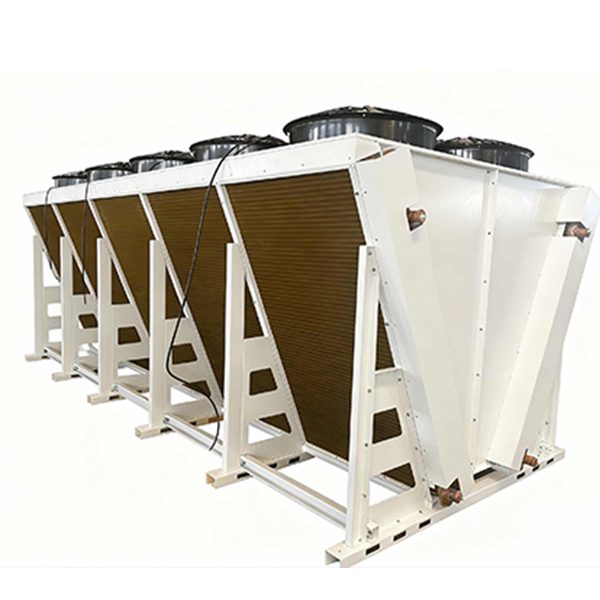
The evaporator is the component that moves heat out of the room. For avocado pre-cooling, ceiling-mounted air coolers should be selected for the required air throw and fin spacing for medium-temperature operation. Frequent door openings and high initial moisture load require defrost management and drain line protection.
Useful reference: воздухоохладителя
Panels and Sealing
High-density PU panels are a practical insulation choice for a dedicated chiller room. Panel thickness and joint design affect both energy use and long-term moisture resistance. For export rooms where hygiene and washdown matter, PIR panels can add fire performance benefits.
Useful reference: Панели PIR для холодильных камер и Панели PUR для холодильных камер
Controls and Handoff
A pre-cooling room needs an accurate controller and, when possible, remote monitoring for off-hours harvest. High-low temperature alarms protect the fruit if a compressor stops or a door is left open. Exporters can then document the cold chain with temperature records that support buyer inspections.
Pre-Cooling Workflow and Export Handoff
- Harvest and pack first, but do not let crates sit in direct sun before cold room intake.
- Leave airflow space between pallets so ceiling-mounted air coolers can reach the center of the room.
- Monitor return air and pulp probes rather than air temperature only.
- After pre-cooling, move fruit to export staging or reefer container without a long stop on an open dock.
End CTA: Plan Your Avocado Pre-Cooling Room
A dedicated chiller room for avocado pre-cooling is a project-specific system, not a one-size-fits-all panel box. MELUCK provides complete turnkey design, manufacturing, installation, and commissioning for export cold chain projects. Send your daily harvest volume, room footprint, power supply, and target set point to meluck@meluckcooling.com or call +8617369893087 to discuss a pre-cooling room that matches your export schedule.
Часто задаваемые вопросы
What temperature should an avocado pre-cooling chiller room run at?
Set point depends on cultivar and destination, but a practical fresh avocado staging temperature can be 10°C with tight control. In the Peru project, 10°C ±0.5°C reduced spoilage from about 15% to below 4%. Some export programs use lower holding temperatures after initial cooling, but pre-cooling should be confirmed for the specific fruit maturity.
How fast should avocados be cooled after harvest?
The objective is to remove field heat before it accelerates ripening. Exact pulldown time depends on room capacity, air circulation, and pallet arrangement, but the design goal is to reach the target pulp temperature before container loading, not to leave fruit in a half-cooled condition.
Can a standard chiller room be used for avocado pre-cooling?
A standard chiller room may not have enough airflow or pulldown capacity for peak harvest intake. Pre-cooling needs matched evaporators and condensing units, higher air circulation, and controls that manage frequent door openings.
What equipment is needed for an avocado export cold room?
Typical configuration includes high-density PU or PIR panels, an insulated sliding door, medium-temperature condensing units, ceiling-mounted air coolers, and a controller with temperature logging. The Peru room used two Bitzer 20HP condensing units and two ceiling-mounted evaporators.
Список литературы
[1] Shanghai Meluck Refrigeration Equipment Co., Ltd. Project case: Avocado Cold Storage Room in Peru, internal project record, 2026.
[2] Shanghai Meluck Refrigeration Equipment Co., Ltd. Product specification: Chiller Room, 0°C to +8°C. https://www.meluckcooling.com/product/chiller-room/
[3] Shanghai Meluck Refrigeration Equipment Co., Ltd. Product specification: Bitzer 20HP Reciprocating Condensing Unit. https://www.meluckcooling.com/product/bitzer-20hp-reciprocating-compressor-condensing-unit-55c/
Если вам интересно, ознакомьтесь с этими статьями по теме:
Проект холодильной камеры в Мьянме для томатов и тропических фруктов
Проекты холодильных камер в Таиланде: холодовая цепь для морепродуктов и фруктов
Имея более чем 15-летний опыт работы инженером по холодильному оборудованию MELUCK, я специализируюсь на проектировании холодильных складов, чиллеров, льдогенераторов и энергосберегающих систем холодовой цепи, обеспечивая техническую поддержку дистрибьюторам и инжиниринговым компаниям по всему миру.

meluck