
Almacenamiento frigorífico de marisco en Indonesia: un diseño de cámara frigorífica fiable
Los productos del mar capturados en Indonesia recorren uno de los entornos de cadena de frío más exigentes del mundo: calor ambiental elevado, aire salino, frecuentes variaciones de tensión y largas distancias entre los puntos de desembarque y las terminales de exportación. El diseño del almacenamiento en frío es una decisión comercial, no la compra de una caja. Parto de la premisa de que los proyectos de almacenamiento en frío de productos del mar en Indonesia deben especificarse como una secuencia de temperaturas desde el enfriamiento hasta la congelación por impacto el almacenamiento congelado, con equipos adaptados al grosor del producto y al suministro eléctrico local. Los compradores que tratan la cámara frigorífica como una unidad independiente lo pagan dos veces: una en el coste de capital y otra en producto perdido.
Riesgos de la cadena de frío en las exportaciones de productos del mar de Indonesia
Most Indonesian seafood facilities lose more money between landing and first cooling than inside the cold room. A vessel that arrives at midday in a port like Bitung or Benoa carries fish that has already spent hours at air temperature above 28°C. The first refrigeration step has to be close to the landing, and it has to pull heat down fast. A standard cámara frigorífica that takes eight hours to reach 0°C will not recover that lost shelf life.
I have seen buyers size compressors for a design ambient of 32°C, then wonder why the system trips when the condenser sits on a rooftop pushing 40°C under direct sun. The condensing unit loses capacity at high ambient, and the room either warms up or the compressor runs against high head pressure. In tropical coastal areas, the condensing unit selection should be done at 38°C to 43°C ambient, not at the lower figure used for temperate projects.
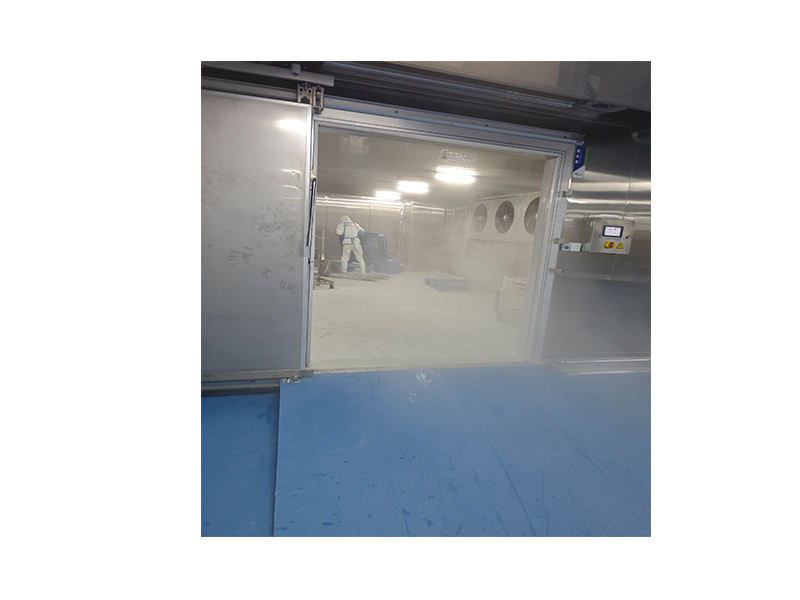
Refrigeration Design for Indonesia's Coastal Conditions
Sea air changes how a cold room should be built. Evaporator coil coatings, condenser fin spacing, and panel joint seals all fail differently in high humidity and salt spray than in a dry inland warehouse. We specify coated coil fins and wider fin spacing on air-cooled condensers for coastal seafood plants because salt builds up between fins, raising head pressure and cutting heat rejection.
Panel choice matters beyond insulation value. A room that holds temperature in a clean processing hall may sweat at door frames and panel joints when the outside air is 30°C and 85% relative humidity. For frozen rooms, PIR panels make more sense than ordinary PU where fire resistance is part of the building permit discussion; for chiller rooms, high-density PU panels with camlock joints still work when the room is properly sealed. We build both ways depending on whether the room sits inside a processing building or outside under a roof.
| Aplicación | Temperatura | Enfoque del equipo |
|---|---|---|
| Conservación de pescado fresco | 0 to -2°C | Chiller room, DL air cooler, medium temp unit |
| Shrimp processing | 5 to 10°C | Processing room, ceiling air cooler, 25HP unit |
| Almacenamiento congelado | -18 a -25 °C | Freezer room, DD air cooler, low temp unit |
| Tuna deep freeze | -55 to -60°C | Two-stage Bitzer, blast freezer evaporator |
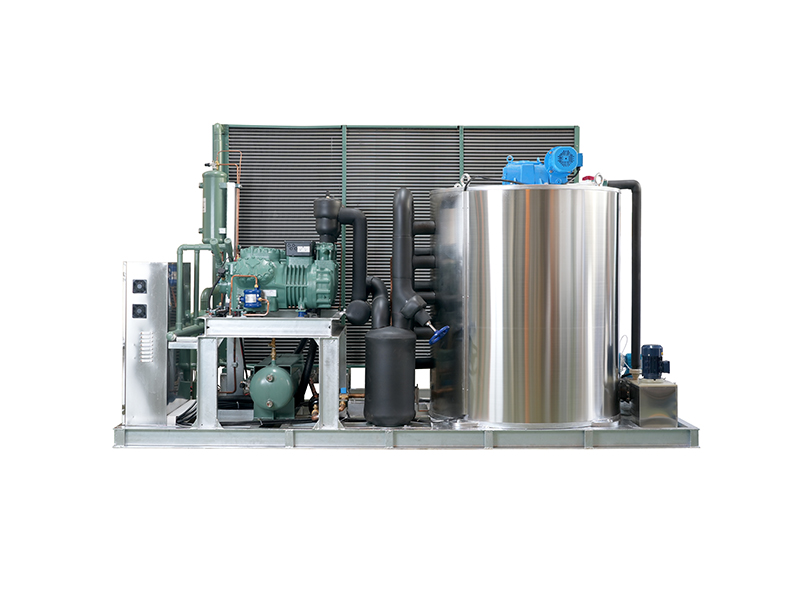
| Producción de hielo | -10°C storage | Flake ice machine, ice storage room |
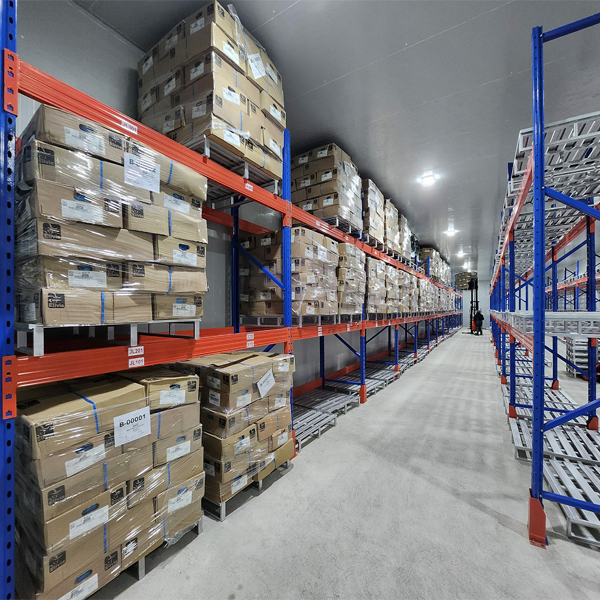
Temperature Zones for Tuna, Shrimp, and Fillet Processing
No single seafood product keeps the same set point. Fresh tuna for export is held at 0°C to -2°C on ice, not frozen. Shrimp in a processing room works best at 5°C to 10°C before freezing, because warmer surfaces encourage bacterial growth and cooler surfaces slow the workers and the peeling line. Finished frozen product goes to -18°C or -25°C depending on how long it waits before shipment. A multi-zone layout separates these functions so the blast freezer does not pull cold air from the processing room and the processing room does not carry freezer moisture into packing.
In the Ecuador Manta project we built for a seafood exporter, the facility used five linked zones: three cámara de congelación rápidas at -35°C, one frozen storage room at -18°C, a 5°C to 10°C processing room, an ice storage room at -10°C, and a 10-ton-per-day flake ice plant. The result was a closed loop from catch handling to export packaging, with Bitzer compressor capacity matched to each zone. That design is the one I would use as a reference for an Indonesian plant handling tuna, shrimp, or mixed reef fish.
Blast Freezing and IQF Selection for Seafood
Blast freezing is not one setting. Whole tuna destined for sashimi may go to -55°C or -60°C in a two-stage Bitzer system. Shrimp for IQF can use a tunnel freezer running at 300 kg/h or more with short dwell time, so each piece freezes separately instead of clumping. The decision between a blast cámara congeladora and an IQF tunnel comes down to product form and throughput. IQF works for small pieces that must stay separated; a blast freezer room works for cartons, whole fish, and thicker cuts.
Freezer capacity is set by product temperature, thickness, and daily intake. If a buyer plans 10 tons of shrimp per day, the freezing capacity must not be 10 tons of frozen storage; it must be the energy to pull 10 tons from 5°C down to -18°C within the freezing window. Slow freezing forms large ice crystals that damage shrimp texture and lower export value. This is the difference between a room that holds product and a room that protects it.
If your program includes whole tuna at -60°C or IQF shrimp at 300 kg/h and above, compressor staging and blast freezer airflow change with product thickness. Send target species, daily intake, and available power to meluck@meluckcooling.com or +8617369893087 before the room list is finalized.
Power, Backup, and Humidity Control
Indonesian grid supply can swing enough to knock out a compressor controller, and many processing sites sit far from stable utility lines. We design refrigeration packs with phase protection, voltage monitoring, and automatic restart after power returns, and we match the compressor electrical characteristics to the site supply. For export plants running whole tuna, a generator backup for at least the blast freezer and the -60°C room is a practical requirement, not an option.
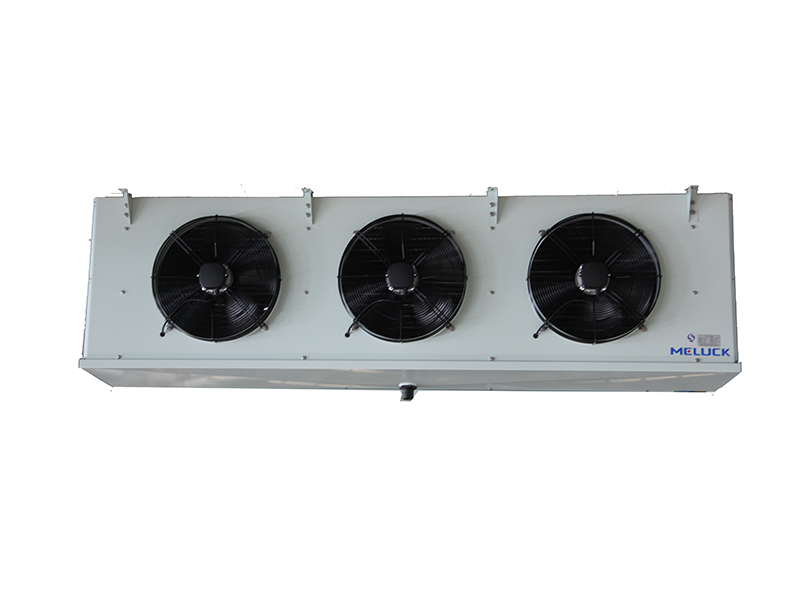
Humidity control matters in chiller and processing rooms for product quality and for the building itself. High moisture on evaporators leads to heavy frost, more defrost cycles, and warmer average temperatures. We use electric defrost on freezer evaporators and off-cycle defrost on chiller rooms. Door openings matter more in a humid climate because each opening pulls in wet air that forms ice on the coil. Strip curtains, fast-close sliding doors, and air curtains are part of the design, not accessories.
A cold room for Indonesian seafood is a sequence of temperature, airflow, and power decisions, not a single equipment purchase. If your site has variable grid supply, mixed species handling, or export audits to pass, confirm the refrigeration set points and defrost strategy before ordering. Share your target species, daily throughput, and site location with us at meluck@meluckcooling.com or +8617369893087.
Common Questions About Indonesia Seafood Cold Storage
What temperature should fresh tuna be held at before export?
Fresh tuna for export is usually held at 0°C to -2°C in ice slurry or chilled seawater, not frozen. The bigger problem is how quickly the fish reaches that range after landing. If core temperature stays above 4°C for more than a few hours, histamine risk increases and the export buyer will reject the lot at inspection. A fast pre-cooling step, then a chiller room at 0°C to -2°C, is the practical sequence. For tuna that ships frozen, the room only becomes relevant after the fish has passed through a -60°C blast cycle or an equivalent rapid freeze.
Do I need IQF or a blast freezer for shrimp?
Many buyers assume IQF and blast freezing are the same thing because both freeze shrimp. They are not interchangeable. IQF is for individual pieces that must stay separate, like peeled shrimp packed in bulk bags. A blast freezer room is for cartons, blocks, or whole fish where pieces can freeze together inside a package. For a shrimp plant, the usual layout uses both: a blast freezer or IQF tunnel for rapid freezing and a frozen storage room at -18°C for finished cartons before shipment.
Can one cold room handle tuna, shrimp, and reef fish together?
It depends on the export market and the product form. Fresh tuna can share a 0°C chiller room with fresh reef fish only if species are separated and the room stays below 2°C. Once frozen, different seafood can share a -18°C freezer room as long as packaging is sealed and cross-contamination is controlled. The split becomes necessary when whole tuna needs -60°C storage or shrimp needs a separate processing zone. Map your daily intake by species before deciding whether one room or multiple zones will work.
What power capacity should I plan for a seafood cold room in Indonesia?
In the tropical coastal projects we have worked on, the first practical step is to measure actual supply voltage and total available load before sizing compressors. Many sites have adequate power on paper but weak voltage during peak hours. I ask for the transformer capacity, cable distance to the room, and whether a standby generator is already installed. Then we match the condensing units and defrost schedule to that real supply. Share your species list and current landing volume and we can confirm the refrigeration sequence and the electrical load profile at meluck@meluckcooling.com or +8617369893087.
Si le interesa, consulte estos artículos relacionados:
Proyecto de almacenamiento en frío de semilla de papa en Myanmar - Meluck
Proyecto de almacenamiento en frío de patatas fritas en Egipto - Meluck
Soluciones de salas de procesamiento para plantas alimentarias - Meluck
Soluciones para salas de refrigeración -10C~10C - Meluck
Soluciones de cámaras de congelación rápida -40C~-60C - Meluck
Con más de 15 años de experiencia como ingeniero de refrigeración de MELUCK, me especializo en el diseño de almacenamiento en frío, enfriadoras, máquinas de hielo y sistemas de ahorro energético para la cadena de frío, y presto soporte técnico a distribuidores y empresas de ingeniería de todo el mundo.

meluck