
Hielo en escamas para la refrigeración de reactores químicos: caudal e higiene
En la producción química, controlar la temperatura de la reacción es fundamental. El hielo en escamas para la refrigeración de reactores químicos es un método eficiente para absorber calor rápidamente, pero el proceso exige prestar especial atención al caudal y a la higiene. Como ingeniero de refrigeración con más de quince años de experiencia en sistemas de refrigeración industrial, he comprobado cómo la configuración adecuada del hielo en escamas puede mejorar el rendimiento y, al mismo tiempo, mantener la pureza del producto. En las secciones siguientes se abordan los factores clave que permiten a los ingenieros de proceso dimensionar correctamente un sistema de hielo, mantener unas condiciones higiénicas y seleccionar el método de refrigeración adecuado.
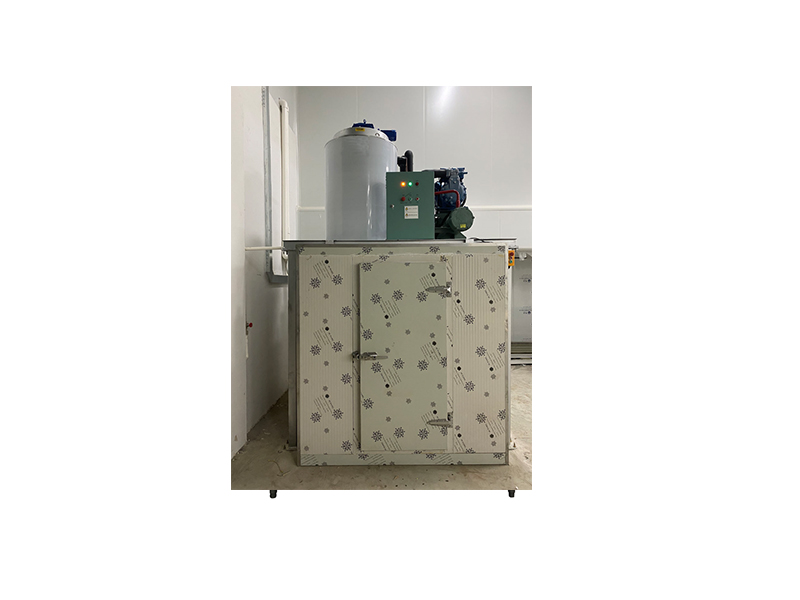
Flow Rate Calculation for Flake Ice in Chemical Reactor Cooling
Determining the required ice melt rate starts with the carga térmica generated by the exothermic reaction. The heat load, expressed in kilowatts, depends on the reaction rate, the mass of reactants, and the desired temperature drop. Once the heat load is known, the daily ice requirement can be estimated by dividing the load by roughly 3.9 kW per ton of ice per day. A reactor that generates 20 kW of excess heat, for instance, needs about 5 tons of flake ice over a 24‑hour period.
How do you determine cooling load for an exothermic reaction?
Process engineers typically start by measuring the temperature rise of the reactor contents without cooling, then multiply by the mass and specific heat capacity of the mixture. In practice, many plants base the calculation on heat‑of‑reaction data from pilot trials or batch records. Adding a 15% to 20% safety margin is standard to cover fluctuations in ambient temperature and reaction kinetics.
What ice melt rate is needed per minute for reactor cooling?
For continuous heat removal, divide the heat load in kW by the latent heat of ice (334 kJ/kg) and convert to minutes. A 20 kW load needs about 3.6 kg of ice melted every minute, translating to roughly 5 tons per day. With an ice buffer tank, a smaller máquina de hielo en escamas can run ahead and accumulate ice during low‑demand periods, then release it when the reactor experiences peak exothermic activity.
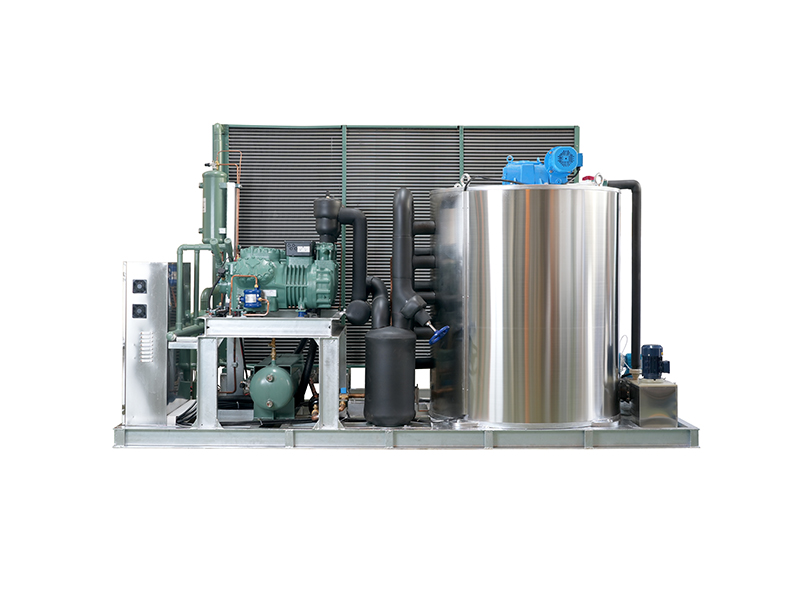
Hygiene Standards for Flake Ice Systems in Chemical Applications
When flake ice might contact chemicals or operate inside a hygienic plant, the construction material and water quality are non‑negotiable. The ice should not become a contamination source. That calls for an ice maker built from corrosion‑resistant stainless steel and a water supply filtered to remove particulates and dissolved minerals that could react with process chemicals.
We build our flake ice machines with food‑grade 304 stainless steel as standard. For chemical environments that involve acidic or chlorinated compounds, we can supply evaporators and water‑contact surfaces in 316 stainless steel to resist pitting. This is not a special‑order wish; it is a configuration we routinely handle for industrial clients who understand their process chemistry.
What materials are suitable for hygienic flake ice production?
304 stainless steel is adequate for neutral‑pH water and most non‑aggressive cooling media. If the cooling loop may encounter low‑pH conditions or chloride ions, 316 stainless steel offers better corrosion resistance. The entire water path, from the city inlet to the ice discharge chute, should be cleanable and free of dead legs where bacteria or scale could accumulate.
How to integrate CIP (clean‑in‑place) systems with a flake ice machine?
Clean‑in‑place capability depends on designing the machine with sloped surfaces, accessible spray nozzles, and a fully drainable water circuit. In our experience, chemical plants that require periodic sanitization often specify CIP‑ready ice makers with fully welded stainless steel cabinets and minimal crevices. This reduces downtime between production batches and makes it easier to meet plant hygiene protocols.
If your reactor handles materials that must stay sterile or free of metal ions, it is worth confirming material compatibility with a supplier before finalizing the ice machine specifications. Contact us at meluck@meluckcooling.com to review your hygiene requirements.
Selecting Flake Ice Machine Capacity for Chemical Process Cooling
Once the heat load and melt rate are established, the next step is matching the ice production capacity to process demand. The table below offers a quick reference for typical machine capacities and their approximate heat removal rates.
| Daily Capacity (tons) | Approximate Heat Removal (kW) | Typical Reactor Size (liters) |
|---|---|---|
| 1 | 4 | Up to 500 |
| 5 | 20 | 500 to 2,000 |
| 10 | 40 | 2,000 to 5,000 |
These figures assume continuous ice melting and a well‑insulated storage bin. Batch processes with intermittent cooling spikes may need a larger ice buffer or a higher‑capacity machine to prevent temperature overshoot.
Our product line covers the full range: from compact 0.5‑ton‑per‑day machines suited to pilot plants to 10‑ton‑per‑day industrial units with air‑ or water‑cooled condensers. For a precise fit, sharing your reactor heat load, desired temperature range, and available footprint lets us recommend the right machine and condenser type.
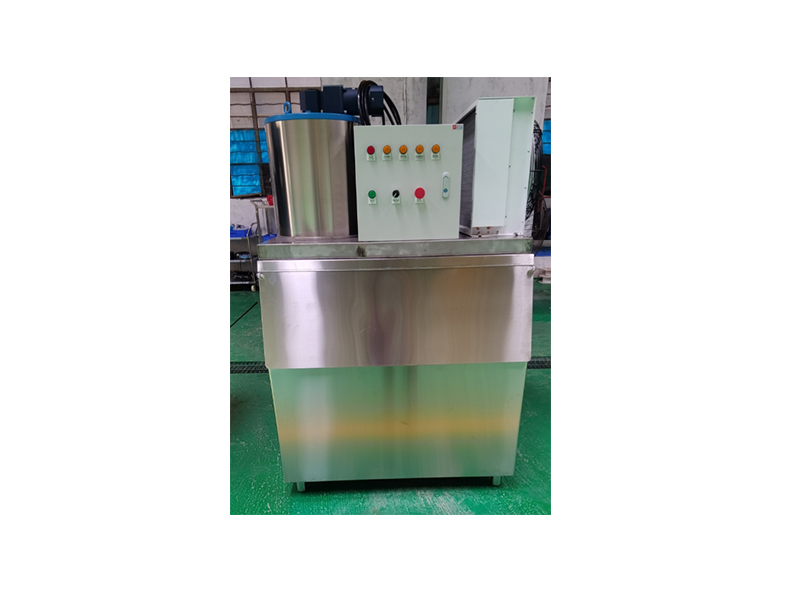
Direct vs Indirect Cooling Methods for Chemical Reactors
Flake ice can be used two ways: direct injection straight into the reactor vessel, or indirect cooling where an ice slurry circulates through a heat exchanger. Direct injection delivers fast heat absorption but carries a serious drawback for chemical processes: melting ice dilutes the reaction mixture and introduces water‑chemistry variables. Unless your process tolerates water addition, and the ice is demonstrably pure enough to avoid side reactions, direct injection is rarely the right choice.
Indirect cooling with an ice slurry pumped through a stainless‑steel plate or shell‑and‑tube heat exchanger offers the same thermal benefit without contamination risk. The reactor contents never touch the ice or its melt water. This method is the standard in food and pharmaceutical cooling, and I recommend it for most chemical applications. It keeps the cooling medium separate, simplifies hygiene compliance, and lets a single ice machine serve multiple reactors through a shared buffer tank.
Get the Right Flake Ice System for Your Chemical Process
Choosing a flake ice system that matches both your cooling load and hygiene requirements starts with getting the technical details right. If you are moving from theory to procurement, sharing your process parameters with an experienced supplier can save weeks of trial and error.
We have supplied flake ice machines to projects ranging from seafood processing to concrete cooling, and the same engineering principles apply to chemical reactors. Our team can guide you in selecting the right ice capacity, material grade, and cooling method so the system performs reliably from day one. Send your reactor cooling requirements and daily capacity needs to meluck@meluckcooling.com or call +8617369893087 for a technical consultation.
Common Questions About Flake Ice for Chemical Cooling
Can flake ice be used directly in a chemical reactor without a heat exchanger?
It is technically possible but rarely advisable. Direct injection adds water to the reaction mix, which can alter concentrations, trigger unwanted hydrolysis, or introduce microbial contaminants. For most chemical production steps, indirect cooling is safer and easier to validate.
What water quality is required for flake ice used in chemical cooling?
Potable water is the baseline. If the ice or its melt water could enter the process, we recommend running the feed water through a sediment filter and activated carbon to remove chlorides and organic residues. For high‑purity processes, deionized or reverse‑osmosis water may be necessary.
How does flake ice compare to a chiller for reactor cooling?
Flake ice delivers a very high latent cooling capacity and can absorb sudden heat spikes that might overwhelm a chiller. A chiller, on the other hand, offers precise temperature control without the need for ice production and storage. The choice often depends on whether the process can accept a cooling medium near 0°C. Many chemical plants use a hybrid approach: a chiller for steady‑state cooling and flake ice for peak‑load shaving during exothermic kicks.
What maintenance does a flake ice machine need in a chemical plant?
Regular inspection of the water filter, cleaning of the evaporator surface, and checking the condenser airflow are the main tasks. In a chemical plant, stainless steel surfaces should be rinsed with clean water after exposure to airborne corrosives. For longer‑term performance, we can supply maintenance guidance and after‑sales support tailored to your machine model. If your plant needs documentation or a preventive maintenance schedule, contact us at meluck@meluckcooling.com to set up a plan.
Si le interesa, consulte estos artículos relacionados:
Almacenamiento en frío con precooling de aguacate en Perú - Meluck
Soluciones de cámaras frigoríficas -25C~-18C - Meluck
Con más de 15 años de experiencia como ingeniero de refrigeración de MELUCK, me especializo en el diseño de almacenamiento en frío, enfriadoras, máquinas de hielo y sistemas de ahorro energético para la cadena de frío, y presto soporte técnico a distribuidores y empresas de ingeniería de todo el mundo.

meluck